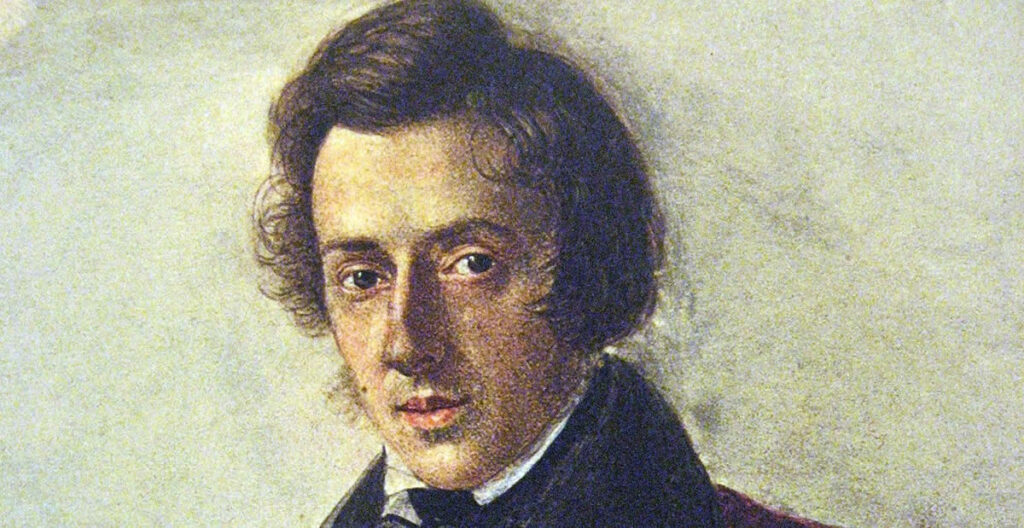
Frédéric Chopin, widely celebrated for his piano compositions, ventured into the realm of chamber music with his Cello Sonata in G Minor, Op. 65. Composed between 1845 and 1846, this masterpiece remains one of the composer’s few works outside the solo piano repertoire and stands as a testament to his deep admiration for the cello.
Background and Composition
The Cello Sonata was written for and dedicated to Chopin’s close friend and renowned cellist Auguste Franchomme. Their friendship played a crucial role in the creation of this sonata, as Chopin often sought Franchomme’s guidance on cello techniques while composing. This collaboration resulted in a composition that beautifully balances the expressive qualities of both the cello and piano, rather than relegating the cello to an accompaniment role.
Chopin’s deteriorating health during this period made composing increasingly difficult. Unlike his earlier works, which often flowed effortlessly, the Cello Sonata underwent numerous revisions, reflecting his struggle for perfection. It was also one of the last works he completed before his death in 1849, adding a poignant layer to its history.
Structure and Musical Characteristics
The Cello Sonata in G Minor consists of four movements:
- Allegro moderato – A dramatic and lyrical opening movement showcasing a dialogue between the piano and cello, featuring sweeping melodies and intricate harmonic shifts.
- Scherzo – Lively and playful, this movement contrasts rapid passages with delicate interludes, demonstrating Chopin’s characteristic pianistic brilliance.
- Largo – A deeply expressive and melancholic movement, often regarded as the emotional core of the sonata. The cello sings with a vocal-like quality, supported by a gentle piano accompaniment.
- Finale: Allegro – The sonata concludes with a virtuosic and energetic finale, blending rhythmic vitality with a sense of longing and resolution.
Premiere and Reception
Chopin himself performed the piano part at the sonata’s premiere on February 16, 1848, with Franchomme on cello. This event, which took place at Chopin’s last public concert in Paris, was highly anticipated, as it showcased the composer in a rare ensemble performance. While the work received mixed reviews at the time—some critics finding its structure unconventional—it has since been recognized as a masterpiece of the cello repertoire.
Legacy and Influence
Despite its initial reception, the Cello Sonata has gained great appreciation among musicians and scholars. It stands as a significant work in 19th-century chamber music, demonstrating Chopin’s ability to adapt his poetic and harmonically rich style to an intimate duo setting. Cellists often consider it a cornerstone of the repertoire, and it continues to be performed and recorded by leading artists worldwide.
Chopin’s Cello Sonata remains a profound and emotional work that captures his late style, blending lyrical beauty with structural innovation. It is a testament to his ability to write beyond the piano, creating a composition that deeply resonates with audiences and musicians alike.

Comments are closed