Introduction
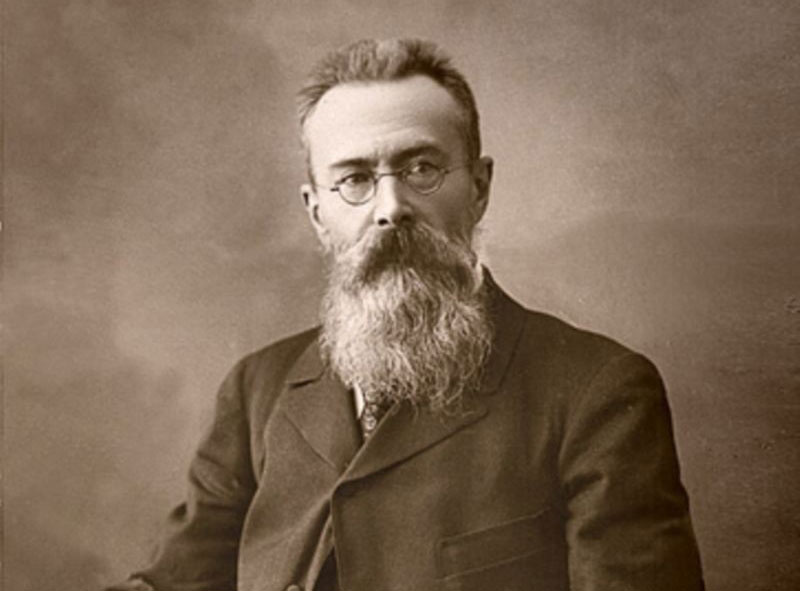
Among the vibrant and majestic works of Nikolai Rimsky-Korsakov, the Russian Easter Festival Overture, Op. 36, stands out as a dazzling celebration of Russian liturgical tradition and folk spirit. Composed in 1887–88 and dedicated to the memory of Modest Mussorgsky and Alexander Borodin, the piece not only highlights Rimsky-Korsakov’s mastery of orchestration but also serves as a musical homage to Russia’s religious heritage and his fellow composers in “The Mighty Handful.” This overture captures the mysticism and joy of Orthodox Easter festivities with brilliant color and spiritual intensity.
A Tribute to Russian Orthodoxy and Comradeship
The Russian Easter Festival Overture was composed during a period of reflection and nationalistic pride. Rimsky-Korsakov had recently revised and completed the unfinished works of his late friends Borodin and Mussorgsky, who had died within a few years of each other. The overture, therefore, was both a musical celebration and a personal memorial.
He dedicated the piece “to the bright memory of Mussorgsky and Borodin,” and it was first performed in St. Petersburg on December 15, 1888, conducted by the composer himself. It remains one of the most enduring works of Russian orchestral music, cherished for both its programmatic richness and its technical brilliance.
Inspiration and Programmatic Design
The overture was inspired by the vibrant Easter celebrations of the Russian Orthodox Church, particularly the Bright Week, the seven days following Easter Sunday. The work bears a programmatic subtitle: Overture on Liturgical Themes, and is infused with melodies drawn from the Obikhod, the traditional chant book of the Orthodox Church.
Rimsky-Korsakov, though personally agnostic, was deeply drawn to the mysticism and ritual of Orthodox services. In his autobiography, he remarked on the “poetic side of the Orthodox liturgy,” especially the dramatic contrast between the solemnity of Holy Saturday and the jubilant explosion of joy at the Easter midnight service.
He wrote:
“The transition from the gloomy and mysterious Lenten hymns to the triumphant Easter chants thrilled me with a kind of poetic delight.”
Structure and Musical Language
The Russian Easter Festival Overture is written in a single movement but contains clearly defined sections that trace a dramatic arc, progressing from darkness into light.
- Largo – The overture begins with a somber introduction in E minor, evoking the reflective atmosphere of Holy Saturday. Here, Rimsky-Korsakov uses ancient chant melodies and mysterious textures to represent the solemn rituals of the Orthodox Church.
- Allegro – The music suddenly bursts into light with a jubilant dance-like theme in C major, depicting the celebratory atmosphere of Easter morning. Bright brass fanfares, swirling strings, and festive percussion suggest the ringing of church bells and the joyful crowds.
- Development and Recapitulation – The rest of the overture is a kaleidoscope of colors, rhythms, and themes drawn from liturgical sources and folkloric elements. The orchestration is particularly notable for its vivid contrasts—reflecting Rimsky-Korsakov’s exceptional skill in creating magical sonic textures.
A notable feature is the solo violin passage, reminiscent of an Eastern priest’s chant, adding an exotic and sacred flavor to the piece. Rimsky-Korsakov incorporates real Orthodox chants, such as Let God Arise (Voskreseniye Bozhe) and The Angel Cried, blending them seamlessly with original material.
Reception and Legacy
The Russian Easter Festival Overture was met with enthusiasm at its premiere and quickly became a staple of the orchestral repertoire in Russia and abroad. Its combination of nationalistic pride, religious homage, and spectacular orchestration made it a favorite of conductors and audiences alike.
Over the years, it has remained one of Rimsky-Korsakov’s most frequently performed compositions, admired not only for its musical brilliance but also for its emotional and spiritual depth. It is often featured in Easter-themed concerts and celebrations, serving as a cultural bridge between the sacred traditions of Russia and the universal language of orchestral music.
Conclusion
Nikolai Rimsky-Korsakov’s Russian Easter Festival Overture, Op. 36, is more than just a celebration of a religious holiday—it is a rich tapestry woven from threads of Russian spirituality, folk culture, and personal memory. Through its dazzling orchestration and heartfelt program, the piece offers listeners an immersive journey into the soul of 19th-century Russia. It stands as a testament to Rimsky-Korsakov’s genius and his enduring role in shaping the voice of Russian classical music.

Comments are closed