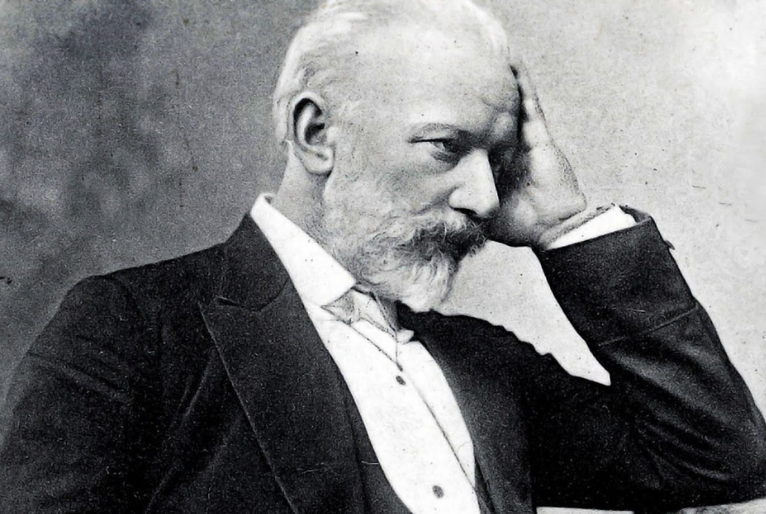
Biography of Pyotr Ilyich Tchaikovsky
Introduction
Pyotr Ilyich Tchaikovsky (1840-1893) was a renowned Russian composer of the Romantic period, whose music left an indelible mark on the history of classical music. Recognized for his captivating melodies, expressive harmonies, and colorful orchestration, Tchaikovsky is widely celebrated for works that evoke a profound emotional response in the audience. His vast oeuvre includes iconic ballets such as Swan Lake and The Nutcracker, the dramatic 1812 Overture, acclaimed concertos like the First Piano Concerto and the Violin Concerto, as well as notable symphonies and operas like Eugene Onegin. Tchaikovsky’s music transcended borders, making him the first Russian composer to achieve lasting international recognition.
Childhood and Early Years
Born on May 7, 1840 (April 25 in the old calendar) in Votkinsk, Russia, Pyotr Ilyich Tchaikovsky was the second of six children of Ilya Tchaikovsky, a metalworks manager, and Alexandra Assier, a descendant of French émigrés. From an early age, Tchaikovsky showed a remarkable interest in music. His earliest musical impressions came from an orchestrina in the family home. At age four, he made his first recorded attempt at composition, a song written with his younger sister, Alexandra. In 1845, he began taking piano lessons with a local tutor, familiarizing himself with Frédéric Chopin’s mazurkas and Friedrich Kalkbrenner’s piano pieces.
Despite his early musical talent, formal music education was not a viable option in Russia at the time. His parents, therefore, planned a career in civil service for the sensitive and high-strung boy. In 1850, Tchaikovsky entered the prestigious Imperial School of Jurisprudence in Saint Petersburg, a boarding institution for boys, where he spent nine years. He proved to be a diligent and successful student, popular among his peers. During this period, Tchaikovsky formed intense emotional ties with several of his schoolmates in this exclusively male environment.
A traumatic event marked his childhood: in 1854, his mother died of cholera. In Tchaikovsky’s last years at school, his father finally recognized his son’s musical vocation and invited the professional teacher Rudolph Kündinger to give him piano lessons. At age 17, Tchaikovsky came under the influence of the Italian singing instructor Luigi Piccioli, the first person to truly appreciate his musical talents, developing a lifelong passion for Italian music thereafter. Wolfgang Amadeus Mozart’s Don Giovanni was also a revelation that profoundly affected his musical taste.
Youth and Musical Training
In the summer of 1861, Tchaikovsky traveled outside Russia for the first time, visiting Germany, France, and England. In October of the same year, he began attending music classes offered by the newly founded Russian Musical Society. When the Saint Petersburg Conservatory opened the following autumn, Tchaikovsky was among its first students. After deciding to dedicate his life to music, he resigned from the Ministry of Justice, where he had been employed as a clerk.
Tchaikovsky spent nearly three years at the Saint Petersburg Conservatory, studying harmony and counterpoint with Nikolay Zaremba and composition and instrumentation with Anton Rubinstein. Among his earliest orchestral works was an overture titled The Storm (composed in 1864), a mature attempt at dramatic programmatic music. The first public performance of any of his works occurred in August 1865, when Johann Strauss the Younger conducted Tchaikovsky’s Characteristic Dances at a concert in Pavlovsk, near Saint Petersburg.
Adult Life and Career
After graduating in December 1865, Tchaikovsky moved to Moscow to teach music theory at the Russian Musical Society, which was soon renamed the Moscow Conservatory. He found teaching difficult, but his friendship with the director, Nikolay Rubinstein, who had offered him the position in the first place, helped make the experience more bearable. Within five years, Tchaikovsky produced his first symphony, Symphony No. 1 in G Minor (composed in 1866; Winter Daydreams), and his first opera, The Voyevoda (1868).
In 1868, Tchaikovsky met the Belgian mezzo-soprano Désirée Artôt, with whom he briefly contemplated marriage, but the engagement ended in failure. The opera The Voyevoda was well received, even by The Five, an influential group of nationalistic Russian composers who never appreciated the cosmopolitanism of Tchaikovsky’s music. In 1869, Tchaikovsky completed Romeo and Juliet, an overture in which he subtly adapted sonata form to mirror the dramatic structure of Shakespeare’s play. Nikolay Rubinstein conducted a successful performance of this work the following year, and it became the first of Tchaikovsky’s compositions to enter the standard international classical repertoire.
In March 1871, the audience at Moscow’s Hall of Nobility witnessed the successful performance of Tchaikovsky’s String Quartet No. 1, and in April 1872 he finished another opera, The Oprichnik. While spending the summer at his sister’s estate in Ukraine, he began to work on his Symphony No. 2 in C Minor, later nicknamed The Little Russian, which he completed later that year. The Oprichnik was first performed at the Maryinsky Theatre in Saint Petersburg in April 1874. Despite its initial success, the opera did not convince the critics, with whom Tchaikovsky ultimately agreed. His next opera, Vakula the Smith (1874), later revised as Cherevichki (1885; The Little Shoes), was similarly judged. In his early operas, the young composer had difficulty striking a balance between creative fervor and his ability to critically assess the work in progress. However, his instrumental works began to earn him his reputation, and at the end of 1874, Tchaikovsky wrote his Piano Concerto No. 1 in B-flat Minor, a work destined for fame despite its initial rejection by Rubinstein. The concerto premiered successfully in Boston in October 1875, with Hans von Bülow as the soloist. During the summer of 1875, Tchaikovsky composed Symphony No. 3 in D Major, which gained almost immediate acclaim in Russia.
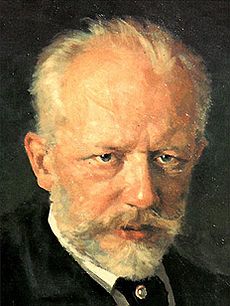
Major Compositions
Tchaikovsky’s work is vast and diverse, encompassing various musical genres. His compositions are characterized by memorable melodies, rich orchestration, and profound emotional expressiveness. Among his most celebrated works are:
•Ballets:
•Swan Lake (1875-1876): One of the most popular ballets of all time, known for its dramatic music and iconic choreography.
•The Sleeping Beauty (1889): A grand and enchanting ballet, based on Charles Perrault’s fairy tale.
•The Nutcracker (1892): A festive and magical ballet, especially popular during the Christmas season.
•Symphonies:
•_Symphony No. 1 in G Minor, Op. 13, Winter Daydreams (1866): His first symphony, which evokes the Russian landscape.
•Symphony No. 4 in F Minor, Op. 36 (1877): A powerful and dramatic work, exploring themes of fate and struggle.
•Symphony No. 5 in E Minor, Op. 64 (1888): Known for its fate theme and lyrical melody.
•_Symphony No. 6 in B Minor, Op. 74, Pathétique (1893): His last symphony, a work of profound melancholy and emotional intensity, considered one of his greatest achievements.
•Concertos:
•Piano Concerto No. 1 in B-flat Minor, Op. 23 (1874-1875): One of the most popular and challenging piano concertos in the repertoire.
•Violin Concerto in D Major, Op. 35 (1878): A virtuosic and lyrical work, fundamental in the violin repertoire.
•Operas:
•Eugene Onegin, Op. 24 (1877-1878): Based on Pushkin’s work, it is a lyrical opera that explores themes of unrequited love and regret.
•The Queen of Spades, Op. 68 (1890): A dramatic and dark opera, also based on Pushkin.
•Orchestral Works:
•1812 Overture, Op. 49 (1880): A programmatic piece celebrating the Russian victory over the Napoleonic invasion.
•Romeo and Juliet (1869): An overture-fantasy inspired by Shakespeare’s tragedy.
•Serenade for Strings in C Major, Op. 48 (1880): An elegant and melodic work for string orchestra.
Death and Legacy
Tchaikovsky’s life was marked by personal crises and periods of depression, factors that contributed to his complex personality. The early separation from his mother for boarding school and her premature death, the loss of his friend and colleague Nikolai Rubinstein, his failed marriage to Antonina Miliukova, and the end of his 13-year association with the wealthy patroness Nadezhda von Meck are some of the events that punctuated his life. His homosexuality, kept secret, is also often cited as a significant factor in his personal life, although some scholars minimize its importance. The dedication of his Sixth Symphony to his nephew Vladimir Davydov and the feelings expressed in letters to others have been cited as evidence of a romantic love between the two.
Tchaikovsky died suddenly on November 6, 1893, at the age of 53, in Saint Petersburg. The cause of his death is generally attributed to cholera, although there is ongoing debate as to whether cholera was indeed the cause and whether the death was intentional. The most accepted theory is that he contracted the disease by drinking unboiled water, but speculations about suicide persist due to his melancholic nature and the mysterious circumstances of his last days.
Tchaikovsky’s legacy is immense. His music continues to be immensely popular with audiences worldwide, being frequently performed and recorded. He is considered one of the greatest composers of the Romantic era and a central figure in Russian music. His ability to infuse his compositions with deep emotion, memorable melodies, and brilliant orchestration secured his place as a giant of classical music. His influence can be seen in countless composers who followed him, and his works continue to captivate and inspire generations of musicians and listeners.
Conclusion
Pyotr Ilyich Tchaikovsky was a composer of unquestionable genius, whose life and work were intrinsically linked to his profound sensitivity and the complexities of his existence. From his early childhood and formal training to his mature masterpieces, Tchaikovsky forged a personal and unmistakably Russian style that resonated globally. Despite personal struggles and initially mixed critical reception, his music transcended cultural barriers, making him an icon of classical music. Tchaikovsky’s impact on Western music is lasting, and his ability to touch the human soul through his compositions ensures that his legacy will endure for many generations. He not only elevated Russian music to an international level but also enriched the classical repertoire with works of unparalleled beauty and power.
Comments are closed