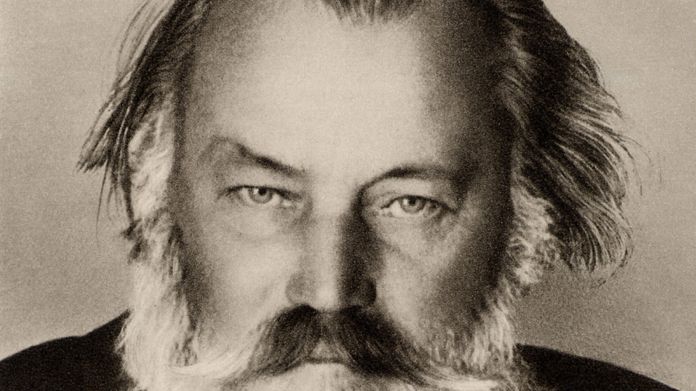
The Life and Legacy of Johannes Brahms
Introduction
Johannes Brahms (1833–1897) stands as a towering figure in the landscape of 19th-century classical music. A German composer and pianist of the Romantic period, Brahms is celebrated for his profound contributions across various genres, including symphonies, concerti, chamber music, piano works, and choral compositions. His work is often seen as a bridge between the Classical traditions of masters like Joseph Haydn, Wolfgang Amadeus Mozart, and Ludwig van Beethoven, and the burgeoning Romanticism of his own era. While many of his contemporaries embraced radical departures from established forms, Brahms championed a more conservative yet deeply innovative approach, infusing traditional structures with rich harmonic language and emotional depth. This biography will delve into the life of this enigmatic genius, exploring his formative years, his rise to prominence, his most significant musical achievements, and the enduring impact of his legacy.
Childhood
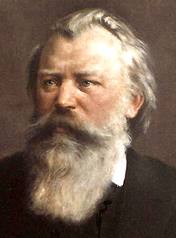
Born on May 7, 1833, in Hamburg, Germany, Johannes Brahms emerged from humble beginnings. His father, Jakob Brahms, was an impecunious horn and double bass player, who provided Johannes with his initial musical instruction. At the tender age of seven, Johannes began formal piano lessons with F.W. Cossel, who, recognizing his prodigious talent, transferred him three years later to his own esteemed teacher, Eduard Marxsen. Between the ages of 14 and 16, Brahms contributed to his family’s meager income by performing in the rough inns of Hamburg’s dock area. During this period, he also dedicated himself to composing and occasionally gave recitals, laying the groundwork for his future as a musical luminary.
Youth
The pivotal moment in Brahms’s youth arrived in 1853 when he encountered the renowned violinist Joseph Joachim. Joachim immediately recognized Brahms’s extraordinary talent and subsequently introduced him to the influential composer Robert Schumann. This introduction blossomed into an immediate and profound friendship. Schumann, deeply impressed by Brahms’s compositions, enthusiastically lauded him in the periodical Neue Zeitschrift für Musik. This article created a sensation, catapulting Brahms into the forefront of the musical world. However, this sudden fame also brought challenges, primarily due to the ongoing conflict between the ‘neo-German’ school, led by Franz Liszt and Richard Wagner, and the more conservative faction championed by Schumann. Brahms, despite being kindly received by Liszt, did not align with the self-conscious modernists, thus becoming embroiled in the musical controversies of the time. Most of the personal upheavals in his otherwise quiet life stemmed from this situation.
Brahms grew close to the Schumann household, and when Robert Schumann suffered a mental breakdown in 1854, Brahms assisted Clara Schumann in managing her family. He developed deep feelings for Clara, and although their relationship remained a profound friendship after Schumann’s death in 1856, it did not progress romantically. Brahms’s closest brush with marriage was in 1858 with Agathe von Siebold, but he abruptly withdrew from the prospect and never again seriously considered marriage. The reasons for this remain somewhat obscure, but his immense personal reserve and his inability to express emotions outside of his music likely played a significant role. He once wrote, “I couldn’t bear to have in the house a woman who has the right to be kind to me, to comfort me when things go wrong.” This sentiment, coupled with his deep affection for children and animals, offers insight into the concentrated inner reserve that characterizes much of his music, often concealing powerful emotional currents.
Between 1857 and 1860, Brahms divided his time between the court of Detmold, where he taught piano and conducted a choral society, and Göttingen. In 1859, he was appointed conductor of a women’s choir in Hamburg. These positions provided invaluable practical experience and afforded him ample time for his own creative work. During this period, Brahms’s productivity surged. In addition to his delightful Serenades for orchestra and the colorful first String Sextet in B-flat Major (1858–60), he also completed his turbulent Piano Concerto No. 1 in D Minor (1854–58).
Adult Life
By 1861, Brahms returned to Hamburg, and the following year marked his first successful visit to Vienna. After failing to secure the position of conductor for the Hamburg Philharmonic concerts, he decided to settle in Vienna in 1863, taking on the directorship of the Singakademie, a distinguished choral society. His life in Vienna was generally orderly and quiet, punctuated only by the fluctuations of his musical success, occasional disputes arising from his quick temper, and the often-fierce rivalry between his supporters and those of Wagner and Anton Bruckner. Despite some setbacks and constant criticism from the Wagnerites, Brahms’s music gained recognition, and his reputation steadily grew. By 1872, he became the principal conductor of the Society of Friends of Music (Gesellschaft der Musikfreunde), a role he held for three seasons, during which he also directed the Vienna Philharmonic Orchestra. His musical selections were not as conservative as one might expect, and despite the ongoing ‘Brahmins’ versus Wagner conflict, Brahms always spoke of his rival with respect. While sometimes portrayed as unsympathetic towards his contemporaries, Brahms showed kindness to Antonín Dvořák, encouraged the young Gustav Mahler, and expressed enthusiasm for Carl Nielsen’s First Symphony.
During his time in Vienna, Brahms’s creative output flourished, leading to some of his most significant works. The year 1868 saw the completion of his most renowned choral work, Ein deutsches Requiem (A German Requiem), a piece he had been working on since Schumann’s death. Based on biblical texts chosen by Brahms himself, this work made a powerful impression at its premiere in Bremen on Good Friday, 1868, and subsequently toured throughout Germany. The Requiem, still considered a masterpiece of 19th-century choral music, solidified Brahms’s position among the leading German composers.
Brahms also composed successful lighter works during this period. In 1869, he released two volumes of Hungarian Dances for piano duet, brilliant arrangements of Roma tunes he had collected over the years. These dances achieved phenomenal success and were performed globally. Between 1868 and 1869, he composed his Liebeslieder (Love Songs) waltzes for vocal quartet and four-hand piano accompaniment, a work characterized by humor and graceful Viennese dance tunes. Many of his greatest compositions emerged during this prolific time.
Main Compositions
By the 1870s, Brahms was increasingly focused on significant chamber works and orchestral compositions. In 1873, he presented the masterful orchestral version of his Variations on a Theme by Haydn. This successful experiment, which even the self-critical Brahms deemed a triumph, prepared him to complete his monumental Symphony No. 1 in C Minor. This magnificent work, first heard in 1876, marked Brahms’s full command of the symphonic idiom. Following this, in 1877, he produced his Symphony No. 2 in D Major, a serene and idyllic work contrasting with the heroic pathos of his first symphony. Six years later, his Symphony No. 3 in F Major (1883) emerged, a comparatively calm composition in its first three movements, culminating in a powerful and elemental finale. His final symphony, No. 4 in E Minor (1884–85), was inspired by ancient Greek tragedies and features a highly intricate set of 30 variations on a simple theme from J.S. Bach’s Cantata No. 150, showcasing his technical skill, clarity of thought, and intense emotional depth.
Brahms’s renown expanded across Germany, Austria, Switzerland, and the Netherlands, where his art was deeply appreciated. His concert tours to these countries, as well as to Hungary and Poland, brought him widespread acclaim. In recognition of his contributions, the University of Breslau (now the University of Wrocław, Poland) conferred an honorary degree upon him in 1879. Brahms expressed his gratitude by composing the Academic Festival Overture (1881), based on various German student songs. Other significant orchestral works from this period include the Violin Concerto in D Major (1878) and the Piano Concerto No. 2 in B-flat Major (1881).
Despite the recognition, Brahms faced criticism from fervent admirers of avant-garde composers like Liszt and Wagner, who considered his contributions old-fashioned. However, his contemporaries recognized his outstanding significance, often referring to him as one of the “three great Bs” alongside Bach and Beethoven. Brahms remained in Vienna for the rest of his life, dedicating himself almost exclusively to composition after resigning as director of the Society of Friends of Music in 1875. He conducted and performed only his own works on concert tours and maintained a lifelong bachelorhood, spending his summers traveling in Italy, Switzerland, and Austria. During these years, he composed the boldly conceived Double Concerto in A Minor (1887) for violin and cello, the powerful Piano Trio No. 3 in C Minor (1886), the Violin Sonata in D Minor (1886–88), the radiantly joyous first String Quintet in F Major (1882), and the energetic second String Quintet in G Major (1890).
Death
In 1891, Brahms found new inspiration in the clarinet, leading to a series of significant chamber works after his acquaintance with the outstanding clarinetist Richard Mühlfeld. With Mühlfeld in mind, Brahms composed his Trio for Clarinet, Cello, and Piano (1891), the grand Quintet for Clarinet and Strings (1891), and two Sonatas for Clarinet and Piano (1894). These compositions exemplify perfect structure and a beautiful adaptation to the capabilities of the wind instrument.
In 1896, Brahms completed his Vier ernste Gesänge (Four Serious Songs), a profound work for bass voice and piano, set to texts from both the Hebrew Bible and the New Testament. This pessimistic composition explores the vanity of earthly existence and embraces death as a release from pain and weariness. The genesis of this work was deeply influenced by Brahms’s contemplation of Clara Schumann’s deteriorating physical condition. Clara died on May 20, 1896, and shortly thereafter, Brahms himself sought medical attention, which revealed a serious liver disease. He made his final public appearance at a concert in March 1897 and passed away from cancer in Vienna in April 1897.
Conclusion
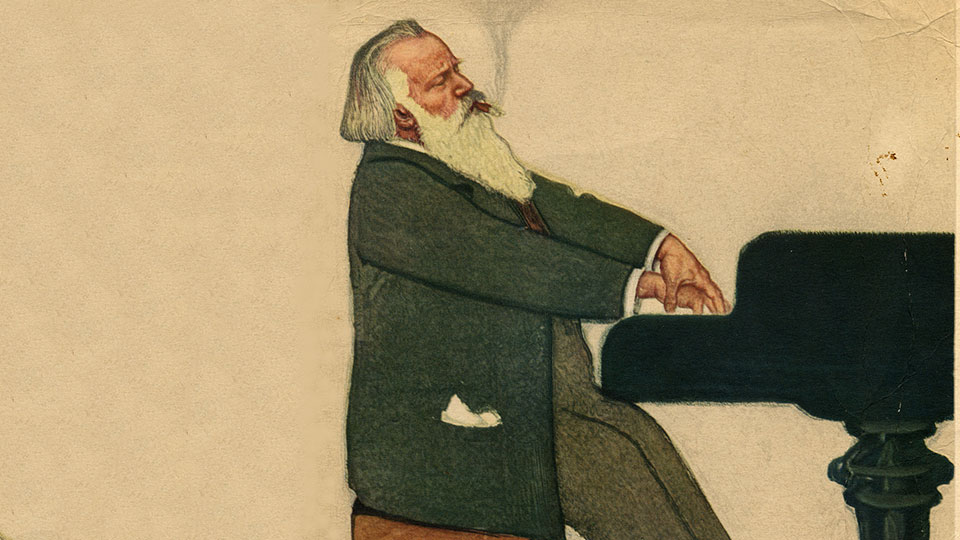
Johannes Brahms’s music served as both a complement and a counterpoint to the rapid growth of Romantic individualism in the latter half of the 19th century. As a traditionalist, he deeply revered the subtlety and power of movement found in the works of Haydn, Mozart, and Beethoven, while also incorporating influences from Franz Schubert. While Romantic composers often prioritized emotional expression, sometimes at the expense of structural coherence, Brahms meticulously preserved the skill of taut, brilliant, and dramatic symphonic development that had distinguished earlier masters. He consciously sought to revitalize a 19th-century rhythmic language that was at risk of stagnation, drawing inspiration from the polyphonic school of the 16th century and infusing his compositions with constructive power rather than merely reproducing old styles.
Brahms’s orchestral works are notable for their distinctive deployment of tone color, particularly in his use of woodwind and brass instruments and his intricate string writing. For Brahms, color was not an end in itself but a means to enhance the architecture of his compositions, with orchestration contributing significantly to the tonal palette and thematic development. His concerti, like those of Mozart and Beethoven, showcase a profound understanding of the relationship between orchestra and soloist, demonstrating a mastery that allowed him to deepen the complex interplay of musical elements. His ability to create long, introductory orchestral passages that sharpen and deepen the relationship with the solo instrument is a testament to his innovative approach.
At the other end of the spectrum, Brahms was a masterful miniaturist. His fine and varied songs, as well as his terse, intensely personal late piano works, demonstrate a range from complex and highly organized structures to simple, strophic forms. His melodic invention was consistently original and direct, and his accompaniments were deeply evocative. While his late piano music often conveys a profound sense of isolation and can appear outwardly monotonous, each piece possesses a quiet intensity and extraordinary internal economy. Finally, Brahms’s choral music, exemplified by A German Requiem, stands as a testament to his ability to combine the solidity of Handel with the contrapuntal skill of Bach, achieving total independence and integrating solo and tutti elements with remarkable subtlety. The spaciousness and grandeur of this work, imbued with Brahms’s underlying melancholy, reflect a large, nonreligious, and humane vision, distinguishing him from the self-regarding Romantic and highlighting his essential stoicism. Johannes Brahms remains a monumental figure whose music continues to captivate and inspire, a testament to his unique blend of tradition and innovation.
Comments are closed