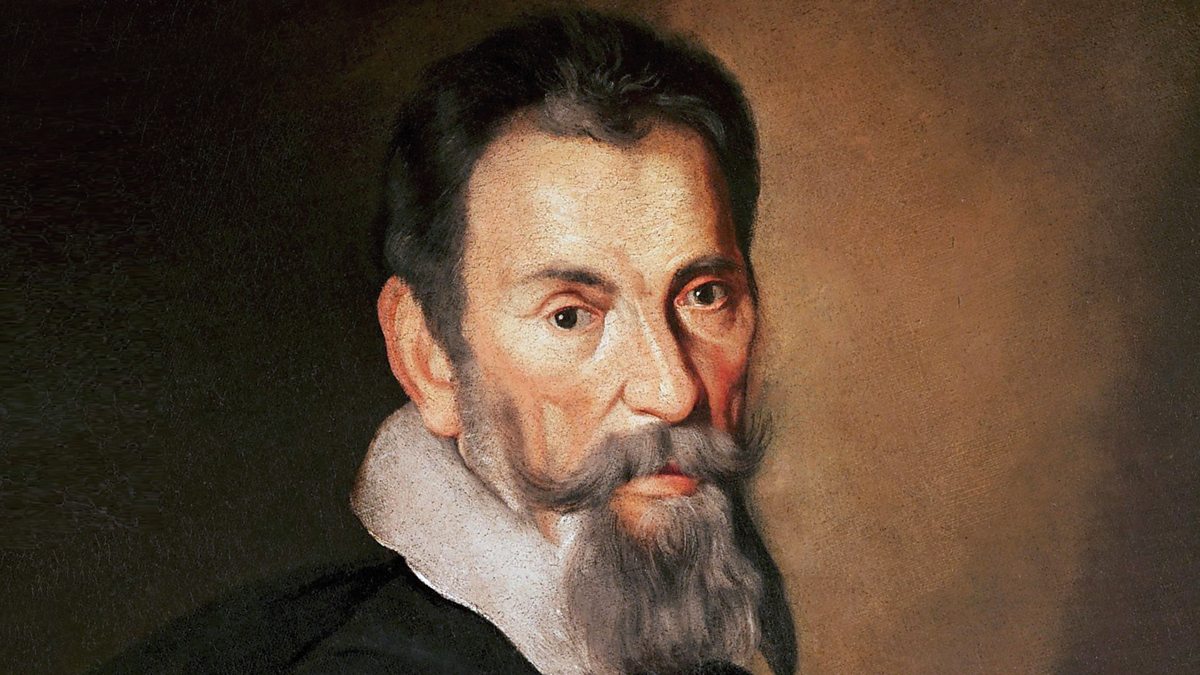
The History of Il Quinto Libro de Madrigali by Claudio Monteverdi
Claudio Monteverdi (1567–1643) remains one of the most influential composers of the late Renaissance and early Baroque periods. Among his many landmark works, Il Quinto Libro de Madrigali (The Fifth Book of Madrigals), published in 1605, marks a turning point in the history of Western music. This collection not only showcases Monteverdi’s growing mastery of expressive vocal writing but also signals the birth of a new musical language—one that paved the way for the Baroque era.
The Context: Monteverdi in Mantua
At the time of composing the Fifth Book of Madrigals, Monteverdi was employed at the court of Mantua, serving the Gonzaga family. His role there demanded both secular and sacred music, but it was in his madrigal books where Monteverdi’s innovative style began to fully emerge.
Monteverdi had already published four books of madrigals before 1605, establishing himself as a leading figure in the polyphonic tradition of the late Renaissance. However, the Fifth Book represented something new. It reflected a bolder approach to text setting, harmony, and emotional expression.
The Break from Tradition: The Prima and Seconda Prattica
One of the most significant aspects of Il Quinto Libro de Madrigali is Monteverdi’s embrace of what he called the “seconda prattica” (second practice). This was a clear departure from the more conservative “prima prattica”, typified by strict counterpoint and adherence to established polyphonic rules, as seen in the works of earlier composers like Giovanni Pierluigi da Palestrina.
In the Seconda Prattica, Monteverdi allowed the meaning and emotional content of the text to dictate the harmonic and rhythmic structure of the music. This often resulted in dissonances and unconventional resolutions, deliberately used for expressive effect. Such techniques were considered daring and controversial at the time.
The Controversy with Artusi
Monteverdi’s innovative harmonic language did not go unchallenged. The music theorist Giovanni Maria Artusi publicly criticized Monteverdi for what he saw as unnecessary and crude violations of traditional compositional rules. Artusi published an essay attacking Monteverdi’s use of dissonance in some earlier madrigals.
Monteverdi’s response to Artusi’s criticism was embedded in the preface to the Fifth Book, where he outlined his defense of the Seconda Prattica. He argued that the expressive power of the text justified the bold harmonic choices and that music should serve the meaning of the words. This debate became one of the most famous musicological controversies of the early 17th century and symbolized the broader shift from Renaissance to Baroque aesthetics.
Innovations in the Fifth Book
The Fifth Book contains 19 madrigals for five voices, and it highlights Monteverdi’s skill in dramatic text painting, emotional contrast, and harmonic experimentation. Key features of the collection include:
- Expressive dissonances: Monteverdi uses suspensions, unresolved chords, and chromaticism to heighten emotional tension.
- Textual focus: Every musical phrase is closely tied to the poetry, with dramatic contrasts between soft and loud, fast and slow, consonant and dissonant.
- New role for basso continuo: The Fifth Book marks one of the first instances where Monteverdi began to suggest the use of instruments to accompany vocal lines. Though not all the madrigals require basso continuo, Monteverdi leaves the option open in certain pieces. This is a significant step toward the fully accompanied style that would dominate Baroque vocal music.
Representative Madrigals from the Fifth Book
Some of the most famous and discussed pieces from Il Quinto Libro include:
- “Cruda Amarilli”: This madrigal was at the center of Artusi’s criticism for its unorthodox treatment of dissonance. However, today it is celebrated as a milestone in expressive vocal writing.
- “O Mirtillo”: Another highlight of the collection, demonstrating Monteverdi’s gift for dramatic dialogue and emotional nuance.
The Legacy of the Fifth Book
Monteverdi’s Quinto Libro de Madrigali stands as a pivotal work in music history. It bridged the gap between the Renaissance and Baroque styles and opened the door to new forms of dramatic expression in music, including opera.
In many ways, the Fifth Book foreshadowed Monteverdi’s later masterpieces, such as his opera L’Orfeo (1607) and his subsequent madrigal books, which would incorporate even more dramatic, soloistic, and instrumentally accompanied styles.
Today, Il Quinto Libro de Madrigali continues to be performed, studied, and admired by musicians and musicologists alike for its daring innovation and emotional power.
Conclusion
Il Quinto Libro de Madrigali is not just a collection of beautiful Renaissance songs. It is a bold statement by a composer willing to challenge tradition in pursuit of deeper human expression. Monteverdi’s work in this collection helped reshape the future of Western music and left an indelible mark on the evolution of vocal composition.
Comments are closed