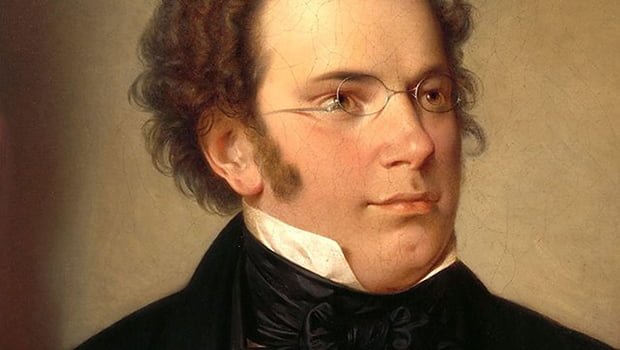
Franz Schubert: A Life in Music and Melody
Franz Schubert (1797–1828) stands as one of the most beloved and influential composers of the early Romantic era. Though his life was tragically short, his musical legacy is immense, with over 1,500 compositions that include symphonies, chamber works, piano pieces, and more than 600 songs (Lieder). His gift for melody and emotional expression bridged the Classical traditions of Mozart and Beethoven with the Romantic sensibilities of later composers.
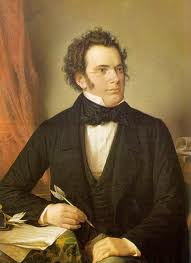
Early Life and Education
Franz Peter Schubert was born on January 31, 1797, in the Himmelpfortgrund suburb of Vienna, Austria. He was the twelfth of fourteen children born to Franz Theodor Schubert, a schoolmaster, and Elisabeth Vietz. Although only five of the children survived infancy, the household was musically inclined. Schubert’s father gave him his first lessons on the violin, while his older brother Ignaz taught him piano.
Recognizing his extraordinary talent early on, Schubert’s family supported his musical education. At the age of eleven, he won a scholarship to the Imperial and Royal City Seminary (Stadtkonvikt), a boarding school for the sons of Vienna’s elite, where he sang in the choir and received instruction in theory and composition from Antonio Salieri, the court composer who had also taught Beethoven and Liszt.
A Prodigious Composer Emerges
Despite his youth, Schubert was already composing prolifically in his teens. His first symphony was completed in 1813, and by the age of 17, he had composed hundreds of works, including string quartets, piano sonatas, and songs. One of his earliest masterpieces, “Gretchen am Spinnrade” (1814), set to a text by Goethe, revealed Schubert’s remarkable ability to fuse poetry with music. This Lied (art song) marked the beginning of a lifelong passion for vocal music.
Though he trained briefly as a teacher to follow in his father’s footsteps, Schubert quickly found that his heart belonged entirely to composition. He gave up his teaching job and began to live a precarious but artistically rich life as a freelance composer in Vienna.
Life in Vienna and the Schubertiades
Schubert’s social circle consisted of artists, poets, musicians, and intellectuals who recognized his genius even when the wider public had not. Among his closest friends were the poets Franz von Schober and Johann Mayrhofer, pianist Josef von Gahy, and the singer Johann Michael Vogl, whose interpretations of Schubert’s Lieder helped spread his fame.
These friends frequently gathered for private concerts known as “Schubertiades” — intimate evenings of music, poetry, and companionship centered around Schubert’s latest creations. Though he never held a prominent court or church position, these gatherings allowed Schubert’s works to reach appreciative audiences and nurtured a sense of artistic community.
Musical Innovations and Masterpieces
Schubert’s compositions reflect a profound lyricism and emotional depth. He expanded the expressive boundaries of the Lied with works like “Der Erlkönig”, “Winterreise”, and “Die schöne Müllerin”, setting the standard for generations of song composers.
In addition to vocal music, Schubert made significant contributions to symphonic and chamber music. His “Unfinished Symphony” (No. 8 in B minor) and Symphony No. 9 in C major (often called “The Great”) are cornerstones of the orchestral repertoire. His late chamber works, such as the “String Quintet in C major”, the “Trout Quintet”, and the “Death and the Maiden” String Quartet, display a mature mastery of form and emotion.
His piano music, particularly the impromptus, moments musicaux, and the late sonatas, combines intimate expressiveness with bold harmonic innovations, paving the way for Romantic composers like Schumann, Brahms, and Liszt.
Struggles and Untimely Death
Despite his talent and the admiration of his peers, Schubert struggled financially throughout his life. He never achieved the widespread recognition that his contemporaries like Beethoven enjoyed during their lifetimes. He also battled poor health, possibly worsened by syphilis, which he contracted in his twenties.
In the final years of his life, Schubert worked with renewed intensity, composing some of his most profound works. Yet his health continued to deteriorate. He died on November 19, 1828, at the age of just 31, only a year after Beethoven, whose funeral he had attended as a pallbearer.
Legacy and Influence
Though Franz Schubert died in relative obscurity, his posthumous reputation soared. The rediscovery and publication of his works in the decades following his death revealed the depth of his genius. Today, Schubert is celebrated as one of the greatest melodists in Western music and a key figure in the transition from Classical to Romantic styles.
His music resonates with listeners for its honesty, intimacy, and lyric beauty — qualities that transcend time. From concert halls to recordings and academic studies, Schubert’s influence remains alive, his songs still sung and his compositions still cherished by musicians and audiences around the world.
Comments are closed