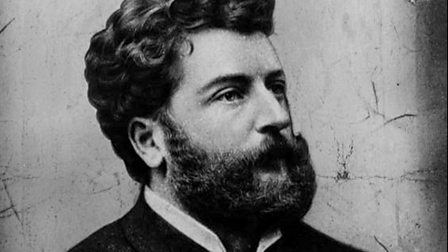
The Life and Legacy of Georges Bizet
Early Life and Education
Georges Bizet was born on October 25, 1838, in Paris, France, into a musical household. His father was a singing teacher and amateur composer, and his mother was a gifted pianist. From an early age, Bizet displayed extraordinary musical ability, mastering the piano and reading music before he could properly write.
At just nine years old, Bizet was accepted into the Paris Conservatoire, the city’s prestigious music academy. His teachers included great figures like Jacques Halévy and Charles Gounod, who were pivotal in shaping his musical direction. During his studies, Bizet received numerous awards, including the coveted Prix de Rome in 1857, which granted him three years of funded study in Italy.
This period laid the foundation for his sophisticated style—a fusion of French elegance, Italian lyricism, and, later, Spanish influence.
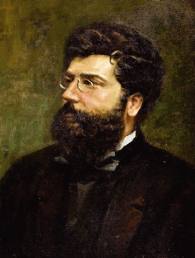
Career Beginnings and Early Works
After returning from Rome in 1860, Bizet embarked on his professional career, though recognition was slow to come. He composed several operas, including Les pêcheurs de perles (The Pearl Fishers, 1863), set in exotic Ceylon and filled with lush melodies and romantic intrigue.
Another early work, La jolie fille de Perth (The Fair Maid of Perth, 1867), showed increasing dramatic confidence. Yet, despite their promise, these operas received mixed reviews, and Bizet struggled to find consistent success.
To support himself, he took on teaching and piano transcription work, all while continuing to compose orchestral, choral, and theatrical pieces. His L’Arlésienne Suite (1872), written as incidental music for a play by Alphonse Daudet, became one of his most enduring instrumental successes.
Carmen – Triumph and Tragedy
In 1875, Bizet premiered his greatest work, Carmen, an opera in four acts based on a novella by Prosper Mérimée. The opera broke conventions of its time by portraying gritty realism, passionate romance, and morally ambiguous characters, especially its fiery heroine, Carmen.
The music was revolutionary: Spanish rhythms, haunting arias like the Habanera and Toreador Song, and a vivid orchestral palette. But initial reactions were controversial—critics deemed the story immoral and too raw for the stage.
Bizet was devastated by the lukewarm reception. Tragically, just three months after the premiere, on June 3, 1875, Georges Bizet died of a heart attack at only 36 years old. He never lived to see Carmen’s eventual global triumph.
Musical Style and Innovations
Bizet’s music is characterized by melodic richness, innovative harmonies, and dramatic flair. His operas often fused classical structure with emotional intensity and exotic color.
He was one of the earliest composers to use verismo—a form of realism in opera that later influenced composers like Puccini. Bizet’s ability to portray human emotions with both subtlety and power marked a shift in the operatic tradition.
Although known primarily for Carmen, Bizet’s orchestral works and piano pieces also reveal his genius. His Jeux d’enfants (Children’s Games) suite and the Roma Symphony showcase his imagination and technical skill.
Legacy and Influence
After Bizet’s death, Carmen quickly rose in popularity. Within a decade, it had become a staple of the global operatic repertoire. Today, it is one of the most performed operas in the world.
Bizet’s innovative use of orchestration and realism inspired a generation of composers, including Claude Debussy, Maurice Ravel, and Giacomo Puccini. His music has also entered popular culture through countless film scores, commercials, and reinterpretations.
Though his life was short, Bizet’s legacy is immense. He reshaped the world of opera and left behind music that still electrifies audiences today.
Curiosities About Georges Bizet
- Child Prodigy: Bizet learned to read and write music before he could read words. He entered the Paris Conservatoire at age 9.
- Unpublished Genius: Many of Bizet’s compositions weren’t performed until after his death.
- Name Change: His birth name was Alexandre César Léopold Bizet, but he chose to go by Georges.
- Famous Fan: Richard Wagner, despite being critical of many French composers, reportedly admired Carmen.
- Posthumous Fame: Bizet died believing Carmen was a failure—today it’s one of the most famous operas ever written.
Bizet’s 10 Greatest Compositions
- Carmen (1875) – A revolutionary opera blending drama, passion, and unforgettable melodies.
- L’Arlésienne Suite No. 1 & 2 (1872–73) – Orchestral suites rich in Provençal character.
- Les pêcheurs de perles (1863) – Romantic opera with the famous duet Au fond du temple saint.
- Jeux d’enfants (1871) – A playful piano suite showcasing Bizet’s lighter side.
- Symphony in C (1855) – Composed at 17, it’s a youthful yet masterful orchestral work.
- Roma Symphony (1861–68) – A colorful musical portrait of the Eternal City.
- La jolie fille de Perth (1867) – Romantic drama with rich orchestration.
- Chants du Rhin (1865) – A collection of charming vocal pieces.
- Te Deum (1858) – A grand sacred choral work written during his stay in Rome.
- Don Procopio (1858–59) – A comic opera influenced by Donizetti.
Final Thoughts
Content:
Georges Bizet’s music continues to enchant, provoke, and inspire. His fearless commitment to emotional truth and his boundary-pushing approach to composition ensure that he remains a pivotal figure in the history of music.
Though his life was short, the brilliance of his work endures. Carmen and his other masterpieces remain timeless, performed in opera houses and concert halls across the globe.
This site celebrates not just a composer, but an artist who spoke through music in ways that still move the human soul.
Comments are closed