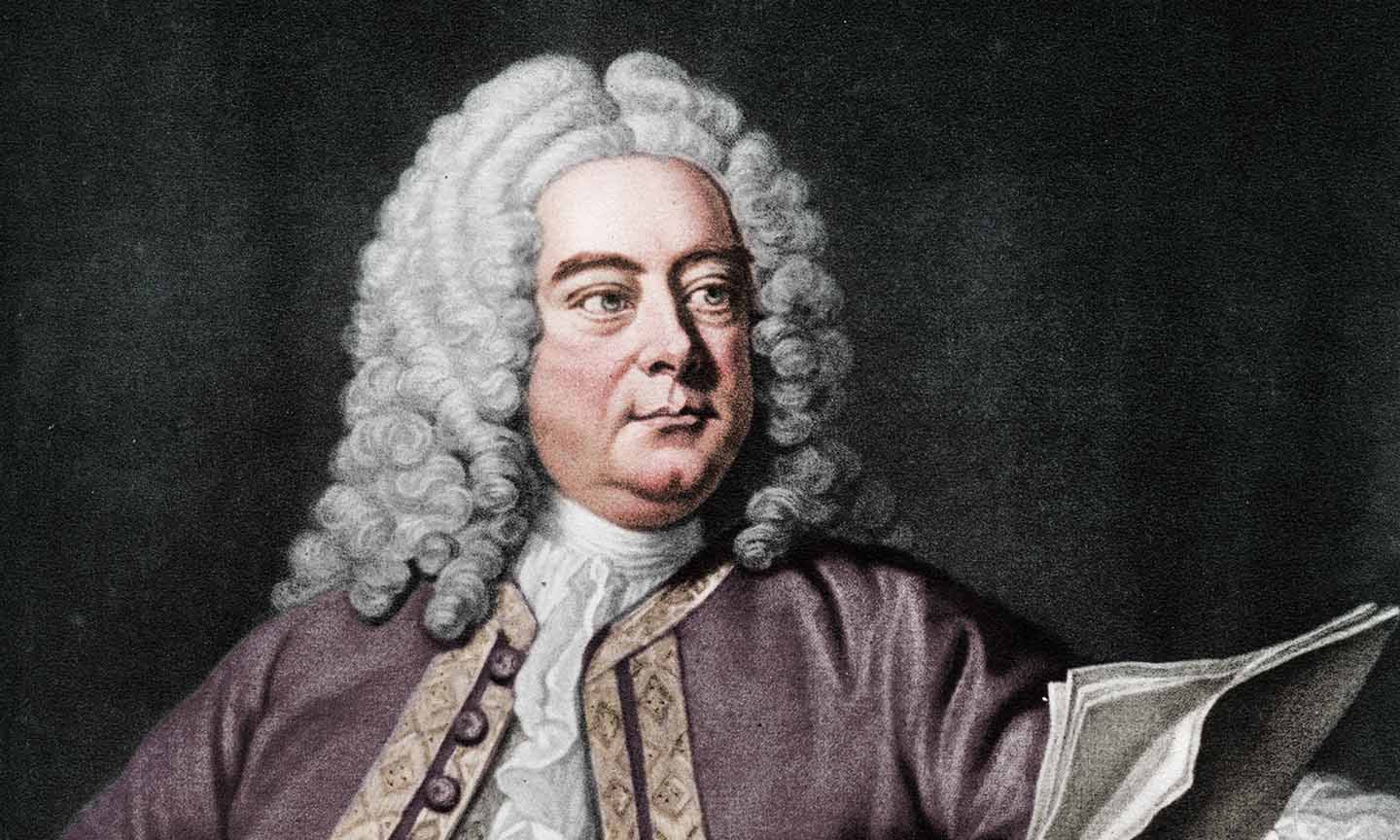
George Frideric Handel – A Complete Biography
Introduction
George Frideric Handel (baptized Georg Friedrich Händel; February 23, 1685 – April 14, 1759) was a German-born composer of the late Baroque era who later became a naturalized British citizen. Renowned for his masterful contributions to opera, oratorio, and instrumental music, he left an enduring mark on Western classical music. Among his most celebrated compositions are Messiah, Water Music, Music for the Royal Fireworks, and Zadok the Priest. His music continues to captivate audiences worldwide and is central to the Baroque repertoire.

Childhood
Handel was born in Halle, in the Duchy of Magdeburg, to a prosperous barber-surgeon and his second wife. His father had little interest in music and discouraged young George from pursuing it. However, his mother recognized his talent and allowed him to explore his passion in secret. He is said to have practiced on a small clavichord hidden in the attic. His musical abilities became evident when he impressed the Duke of Saxe-Weissenfels by playing the organ at age nine. This performance led to formal music training under the guidance of composer and organist Friedrich Wilhelm Zachow, who taught him the fundamentals of composition, counterpoint, and several instruments.
Youth
During his teenage years, Handel absorbed the rich traditions of German music. He became proficient in organ, harpsichord, violin, and oboe. His talent as a composer emerged early, as he began writing cantatas, sonatas, and church music under Zachow’s mentorship. In 1702, he briefly enrolled in law at the University of Halle to satisfy his father’s wishes, but his heart remained with music. He soon secured a position as organist at the Halle Cathedral, marking his formal entry into the professional music world. Despite his youth, his skills attracted attention, and he soon moved on to more prominent opportunities.
Adulthood
In 1703, Handel moved to Hamburg, then a major center of opera in Germany. He joined the opera house orchestra as a violinist and harpsichordist. There, he composed his first operas, including Almira and Nero. His ambition soon led him to Italy, where he spent several years absorbing the Italian style of opera and sacred music. He composed a string of successful works during his travels, including Rodrigo and Agrippina, the latter earning widespread acclaim.
In 1710, he became Kapellmeister to the Elector of Hanover but soon relocated to London, where he would spend most of his career. His opera Rinaldo premiered in 1711 and was a sensation. Handel quickly established himself as a leading composer in London, enjoying royal patronage and producing a series of successful operas and oratorios. He was instrumental in founding the Royal Academy of Music in 1719, an opera company that presented many of his works. During this period, he composed operas such as Giulio Cesare, Rodelinda, and Alcina, showcasing his dramatic flair and melodic genius.
Major Compositions
Handel’s vast catalog includes over 40 operas, numerous oratorios, orchestral suites, concerti grossi, and church music. His most famous oratorio, Messiah, composed in 1741, remains one of the most performed choral works in the world. Other major oratorios include Israel in Egypt, Samson, Saul, and Judas Maccabaeus. His English oratorios introduced a new genre that combined biblical stories with dramatic musical expression.
Among his instrumental works, Water Music and Music for the Royal Fireworks stand out as masterpieces of orchestration and public spectacle. His Chandos Anthems, organ concertos, and coronation anthems, especially Zadok the Priest, reflect his deep involvement in English ceremonial and religious life. Handel’s music blends German counterpoint, Italian melody, French dance rhythms, and English choral traditions into a distinctive and powerful style.
Death
Despite facing health challenges later in life, including a stroke and progressive blindness, Handel continued to compose and perform. He dictated music to assistants and oversaw performances of his works. His popularity remained high, and he was revered as a national figure in Britain. On April 14, 1759, Handel died at the age of 74. He was buried with full honors in Westminster Abbey, where a monument stands in his memory. His funeral was attended by thousands, a testament to the profound impact he had on music and culture.
Conclusion
George Frideric Handel’s life was marked by extraordinary musical achievements and international acclaim. From his humble beginnings in Halle to his triumphs on the stages of London, he rose to become one of the most influential composers of the Baroque period. His operas, oratorios, and orchestral works shaped the music of his time and continue to inspire generations of musicians and audiences. Handel’s legacy endures not only in the concert hall but also in the cultural fabric of the Western world.
Comments are closed