
Reinhold Glière – A Complete Biography
Introduction
Reinhold Moritzevich Glière (1875–1956) stands as a pivotal figure in the landscape of Russian and Soviet classical music. Born Reinhold Ernest Glier on January 11, 1875 (December 30, 1874, Old Style) in Kiev, then part of the Russian Empire and now the capital of Ukraine, Glière’s life spanned a period of immense political and cultural transformation. He passed away on June 23, 1956, in Moscow, U.S.S.R. Of German and Polish descent, Glière became renowned for his compositions that skillfully integrated elements of folk music from various Eastern Soviet republics, a characteristic that would define much of his later work and contribute to his significant standing within the Soviet musical establishment.
This biography aims to provide a comprehensive overview of Glière’s life, tracing his journey from his early musical inclinations and rigorous academic training to his influential career as a composer, conductor, and educator. We will explore his formative years, his rise to prominence, his major contributions to opera, ballet, and symphonic music, and his enduring legacy in the annals of classical music. By examining the various facets of his life and artistic output, this document seeks to illuminate the profound impact Reinhold Glière had on the musical traditions of his time and beyond.
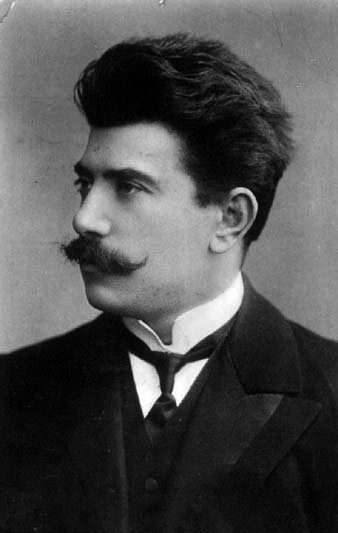
Childhood
Reinhold Glière’s early life was deeply rooted in a musical environment, largely shaped by his family. He was the second son of Ernst Moritz Glier (1834–1896), a skilled wind instrument maker who had emigrated from Saxony, specifically Klingenthal in the Vogtland region, to the Russian Empire. His mother, Józefa (Josephine) Korczak (1849–1935), was the daughter of his father’s master from Warsaw, Poland . This mixed German and Polish heritage would later be a point of discussion, especially after Glière himself altered the spelling and pronunciation of his surname around 1900 to “Glière,” leading to speculation about French or Belgian ancestry .
From a very young age, Glière displayed prodigious musical talent. His father’s house in Kiev was a frequent gathering place for musicians, creating an atmosphere rich with melodies and harmonies. It was in this vibrant setting that the young Reinhold honed his skills, becoming an accomplished violinist even as a child. The informal concerts held at home provided him with a small but critical audience for his earliest attempts at composition, fostering his creative development . By the age of sixteen, his musical aptitude was undeniable, and it became clear that a career in music was his destined path. In 1891, he formally began his musical education, enrolling in the Kiev School of Music, where he would spend three formative years before advancing to more rigorous studies .
Youth
Glière’s formal musical education continued at the prestigious Moscow Conservatory, which he entered in 1894. Here, he was fortunate to study under some of the most influential figures in Russian music. His violin instruction was guided by Jan Hřímalý, to whom Glière later dedicated his Octet for Strings, Op. 5. He delved into the intricacies of harmony with Anton Arensky and Georgi Conus, and mastered counterpoint under the tutelage of Sergei Taneyev, a renowned theorist and composer. His composition studies were overseen by Mikhail Ippolitov-Ivanov, a pupil of Rimsky-Korsakov, who instilled in Glière a strong connection to the national Russian tradition .
He graduated from the Conservatory in 1900, a significant milestone marked by the completion of his one-act opera, Earth and Heaven, based on Lord Byron’s work, for which he was awarded a gold medal in composition . Following his graduation, Glière accepted a teaching position at the Gnesin School of Music in Moscow in 1901. It was during this period that he began to cultivate the talents of future musical giants. In 1902, Taneyev introduced him to two private pupils who would later achieve international acclaim: Nikolai Myaskovsky and an eleven-year-old Sergei Prokofiev. Glière’s early mentorship of Prokofiev, particularly at Prokofiev’s parental estate Sontsovka, highlights his early influence on the next generation of Russian composers .
Seeking to broaden his musical horizons, Glière traveled to Berlin from 1905 to 1908 to study conducting with Oskar Fried. This experience proved invaluable, as it further developed his skills as a conductor. Upon his return to Moscow, he resumed his teaching duties at the Gnesin School. The years that followed saw the emergence of significant early compositions, including the symphonic poem Sireny (The Sirens), Op. 33 (1908), and the monumental program symphony Ilya Muromets, Op. 42 (1911). The latter, depicting the adventures of the Russian hero Ilya Muromets, earned him widespread international recognition and became a favorite of conductors like Leopold Stokowski. His early works, particularly his chamber music such as the Sextet, Op. 1, and his First Symphony, clearly demonstrated his deep ties to the rich traditions of Russian musical culture, characterized by their colorful, emotional, and profound qualities .
Adulthood
Glière’s career continued to flourish as he entered adulthood, marked by significant academic appointments and a deep engagement with the musical traditions of the Soviet Union. In 1913, he was appointed to the Kiev school of music, which soon after gained conservatory status, becoming the Kiev Conservatory. He served as its director from 1914 to 1920, during which time he mentored a new generation of Ukrainian composers, including Levko Revutsky, Boris Lyatoshinsky, and Vladimir Dukelsky (who later gained fame in the West as Vernon Duke) .
In 1920, Glière returned to Moscow, joining the faculty of the Moscow Conservatory, where he taught intermittently until 1941. His students during this period included many who would become prominent figures in Soviet music, such as Boris Alexandrov, Aram Khachaturian, Alexander Davidenko, Lev Knipper, and Alexander Mosolov . Beyond his academic roles, Glière became actively involved in the post-revolutionary cultural landscape. He held positions within the Proletkul’t organization and collaborated with the People’s Commissariat for Education, demonstrating his commitment to the new Soviet artistic ideals .
A defining aspect of Glière’s adulthood was his extensive research into folk music, a pursuit encouraged by the Soviet government’s nationalist policies. In 1923, he was invited by the Azerbaijan People’s Commissariat of Education to Baku to compose a national opera that would serve as a prototype for Azerbaijani music. His ethnographic research culminated in the opera Shakh-Senem (first performed in 1934), a work now considered foundational to the Soviet-Azerbaijan national opera tradition. This opera masterfully blended the musical heritage of Russian classics with local folk song material and oriental symphonic elements. He undertook similar research in Uzbekistan in the late 1930s, which led to the musical drama Gyulsara (1936) and the opera Leyli va Medzhnun, both composed in collaboration with Uzbek composer Talib Sadykov .
Glière’s most internationally renowned work, the ballet Krasny mak (The Red Poppy), premiered in 1927. Inspired by the ballerina Yekaterina Vasilyevna Geltzer, this ballet was later revised and renamed Krasny tsvetok (The Red Flower) in 1955 to avoid associations with opium. The Red Poppy was hailed as the first Soviet ballet on a revolutionary theme and remains his most famous work both in Russia and abroad. A particularly popular excerpt, his arrangement of the Russian folk chastushka song Yablochko (Little Apple), is widely known as the Russian Sailor’s Dance and is frequently performed at symphony concerts worldwide . Other notable ballets from this period include Chrizis (revised in the late 1920s) and Comedians (1931), later retitled The Daughter from Castile .
Despite the political shifts, Glière remained a respected figure. From 1938 to 1948, he served as Chairman of the Organization Committee of the Soviet Composers Association . His contributions were widely recognized with numerous honors and awards. He received the prestigious Glinka Prize three times before the revolution. During the Soviet era, he was appointed Artist of the People by Azerbaijan (1934), the Russian Soviet Republic (1936), Uzbekistan (1937), and the USSR (1938). In 1941, he was awarded the title “Doctor of Art Sciences.” He also received first-degree Stalin Prizes in 1946 for his Concerto for Voice and Orchestra, in 1948 for his Fourth String Quartet, and in 1950 for The Bronze Horseman. His ability to adapt and thrive within the Soviet system, while maintaining his artistic integrity, solidified his position as a leading composer of his era.
Major Compositions
Reinhold Glière’s extensive compositional output spans a wide array of genres, reflecting his versatility and mastery of various musical forms. His works often combined the rich traditions of Russian classical music with elements of folk music, particularly from the Eastern Soviet republics, a hallmark of his unique style.
Operas: Glière contributed significantly to the operatic stage. His early one-act opera, Earth and Heaven (based on Lord Byron), marked his graduation from the Moscow Conservatory . Later, his deep engagement with folk traditions led to works like Shakh-Senem (first performed 1934), a pioneering Azerbaijani national opera, and the Uzbek-influenced Gyulsara (1936) and Leyli va Medzhnun . He also composed Rachel, an opera based on Guy de Maupassant’s story Mademoiselle Fifi .
Ballets: Ballet music formed a crucial part of Glière’s oeuvre, with The Red Poppy (1927) standing out as his most celebrated work. This ballet, later revised as The Red Flower (1955), gained immense popularity, especially for its iconic Russian Sailor’s Dance . Other notable ballets include Chrizis (1912, revised in the late 1920s), Comedians (1931, later The Daughter from Castile), and The Bronze Horseman (1949).
Symphonies: Glière composed three symphonies. While his Symphony No. 1 in E-flat major (1900) and Symphony No. 2 in C minor (1907) are significant, it is his Symphony No. 3 in B minor, Ilya Muromets (1911), that achieved worldwide renown. This programmatic symphony, depicting the adventures of the legendary Russian hero, is notable for its grand scale, rich orchestration, and blend of Russian national tradition with impressionistic elements .
Concerti: His concerti showcase his ability to write for various solo instruments with orchestral accompaniment. Key works include the Concerto for Voice and Orchestra (1943), Harp Concerto (1938), Horn Concerto (1951), and Violin Concerto (1956).
Other Orchestral Works: Beyond symphonies and concerti, Glière composed several other orchestral pieces. These include the symphonic poem Sireny (The Sirens), Op. 33 (1908), Zaporozhtsy (The Zaporozhian Cossacks), Na prazdnik Kominterna! (Fantasy for the Comintern Festival), Marsh Krasnoy Armii (March of the Red Army), Symphonic Fragment, Geroitshesky marsh Buryatskoy-Mongolskoy ASSR (Heroic March for the Buryat-Mongolian ASSR), Friendship of Peoples, and the Triumphal Overture Victory (1944).
Chamber Music and Piano Works: Glière’s early career saw a focus on chamber music, including his Sextet, Op. 1, and his Fourth String Quartet (1946) . His piano compositions include the 25 Preludes for Piano, Op. 30, and Trois mazurkas pour piano, Op. 29 .
Glière’s comprehensive body of work demonstrates his profound understanding of musical forms and his dedication to integrating diverse cultural influences, solidifying his place as a significant composer of the 20th century.
Death
Reinhold Glière’s long and prolific life came to an end on June 23, 1956, in Moscow, U.S.S.R. He was 81 years old. His passing marked the end of an era for Russian and Soviet music, as he had been a continuous and influential presence in the musical landscape for over half a century .
Glière was laid to rest in the Novodevichy Cemetery in Moscow, a prestigious burial ground that serves as the final resting place for many prominent Russian and Soviet figures, including writers, artists, and political leaders. His grave stands as a testament to his significant contributions and enduring legacy within the cultural history of his nation .
Conclusion
Reinhold Glière’s legacy is multifaceted, firmly establishing him as a crucial figure in the development of Russian and Soviet classical music. As a composer, he skillfully navigated the stylistic currents of his time, bridging the late Romantic tradition with the demands and influences of the Soviet era. His ability to integrate folk music elements from various Soviet republics into his compositions not only enriched his musical language but also aligned with the cultural policies of the time, earning him official recognition and popular acclaim .
Beyond his prolific compositional output, Glière was an immensely influential teacher. His pedagogical career at both the Kiev and Moscow Conservatories shaped generations of prominent composers, including such luminaries as Sergei Prokofiev, Nikolai Myaskovsky, and Aram Khachaturian. His dedication to nurturing young talent and his profound understanding of musical traditions left an indelible mark on the future of Russian music.
While some critics might argue that his adherence to traditional forms and his embrace of Soviet-era themes occasionally overshadowed his innovative potential, Glière’s artistry and craftsmanship are undeniable. Works like the Ilya Muromets Symphony and the ballet The Red Poppy continue to be performed and admired globally, showcasing his mastery of orchestration, melodic invention, and dramatic flair. His contributions to opera, ballet, and symphonic music, coupled with his role as an educator and cultural leader, solidify his position as a significant and enduring presence in the history of classical music. Reinhold Glière’s life and work serve as a testament to a composer who, through dedication and talent, left a lasting impact on the musical heritage of his nation and the world.
Comments are closed