Leopoldo Miguez – A Complete Biography
Introduction
Leopoldo Américo Miguez (1850-1902) was a prominent Brazilian classical composer, violinist, and conductor whose contributions significantly shaped the musical landscape of 19th-century Brazil. Born in Niterói, Miguez became a fervent advocate for the music of Richard Wagner and played a pivotal role in the institutional development of music education in his home country. His legacy includes a diverse body of work, ranging from operas and symphonies to chamber and piano pieces, alongside his notable composition of the music for Brazil’s “Hymn for the Proclamation of the Republic.”
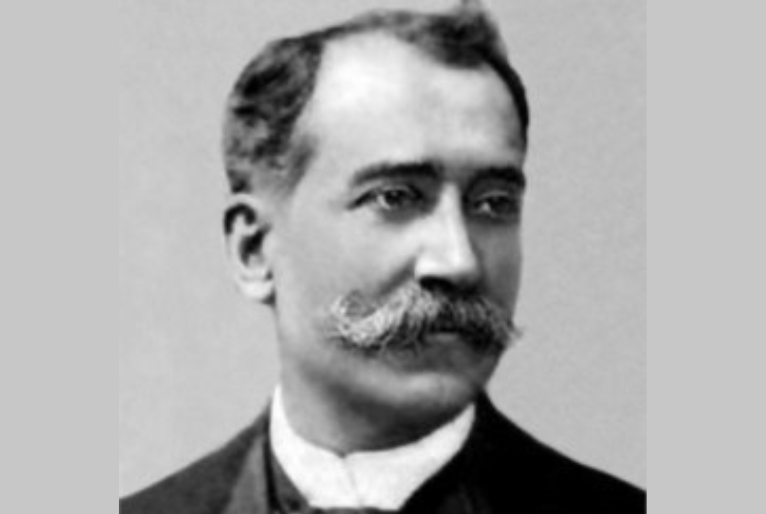
Childhood
Leopoldo Miguez’s early life was marked by international exposure. Born on September 9, 1850, in Niterói, Brazil, his family relocated to Spain when he was merely two years old. They resided in Vigo until 1857, after which they settled in Portugal. This early European immersion provided Miguez with foundational cultural experiences that would later influence his artistic perspective. His formal musical education commenced at the age of eight in Portugal, where he began violin lessons at the Conservatório de Música do Porto under the tutelage of Nicolau Medina Ribas (1832-1900).
Youth
During his youth, Miguez continued to hone his musical skills in Europe. His studies with Nicolau Ribas in Oporto were instrumental in shaping his early development as a violinist and composer. Beyond his formal education, Miguez also gained practical experience by working with a publishing firm. This period allowed him to engage with the broader musical world, preparing him for his eventual return to Brazil. His European training, which included exposure to various musical traditions in Spain, Portugal, and France, instilled in him a deep appreciation for the classical European repertoire, particularly the works of contemporary masters like Richard Wagner.
Adulthood
Upon his return to Brazil, Leopoldo Miguez quickly established himself as a significant figure in the nation’s musical scene. He became an active conductor in Rio de Janeiro, where he passionately championed the music of Richard Wagner, introducing Brazilian audiences to the German composer’s innovative works. His influence extended beyond performance and composition; from 1890 to 1902, Miguez served as the director of the Instituto Nacional de Música (National Institute of Music). In this capacity, he played a crucial role in shaping music education and fostering a new generation of Brazilian musicians. His leadership at the institute solidified his position as a central figure in Brazilian musical life, advocating for high artistic standards and a progressive approach to music.
Major Compositions
Leopoldo Miguez’s compositional output was varied and substantial, reflecting his diverse musical interests and European training. His works include significant contributions to opera, orchestral music, chamber music, and piano repertoire. Among his most notable operatic works are Pele amor!, which premiered in Rio de Janeiro in 1897, and Os Saldunes, first performed in Rio de Janeiro on September 20, 1901. These theatrical pieces often incorporated Wagnerian ideas, showcasing Miguez’s admiration for the German master’s dramatic and harmonic innovations.
In the realm of orchestral music, Miguez composed a Symphony in 1882 (Op. 6), alongside symphonic poems such as Prométhée, Op. 21, and Cena dramática, Op. 8. His chamber music includes a Violin Sonata, Op. 14, demonstrating his proficiency in instrumental writing. For the piano, he penned numerous pieces, including Allegro appassionato, Op. 11, Bluettes, Op. 31, Carinho, Impromptu, Nocturno, Op. 10, 12 Peças características, Scènes intimes, Op. 24, and Souvenirs, Op. 20. Miguez also contributed to vocal and choral music, most famously composing the music for Brazil’s Hino da Proclamação da República (Hymn for the Proclamation of the Republic), a piece of enduring national significance. Other vocal works include Hosanah and A Ronda Infantil, Op. 32.
Death
Leopoldo Américo Miguez passed away on July 6, 1902, in Rio de Janeiro, Brazil, at the age of 51. His death marked the end of a prolific career that had a profound impact on Brazilian classical music. Despite his relatively short life, Miguez left behind a rich legacy as a composer, conductor, and educator.
Conclusion
Leopoldo Miguez stands as a pivotal figure in the history of Brazilian classical music. His European education and passionate advocacy for Wagnerian ideals brought a sophisticated and progressive influence to Brazil’s musical scene. As a composer, his diverse catalog of works, from grand operas to intimate piano pieces, showcased his mastery and versatility. As the director of the Instituto Nacional de Música, he played an indispensable role in fostering musical talent and shaping the future of music education in Brazil. Miguez’s enduring contribution, particularly the “Hymn for the Proclamation of the Republic,” ensures his place as one of Brazil’s most significant classical composers, whose vision helped to define a national musical identity.
Comments are closed