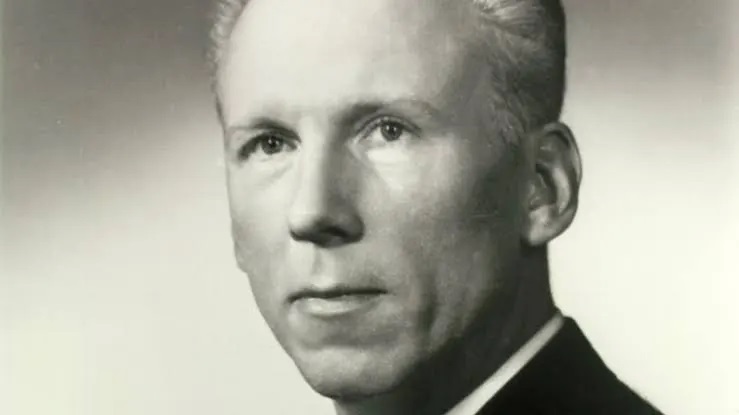
Leroy Anderson – A Complete Biography
Introduction
Leroy Anderson (June 29, 1908 – May 18, 1975) was an American composer, arranger, and conductor best known for short, brilliantly crafted orchestral “miniatures” such as Sleigh Ride, Blue Tango, The Typewriter, and The Syncopated Clock. His music — light in mood, inventive in orchestration, and often containing clever percussion effects — became a staple of pops orchestras and radio broadcast programs in the mid-20th century, and remains widely heard today.
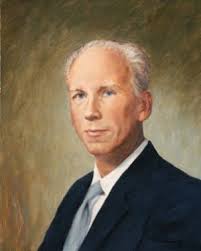
Childhood
Leroy Anderson was born in Cambridge, Massachusetts, to Swedish immigrant parents who fostered a strong musical environment at home. He took his first piano lessons from his mother, who was herself a church organist, and studied multiple instruments as a child, including organ, double bass, and trombone. Early training at the New England Conservatory set the foundation for his facility with melody, harmony, and orchestral color.
Youth
A bright student, Anderson attended Harvard College in 1925, where he studied composition, orchestration, and counterpoint with notable teachers and graduated magna cum laude in 1929. He then completed an M.A. in music at Harvard in 1930. While at Harvard he conducted and arranged for student ensembles and began composing short works that revealed his gift for concise, tuneful writing and clever instrumental effects. During summers he and his brother played in dance orchestras on cruise ships, gaining practical arranging and band experience.
Adulthood
After finishing his studies Anderson worked as an arranger, conductor, and editor while gradually establishing himself as a composer of short orchestral pieces. His early compositions and arrangements came to the attention of Arthur Fiedler, conductor of the Boston Pops Orchestra, who championed Anderson’s work and introduced many of his pieces to wider audiences.
During World War II Anderson served in the U.S. Army, where his language abilities and academic background led to work in military intelligence. After the war he settled in Woodbury, Connecticut, where he composed many of his most enduring works. In 1942 he married Eleanor Jane Firke; the couple raised three children in the Woodbury home that later became identified with his creative life.
Major compositions
Anderson specialized in compact orchestral miniatures, each built around a strong, memorable motif and often a distinctive orchestral gimmick or effect. Notable pieces include:
- Jazz Pizzicato (1938) and its companion Jazz Legato, early short works that displayed his knack for character pieces.
- The Syncopated Clock, which gained broad recognition as a radio and television theme.
- Blue Tango, a popular hit that sold widely as a recording and helped cement his commercial success.
- Sleigh Ride (written in 1946 while Anderson was in Woodbury), which — though an instrumental — became one of the most-played holiday pieces in the United States.
- The Typewriter, a novelty piece notable for its use of a working typewriter as percussion.
- Bugler’s Holiday and A Trumpeter’s Lullaby, which highlight brass writing in playful and lyrical ways.
Anderson also collaborated on the Broadway musical Goldilocks (1958), and several of his melodies later gained lyrics and entered the popular-song catalog. His works became staples for pops orchestras because they combined immediate appeal with disciplined craftsmanship.
Death
Leroy Anderson died on May 18, 1975, in Woodbury, Connecticut, after a period of illness. He was 66 years old. His death was widely noted in musical and popular-press outlets, and his music continued to be performed, recorded, and licensed after his passing, ensuring an ongoing presence in concert programs and media.
Conclusion
Anderson’s legacy rests on the rare combination of craftsmanship and populist charm: short, perfectly shaped orchestral pieces that are both listenable and cleverly orchestrated. He has been honored in many ways — recordings, broadcasts, institutional recognitions, and commemorations in Cambridge and at Harvard — all of which attest to his lasting place in American musical life. From school orchestras to professional pops ensembles, Anderson’s music lives on as a beloved part of the 20th-century American repertory.
Comments are closed