Richard Storrs Willis – A Complete Biography
INTRODUCTION
Richard Storrs Willis (February 10, 1819 – May 7, 1900) stands as one of America’s most significant 19th-century composers and music critics. His contributions to American sacred music, particularly his hymn compositions, have left an indelible mark on the nation’s musical landscape. While perhaps not as widely recognized as some of his contemporaries, Willis’s work—especially his melody “Carol” for the beloved Christmas hymn “It Came Upon the Midnight Clear”—continues to resonate in churches and concert halls across America more than a century after his death.
Born into a family of notable literary figures during a period of cultural awakening in America, Willis would forge his own path in the musical world. His journey from Boston to Yale, then to Germany to study under masters including Felix Mendelssohn, and finally back to America as a composer, critic, and editor, reflects the evolving musical consciousness of 19th-century America.
This biography aims to explore the life, work, and lasting influence of Richard Storrs Willis—a man whose musical contributions helped shape American sacred music and whose critical writings documented and influenced the development of classical music appreciation in the United States during a formative period in the nation’s cultural history.
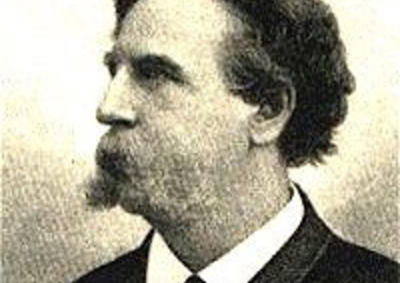
CHILDHOOD
Richard Storrs Willis was born on February 10, 1819, in Boston, Massachusetts, into a family that would produce several notable literary and artistic figures of the 19th century. He was the son of Deacon Nathaniel Willis, a prominent publisher who founded The Youth’s Companion, one of America’s earliest and most successful children’s magazines. His mother, Hannah Parker Willis, came from a respected Boston family and instilled in her children an appreciation for the arts and literature.
The Willis household was one of intellectual curiosity and creative expression. Richard’s siblings would go on to achieve their own fame—his brother Nathaniel Parker Willis became a celebrated poet and magazine editor, while his sister Sara Payson Willis (who wrote under the pen name Fanny Fern) became a successful novelist and newspaper columnist.
Growing up in early 19th-century Boston provided young Richard with a rich cultural environment. Boston was emerging as a center of American intellectual and artistic life, with a growing appreciation for European classical music traditions. The city’s strong religious heritage, particularly its Protestant churches with their emphasis on congregational singing, would later influence Willis’s focus on sacred music composition.
Richard’s early education began at Chauncey Hall, a prestigious preparatory school in Boston known for its rigorous academic standards. He later attended the Boston Latin School, one of America’s oldest educational institutions, where he received a classical education that included Latin, Greek, and likely his first formal music instruction.
While specific details of Willis’s childhood musical experiences are limited in historical records, the cultural environment of Boston, with its growing concert life and church music traditions, undoubtedly shaped his early musical sensibilities. These formative years in Boston laid the foundation for what would become a distinguished career in music composition, criticism, and education.
YOUTH
Richard Storrs Willis’s youth was marked by his pursuit of higher education and the development of his musical talents. After completing his preparatory studies at Boston Latin School, Willis enrolled at Yale College (now Yale University), where he would distinguish himself both academically and musically.
At Yale, Willis immersed himself in the university’s musical life. His most significant contribution came through his involvement with the Beethoven Society, Yale’s musical organization. Willis served as president of this society in both 1838 and 1840, demonstrating his leadership abilities and commitment to musical excellence. Under his guidance, the society promoted appreciation for classical music among the student body and likely performed concerts featuring works by its namesake composer and other European masters.
Willis’s time at Yale coincided with a period when American universities were beginning to recognize the importance of music in a well-rounded education. Though Yale would not establish its School of Music until decades later, the university’s musical societies provided students like Willis with opportunities to develop their talents outside the standard curriculum.
In addition to his musical activities, Willis was inducted into Skull and Bones, Yale’s prestigious secret society, in 1841—the year of his graduation. Membership in this exclusive organization indicated his social standing and the respect he had earned among his peers.
Willis’s Yale education provided him with a strong foundation in the liberal arts and humanities, which would later inform his work as a music critic and writer. His undergraduate years also solidified his determination to pursue music professionally—an unusual career path for an American college graduate of his era, when music was still largely considered a pastime rather than a serious profession for someone of his social background.
Upon graduating from Yale in 1841, Willis made a decision that would profoundly shape his musical development and career: he resolved to continue his musical education in Europe, specifically in Germany, which was then the center of Western classical music. This choice reflected both his serious commitment to music and his awareness that America had not yet developed musical institutions comparable to those of Europe.
ADULTHOOD
Following his graduation from Yale in 1841, Richard Storrs Willis embarked on what would become a transformative six-year sojourn in Germany, then the epicenter of Western classical music. This period of intensive study and cultural immersion would profoundly shape his musical philosophy and compositional style.
In Germany, Willis studied under two significant musical figures of the era: Xavier Schnyder von Wartensee, a Swiss composer and music theorist, and Moritz Hauptmann, a renowned German composer, theorist, and teacher who served as Cantor of the Thomasschule in Leipzig—the same position once held by Johann Sebastian Bach.
Perhaps the most significant relationship Willis formed during his time in Germany was with Felix Mendelssohn, one of the preeminent composers of the Romantic era. Willis became not only Mendelssohn’s student but also his personal friend. Mendelssohn took an active interest in Willis’s compositions, reviewing and correcting his work, leaving his own pencil marks on Willis’s manuscripts. This direct connection to one of the masters of European composition gave Willis insights and training that few American musicians of his era could claim.
Upon returning to America in 1847, Willis briefly visited Yale, where he taught colloquial German to a group of tutors and professors. Soon after, he established himself in New York City, where he began what would become a distinguished career as a music critic and editor.
Willis served as music critic for several prominent publications, including the New York Tribune, The Albion, and The Musical Times. From 1852 to 1864, he also served as editor of The Musical Times, giving him a significant platform to shape American musical taste and discourse.
In January 1862, Willis founded his own journal, Once a Month: A Paper of Society, Belles-Lettres and Art, further expanding his influence on American cultural life. Through his critical writings and editorial work, Willis helped introduce American audiences to European classical music traditions while also advocating for the development of a distinctly American musical voice.
Willis was also active in musical organizations that promoted American composition. He joined the New-York American-Music Association, which championed the work of native and naturalized American composers. In December 1856, he reviewed the organization’s first concert of their second season for the Musical World, describing it as a “creditable affair, all things considered”.
Willis’s personal life included two marriages. In 1851, he married Jessie Ellen Cairns, and following her death, he married Alexandrine Macomb Sheldon in 1861. That same year, as the Civil War began, Willis relocated to Detroit, Michigan, seeking a safer environment for his family. Detroit would remain his home for the rest of his life, except for a period from 1874 to 1878 when he accompanied his daughter to Italy for her education.
Throughout his adult life, Willis balanced his work as a critic and editor with his own compositions, particularly in the realm of sacred music. His European training, combined with his immersion in American musical life, positioned him as an important bridge between Old World traditions and the developing musical culture of the United States.
MAJOR COMPOSITIONS
Richard Storrs Willis’s compositional output, while not vast by some standards, made a significant and lasting impact on American sacred music. His work is characterized by a blend of European classical techniques—acquired during his studies in Germany—and a distinctly American sensibility suited to the needs and tastes of 19th-century American congregations and audiences.
Willis’s most enduring composition is undoubtedly “Carol,” a melody he composed in 1850 that became the standard American tune for Edmund Sears’s Christmas hymn text “It Came Upon the Midnight Clear”. Interestingly, the melody was originally written as an organ study (designated as his “Organ Study No. 23” in the key of B-flat major) before being arranged as a hymn tune.
The pairing of Willis’s “Carol” with Sears’s 1849 poem first appeared in 1850 at Sears’s request and has since become the standard setting of this beloved Christmas hymn in the United States, though in Great Britain and other Commonwealth countries, Arthur Sullivan’s tune “Noel” is more commonly used. The enduring popularity of this composition speaks to Willis’s gift for creating melodies that are both musically satisfying and accessible to congregational singers.
Willis is also credited with the American arrangement of “Fairest Lord Jesus,” another hymn that has remained popular in American church traditions. His hymn settings generally reflect the influence of his European training while remaining approachable for American congregations.
Beyond individual hymn compositions, Willis published several collections of sacred music that were influential in American church music circles:
- “Church Chorals and Choir Studies” (1850) – This collection, published shortly after his return from Germany, demonstrated his ability to apply his European training to American sacred music.
- “Our Church Music” (1856) – This work likely reflected Willis’s thoughts on the state and direction of American sacred music, informed by both his European training and his observations as a critic.
- “Waif of Song” (1876) – Published during his time in Detroit, this collection showcased Willis’s continued commitment to composition despite his move away from the musical center of New York.
- “Pen and Lute” (1883) – One of his later publications, this work likely combined his literary and musical interests, reflecting the dual nature of his career as both writer and composer.
Willis’s compositions were characterized by melodic accessibility, harmonic sophistication that never overwhelmed the listener, and a sensitivity to the relationship between text and music—qualities that made his hymn tunes particularly effective for congregational singing. His work helped bridge the gap between European art music traditions and the practical needs of American churches, contributing to the development of a distinctly American sacred music tradition.
While Willis may not have produced symphonies or operas like some of his European contemporaries, his focus on sacred music allowed him to make a lasting contribution to a genre that was central to American musical life in the 19th century. The continued use of his Christmas carol setting more than 170 years after its composition testifies to the enduring quality of his musical craftsmanship.
DEATH
Richard Storrs Willis spent the final decades of his life in Detroit, Michigan, where he had relocated during the Civil War in 1861. While Detroit was not the cultural and musical center that New York had been, Willis maintained his musical activities and continued to compose, though perhaps with less public visibility than during his New York years.
Between 1874 and 1878, Willis temporarily left Detroit to accompany his daughter to Italy, where she attended school. This European sojourn in his later years allowed him to reconnect with the continent that had so profoundly shaped his musical development decades earlier.
After returning to Detroit, Willis continued his life there until his death on May 7, 1900, at the age of 81. Some sources incorrectly list his death date as May 10, but May 7 appears to be the accurate date.
Willis was laid to rest in Woodlawn Cemetery in Detroit, far from his Boston birthplace and the New York City that had been the center of his professional life as a critic and editor. His grave stands as a quiet memorial to a man whose music continues to be sung by millions, particularly during the Christmas season, even if many singers of “It Came Upon the Midnight Clear” are unaware of the composer behind the melody.
At the time of his death, Willis had lived through most of the 19th century—a period of tremendous change in American musical life. From his birth in 1819, when American classical music was in its infancy and largely derivative of European models, to his death in 1900, when distinctly American musical voices like Charles Ives were beginning to emerge, Willis’s life spanned a crucial developmental period in the nation’s musical history.
Though his passing was noted in musical circles, Willis did not receive the kind of public mourning accorded to some of his more famous contemporaries. However, his legacy was secure through his compositions, particularly his hymn tunes, which had already become standard repertoire in American churches. His portrait, painted by William Brewster Conely in 1887, was housed in the Detroit Institute of Arts from 1906 to 1992, preserving his image for future generations.
In the years following his death, Willis’s reputation rested primarily on his hymn compositions rather than his critical writings or editorial work. While his contemporaries may have known him equally as a critic and composer, history has remembered him primarily for his musical contributions, especially “Carol,” his enduring setting of “It Came Upon the Midnight Clear.”
CONCLUSION
Richard Storrs Willis occupies a unique place in American musical history as a figure who bridged European classical traditions and the developing musical culture of 19th-century America. His life’s work—spanning composition, criticism, and education—helped shape the course of American sacred music and contributed to the nation’s growing appreciation for classical music.
Willis’s most enduring legacy remains his composition “Carol,” the melody for “It Came Upon the Midnight Clear,” which continues to be sung in churches across America each Christmas season. This single work has ensured that Willis’s music reaches far more listeners today than his critical writings or other compositions. The melody’s staying power speaks to Willis’s gift for creating music that is both artistically satisfying and accessible to ordinary singers—a balance that reflects his dual immersion in European art music and American practical music-making.
Beyond this signature composition, Willis’s broader contributions to American musical life deserve recognition. As a critic and editor, particularly during his years at The Musical Times from 1852 to 1864, he helped educate American audiences about European classical music while also advocating for native American composition. His involvement with the New-York American-Music Association demonstrated his commitment to fostering an authentic American musical voice.
Willis’s life trajectory—from Boston to Yale to Germany and then to New York and Detroit—mirrors the developing musical consciousness of America itself. His European training under masters like Mendelssohn represented the young nation’s continuing reliance on Old World musical traditions, while his return to America and subsequent career reflected the country’s growing confidence in developing its own musical institutions and voices.
As one of the first notable musicians to emerge from Yale—decades before the establishment of its School of Music—Willis also represents an important early figure in American music education. His presidency of Yale’s Beethoven Society foreshadowed the eventual integration of music into the formal curriculum of American universities.
Richard Storrs Willis may not be as widely remembered as some of his contemporaries, but his contributions to American musical life were significant and lasting. His hymn tunes continue to be sung, his critical writings provide valuable insights into 19th-century musical thought, and his life story illustrates the development of American classical music during a formative period. In Willis, we see reflected the journey of American music itself—from European apprenticeship toward an authentic national voice, a journey that continues to evolve in the present day.
As we sing “It Came Upon the Midnight Clear” each Christmas season, we participate in the living legacy of Richard Storrs Willis, a thoughtful musician whose work continues to enrich American cultural life more than a century after his death.
Comments are closed