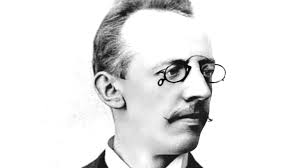
Vítězslav Novák – A Complete Biography
Introduction
Vítězslav Augustín Rudolf Novák (1870–1949) was a preeminent Czech composer and academic teacher, a pivotal figure in the transition of Czech music from the late Romantic tradition to modernism. A student of Antonín Dvořák, Novák initially composed works influenced by German Romanticism, but a decisive shift occurred after his travels to Moravia and Slovakia, where he immersed himself in the rich tapestry of local folk music. This experience transformed his style, leading him to become a major proponent of Czech musical nationalism. His music is characterized by its evocative orchestral color, innovative harmonies, and a deep connection to the natural landscapes and cultural spirit of his homeland. His influence extended through his long teaching career at the Prague Conservatory, where he mentored a new generation of Czech composers.
Childhood
Born Viktor Novák on December 5, 1870, in Kamenice nad Lipou, a small town in Southern Bohemia, he was the eldest son of a doctor. His family was cultured, and he began his musical life early with lessons in piano and violin. In 1872, the family moved to Počátky, where Novák continued his studies, taking violin lessons with Antonín Šilhan and piano with Marie Krejčová. A defining event of his childhood was the death of his father in 1882, when Novák was only 11 years old. Following this loss, the family relocated to Jindřichův Hradec, where he continued his grammar school education.
Youth
In his late teens, Novák moved to Prague to pursue higher education. He initially enrolled to study law at Prague University, but his passion for music soon led him to the Prague Conservatory. At the Conservatory, he studied composition under the renowned master Antonín Dvořák. Dvořák’s influence was profound, but Novák’s early works, such as the Piano Trio No. 1 in G minor (Op. 1) and the Piano Quartet in C minor (Op. 7), still bore the strong imprint of German Romanticism, particularly the styles of Johannes Brahms and Robert Schumann. It was during this period that he changed his first name to Vítězslav, meaning “victorious,” a common practice among Czech nationalists. A key turning point came in 1896 when he traveled to Moravia and Slovakia. This journey ignited a lifelong passion for the folk music of the region, leading him to reject the German-centric style and embrace a distinctly Czech national voice.
Adulthood
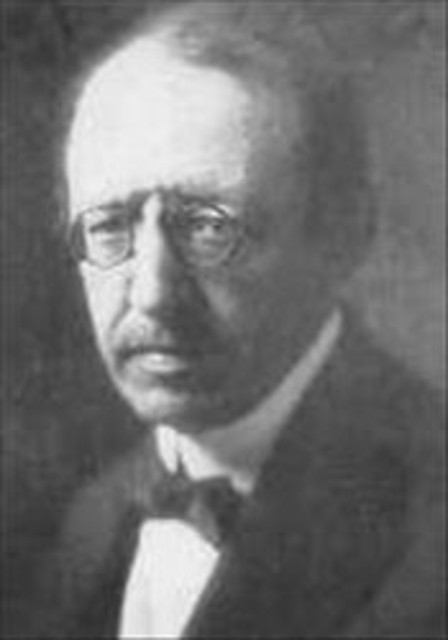
Novák’s adulthood was marked by his maturation as a composer and his rise to a position of immense influence in Czech musical life. His compositional style evolved rapidly after his folk music immersion, moving from late Romanticism towards a more personal, impressionistic, and modernist expression, often compared to the influences of Claude Debussy and Richard Strauss. His works from this period, such as the symphonic poem In the Tatra Mountains (1902) and the Slovak Suite (1903), cemented his reputation as a leading figure of the Czech musical avant-garde.
In 1909, Novák began his long and distinguished teaching career at the Prague Conservatory. He was appointed professor of composition and, in 1919, established his own Master School, which became the most sought-after destination for a new generation of Czech and Slovak composers. His pupils included many future luminaries, such as Alois Hába, Ladislav Vycpálek, and Eugen Suchoň. Politically, Novák was a fervent Czech nationalist. After Czechoslovakia gained independence in 1918, he worked tirelessly towards establishing a strong Czech identity in the country’s culture, often clashing with conservative musical circles. He served as the rector of the Prague Conservatory multiple times.
Major Compositions
Novák’s extensive catalog spans various genres, but he is best known for his large-scale orchestral and dramatic works. His output can be broadly divided into three periods:
1. Early Romantic Period (c. 1890–1896): Influenced by Dvořák and German Romanticism.
•Piano Trio No. 1 in G minor, Op. 1 (1892)
•Piano Quartet in C minor, Op. 7 (1894)
2. Nationalist and Impressionistic Period (c. 1897–1910): The period of his greatest popularity, marked by the use of folk music elements, rich orchestration, and impressionistic color.
•In the Tatra Mountains (V Tatrách), Op. 26 (1902): A symphonic poem considered a masterpiece of Czech modernism, depicting the elemental power and beauty of the Tatra mountains.
•Slovak Suite (Slovácká suita), Op. 32 (1903): His most popular work, a picturesque orchestral suite inspired by his travels in Moravia and Slovakia.
•Eternal Longing (O věčné touze), Op. 33 (1905): A symphonic poem based on Hans Christian Andersen’s fairy tale, showcasing his evocative orchestral style.
•The Storm (Bouře), Op. 42 (1910): A large-scale cantata for soloists, chorus, and orchestra, based on a poem by Svatopluk Čech.
3. Mature and Late Period (c. 1911–1949): Characterized by a more complex, sometimes expressionistic, and monumental style, often reflecting political and philosophical themes.
•The Lantern (Lucerna), Op. 56 (1923): Opera.
•De Profundis (1941): A powerful orchestral work written during the dark years of World War II, a musical expression of despair and defiance.
•May Symphony (Májová symfonie) (1943): Another major work from the war years, a testament to his enduring spirit and patriotic feeling.
Death
Novák’s final years were spent in the newly re-established Czechoslovakia. Despite the political turmoil and the hardships of the war years, he continued to compose and teach. He was recognized as a national treasure, a figure who had successfully forged a modern, independent Czech musical voice. Vítězslav Novák died on July 18, 1949, in Skuteč, Czechoslovakia, at the age of 78. His legacy as a composer who bridged the gap between the Romantic era and 20th-century modernism, and as a teacher who shaped the future of Czech music, was already firmly established.
Conclusion
Vítězslav Novák stands as one of the most significant and influential Czech composers after Dvořák and Smetana. His journey from a student of German Romanticism to a passionate advocate for Czech and Slovak musical traditions exemplifies the cultural and political awakening of his era. Through his evocative symphonic poems, his picturesque folk-inspired suites, and his powerful late-period works, Novák left a body of music that is both deeply national and universally expressive. His commitment to teaching ensured that his influence permeated the 20th century, cementing his role not just as a composer, but as a foundational pillar of modern Czech musical culture.
Comments are closed