William Byrd – A Complete Biography
Introduction
William Byrd (c. 1540 – July 4, 1623) stands as one of the most significant and influential composers of the English Renaissance. Often referred to by his contemporaries as the “Father of Musick” and “Brittanicae Musicae Parens” , his profound contribution to both sacred and secular music has cemented his place among the greatest figures in the history of English classical music . Byrd’s career spanned the reigns of Queen Elizabeth I and King James I, a period of intense religious and political upheaval in England. Despite the dangers and restrictions imposed on Roman Catholics, Byrd, a steadfast recusant, managed to thrive as a composer, serving the Anglican court while simultaneously writing his most profound works for the forbidden Catholic liturgy . His mastery of polyphony, his development of the English madrigal, and his pioneering work in keyboard and consort music demonstrate a genius that transcended the religious and political divisions of his time.
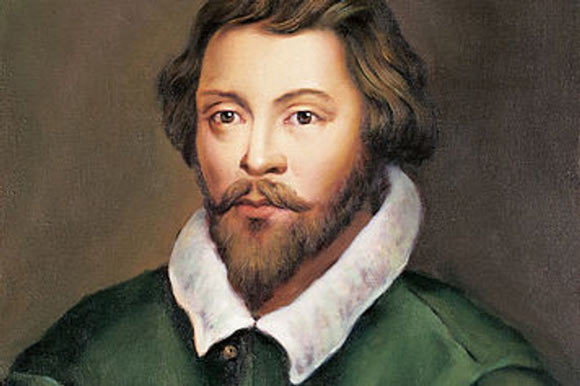
Childhood
Details concerning William Byrd’s early life remain speculative, as no record of his birth has survived . It is generally accepted that he was born around 1540, likely in London, as the third surviving son of Thomas Byrd and his wife, Margery . The family was relatively wealthy and musically inclined. His older brothers, Symond and John, became London merchants, and one of his sisters married an instrument maker, suggesting a connection to the musical trade .
His formal musical education is also a matter of conjecture. Given the family’s background, he may have been a chorister at St. Paul’s Cathedral, where his brothers served. However, the most compelling evidence suggests he was a pupil of the venerable Thomas Tallis at the Chapel Royal . A dedication in the 1575 joint publication Cantiones sacrae tends to confirm this apprenticeship, linking the young Byrd to the most prestigious musical establishment in England . This tutelage under Tallis would have exposed Byrd to the highest levels of musical craftsmanship and the rich tradition of English polyphony, laying the foundation for his own monumental career.
Youth
Byrd’s career began to take shape in his early twenties. In 1563, he secured his first known professional appointment as the organist and master of the choristers at Lincoln Cathedral . This was a significant post, where he was responsible for the musical training of the choirboys and the performance of music for the cathedral’s services. He remained in Lincoln for nine years, a period that was not entirely without incident. In 1569, he was cited by the Dean and Chapter for “certain matters alleged against him,” possibly related to the use of “over-elaborate choral polyphony or organ playing,” which ran counter to the growing influence of Puritanism in the region .
While in Lincoln, Byrd married Juliana Birley from Lincolnshire in 1568. The marriage produced at least seven children, including Christopher and Elizabeth . His time at the cathedral was crucial for his development as a composer, as he was actively composing music for the Anglican service, including his Short Service, a work designed to meet the Protestant demand for clarity and simplicity in church music. He also began to seriously explore instrumental music, composing several In Nomine settings and early keyboard works, such as the Ground in Gamut .
Adulthood
The year 1572 marked a major turning point in Byrd’s life and career. Following the death of Robert Parsons, Byrd was appointed a Gentleman of the Chapel Royal, a prestigious, life-long position that brought him to the heart of the Elizabethan court . This appointment provided him with a good salary and the opportunity to work alongside his former teacher, Thomas Tallis.
Three years later, in 1575, Queen Elizabeth I granted Byrd and Tallis a joint, 21-year monopoly for the printing of music and ruled music paper . This was a remarkable privilege, which the composers immediately used to publish their joint collection, Cantiones quae ab argumento sacrae vocantur. Dedicated to the Queen, this collection of 34 Latin motets was an artistic triumph but a commercial failure, forcing the two composers to petition the Queen for financial assistance .
The Catholic Recusant
Perhaps the most defining aspect of Byrd’s adulthood was his unwavering commitment to Roman Catholicism in a Protestant-ruled country . Though his family may have been nominally Protestant, Byrd became increasingly involved with the Catholic community from the 1570s onward. His wife, Juliana, was cited for recusancy (refusing to attend Anglican services) as early as 1577, and Byrd himself appeared in the recusancy lists from 1584 .
His faith placed him in a precarious position, especially after the influx of missionary priests. Byrd associated with prominent Catholics, including Lord Thomas Paget, and was implicated in the Throckmorton Plot, which led to a temporary suspension from the Chapel Royal and heavy fines .
In a move toward semi-retirement from the court, Byrd relocated his family around 1594 to Stondon Massey in Essex . This move was strategically motivated by the proximity of his patron, Sir John Petre, a wealthy and discreet Catholic who maintained a household where clandestine Mass celebrations were held. For the remainder of his life, Byrd continued to pay heavy fines for recusancy, yet his position in the Chapel Royal and his reputation as a composer largely protected him from the ultimate persecution .
Major Compositions
Byrd’s compositional output was vast and diverse, spanning all major genres of the late Renaissance. His works can be broadly categorized into three areas: sacred vocal music, secular vocal music, and instrumental music.
| Category | Key Works | Significance |
| Catholic Sacred Music | Mass for Four Voices, Mass for Three Voices, Mass for Five Voices, Gradualia (1605, 1607) | Provided complete liturgical music for the forbidden Catholic rite in England. The Gradualia is a monumental cycle of 109 motets for the church calendar . |
| Anglican Sacred Music | Short Service, Great Service, anthems (e.g., Sing joyfully) | Composed for the Chapel Royal, demonstrating his ability to excel in the required Protestant style, from simple settings to the grand scale of the Great Service . |
| Secular Vocal Music | Psalmes, Sonets, and Songs of Sadnes and Pietie (1588), Songs of Sundrie Natures (1589) | Pioneered the English madrigal and adapted the native consort song form, setting texts by poets like Sir Philip Sidney . |
| Instrumental Music | My Ladye Nevells Booke, Fitzwilliam Virginal Book, Consort Fantasias | Mastered the keyboard genre, including pavans, galliards, grounds, and variations (e.g., The Battle), and wrote complex polyphonic music for instrumental consorts . |
His Latin Masses, published between 1592 and 1595, are masterpieces of polyphony, designed for private Catholic worship. The Gradualia collections, published in the early years of King James I’s reign, represent the culmination of his efforts to provide a full cycle of music for the Catholic liturgical year .
Death
William Byrd remained at his home in Stondon Massey, Essex, until his death on July 4, 1623 . He was approximately 83 years old. The cause of death was noted as heart failure . His passing was marked by a unique entry in the Chapel Royal Check Book, which described him simply and reverently as “a Father of Musick” .
Despite the persistent legal troubles and heavy fines he incurred for his recusancy, Byrd died a wealthy man, a testament to his professional success and the protection afforded by his patrons and the Crown . He was buried next to his wife, Juliana, in the churchyard of the parish church at Stondon Massey, though the grave remains unmarked . A cenotaph was later dedicated to him in 1923, on the 300th anniversary of his death .
Conclusion
William Byrd’s life was a remarkable testament to the power of artistic genius and personal conviction in the face of political and religious adversity. His ability to navigate the treacherous waters of Elizabethan and Jacobean England, serving the Protestant Queen while remaining a devout Catholic, is a feat almost as impressive as his music .
His legacy is not merely historical; it is a living tradition. Byrd’s music is characterized by its profound emotional depth, technical brilliance, and spiritual intensity. He elevated every genre he touched, from the grand Great Service to the intimate keyboard pieces of My Ladye Nevells Booke. Four hundred years after his death, Byrd’s works continue to be performed, studied, and revered, ensuring that the “Father of British Music” remains a vital voice in the classical canon .
Comments are closed