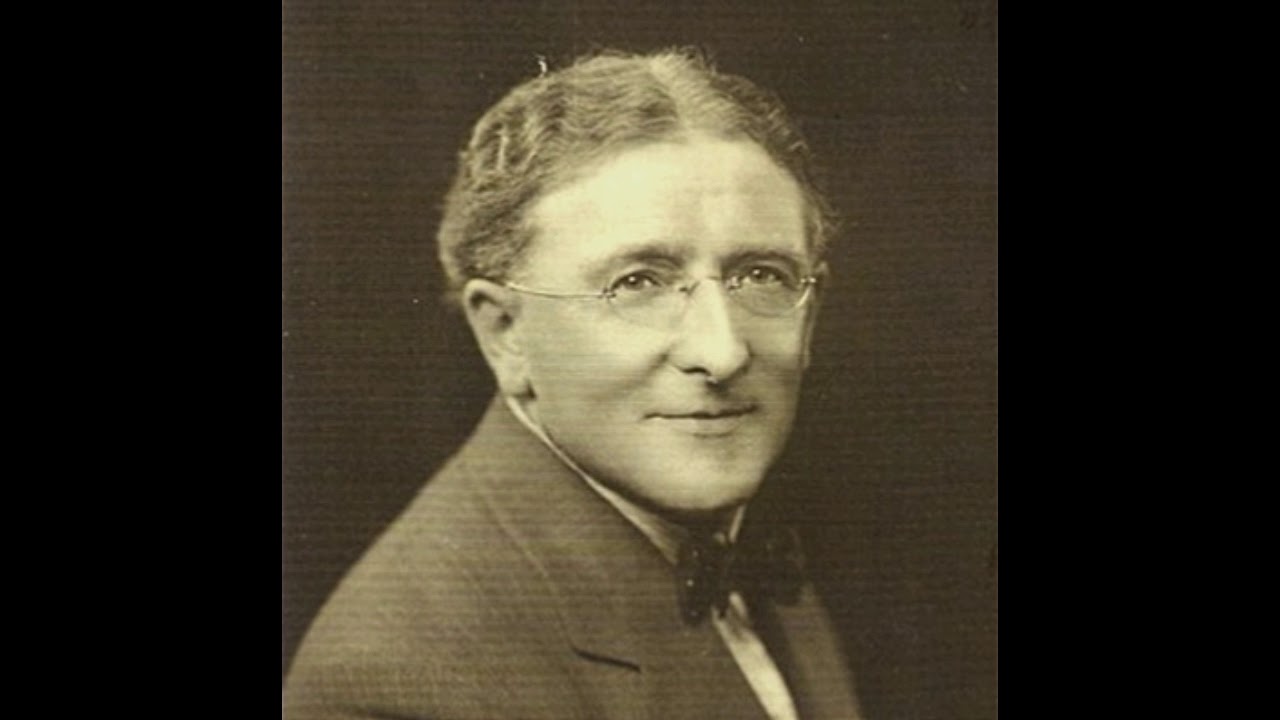
Albert Ketèlbey – A Complete Biography
Introduction
Albert William Ketèlbey was one of the most celebrated British light-music composers of the early twentieth century. Best known for his vividly atmospheric orchestral miniatures, he created a musical world rich with color, exoticism, and storytelling. His works—filled with memorable melodies and imaginative orchestration—once made him one of the most performed composers in Britain. Though his fame diminished after World War II, Ketèlbey’s music has experienced renewed appreciation in recent decades. His career offers a compelling portrait of a composer who mastered the art of evoking place, mood, and narrative through accessible, expressive sound.
Childhood
Albert Ketèlbey was born on August 9, 1875, in Birmingham, England, into a modest family that encouraged his early musical interests. From a young age, he demonstrated extraordinary talent, especially at the piano and organ. His family home supported his artistic development, and by the age of eleven, he had already composed a string quartet. His early years reflected an environment where creativity was nurtured, and his precocious gifts quickly attracted the attention of local musicians and teachers.
Youth
As a teenager, Ketèlbey enrolled at the prestigious Trinity College of Music in London. There, he won several academic and performance prizes, distinguishing himself as one of the institution’s most accomplished students. His early works ranged from chamber pieces to church compositions, revealing both discipline and versatility. During this period, he briefly considered a career as a concert pianist or organist but soon gravitated toward composition and conducting—fields where his exceptional ear for melody and orchestration flourished.
While still a young man, Ketèlbey began working as a conductor and arranger for London theater orchestras. These positions gave him daily contact with popular entertainment, stage music, and the tastes of the general public. This experience profoundly shaped his future style, which would blend classical technique with the immediacy of light entertainment.
Adulthood
By the early 1900s, Ketèlbey had become a prominent figure in London’s musical life. He served as musical director at several theaters and publishing houses, where he composed songs, piano pieces, and incidental music. Over time, he developed a distinctive compositional voice distinguished by lush harmonies, picturesque settings, and strong melodic lines.
His breakthrough came in the 1910s and 1920s, when he produced a series of orchestral works that captivated audiences with their exotic themes and vivid soundscapes. Ketèlbey became one of the most frequently performed composers in British concert halls, seaside orchestras, and early radio broadcasts. His fame was so widespread that at one point he was reported to be the most performed composer in the United Kingdom.
Despite his commercial success, Ketèlbey lived a relatively private life. He married Charlotte Siegenberg in 1906, and though the couple had no children, their partnership endured for decades. As musical tastes shifted after World War II, his popularity declined, but he continued composing and conducting into his later years. Eventually, he retired to the Isle of Wight, where he spent his final years enjoying a quieter life.
Major Compositions
Albert Ketèlbey’s output includes hundreds of works, but several stand out as defining contributions to light music:
“In a Persian Market” (1920)
Perhaps his most famous piece, this orchestral miniature evokes a bustling Middle Eastern marketplace. Complete with camel bells, beggars’ cries, and a romantic theme, the work helped establish Ketèlbey as a master of musical exoticism.
“Bells Across the Meadows” (1919)
A lyrical tone-poem featuring gentle bell motifs and pastoral imagery, it remains one of his most beloved melodies.
“In a Monastery Garden” (1915)
Inspired by religious serenity, this work incorporates wordless vocal passages and organ textures, creating a peaceful, contemplative atmosphere.
“The Phantom Melody” (1911)
A haunting, sentimental piece that became extremely popular in early recordings and cinema accompaniment.
“Sanctuary of the Heart” (1924)
Another deeply expressive piece blending romantic orchestration with sacred overtones.
“In the Mystic Land of Egypt” (1931)
A later work continuing his fascination with Orientalist themes, it reveals his sustained commitment to atmospheric orchestral storytelling.
Collectively, these compositions embody the charm, color, and accessibility that made Ketèlbey a household name during his lifetime.
Death
Albert Ketèlbey died on November 26, 1959, on the Isle of Wight in England. By the time of his passing, his music had fallen out of mainstream fashion, overshadowed by evolving musical trends. However, those who admired his work continued to celebrate its beauty, craftsmanship, and emotional appeal. Over the years, revivals of interest in light orchestral music have restored Ketèlbey’s reputation as a pioneering figure in British popular classical composition.
Conclusion
Albert Ketèlbey’s life and music stand as a testament to the power of melody, imagination, and storytelling in classical composition. His works captured the public’s imagination with vivid scenes of distant lands, pastoral landscapes, and romantic reverie. Though stylistic shifts led to a temporary decline in his recognition, modern audiences and performers have rediscovered the richness of his orchestral world.
Ketèlbey remains a key figure in the history of British light music—a composer whose gift for evoking atmosphere and emotion ensures that his melodies continue to resonate well beyond his lifetime.
Comments are closed