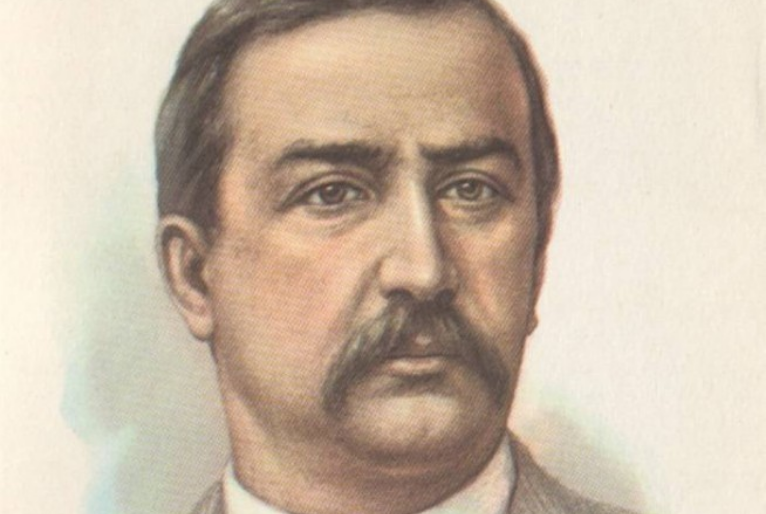
Aleksandr Borodin – A Complete Biography
Introduction
Aleksandr Porfiryevich Borodin stands as one of the most remarkable figures of nineteenth-century Russian culture—not only as a composer of enduring orchestral and chamber masterpieces, but also as a distinguished chemist and medical researcher. His dual career was so extraordinary that he became emblematic of the Russian intelligentsia’s broad intellectual curiosity during the era of the Tsars. Borodin’s music, closely associated with “The Mighty Handful” of nationalist composers, helped shape a distinct Russian voice in classical music, blending folk-inspired melodies with innovative harmonies and vivid orchestration. At the same time, his scientific work earned deep respect among his contemporaries, making him a rare example of a major figure in both the arts and sciences.
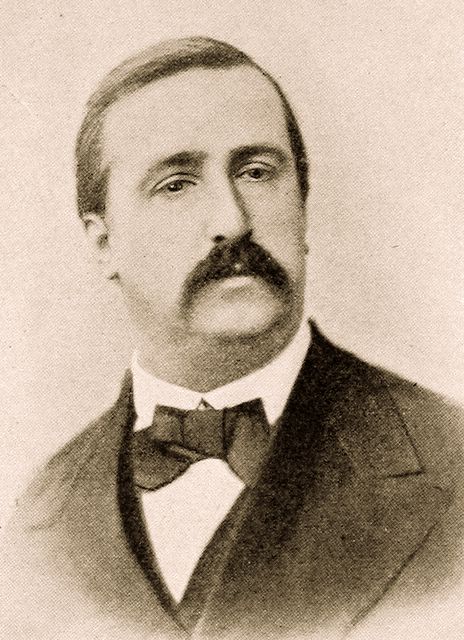
Childhood
Aleksandr Borodin was born in Saint Petersburg on November 12, 1833. His birth was surrounded by social complexity: he was the illegitimate son of a Georgian nobleman and a young Russian woman of modest background. To navigate the social constraints of the time, Borodin was officially registered as the son of one of his father’s serfs. Despite this complicated beginning, he was raised in a comfortable home and received a strong early education.
From childhood, Borodin demonstrated an unusual aptitude for both music and science. He was given a small flute and later a piano, quickly showing natural musical instincts. At the same time, he displayed curiosity about the workings of the physical world, conducting rudimentary chemistry experiments at home. His family encouraged intellectual exploration, exposing him to literature, languages, and music, allowing him to develop a broad foundation that foreshadowed his later multidisciplinary life.
Youth
As he entered adolescence, Borodin’s interests continued to expand. He learned to play the cello, participated in chamber ensembles, and began composing small pieces for piano and strings. Yet his academic strengths led him down a scientific path. In 1850, he entered the Medico-Surgical Academy of Saint Petersburg, one of the most prestigious institutions in the Russian Empire, initially intending to pursue a career in medicine.
During these formative years, his musical activity remained secondary. He wrote music privately, mostly for personal enjoyment or for playing with friends. Although he admired German composers—especially Beethoven, Mendelssohn, and Schumann—he had not yet developed the distinctly Russian musical voice that would later define his legacy. His scientific studies dominated his time, and he soon became deeply involved in chemical research.
Adulthood
Upon graduating with distinction in 1856, Borodin became a physician and researcher, joining the faculty of the Medico-Surgical Academy. His early scientific work focused on organic chemistry, particularly aldehydes and their behavior. He earned respect for his precise methods, well-designed experiments, and ability to communicate scientific ideas. Later, he helped establish medical education for women in Russia, an initiative that reflected his strong belief in social progress and equality.
Borodin’s life took a significant artistic turn in the late 1850s when he met Mily Balakirev, the influential composer who served as a mentor to the group of nationalistic Russian composers known as “The Mighty Handful” or “The Five.” Through this circle—also including Rimsky-Korsakov, César Cui, and Modest Mussorgsky—Borodin found both encouragement and creative energy. Their discussions and shared ideals helped him approach composition with renewed seriousness, even as he continued his demanding scientific career.
In 1863, Borodin married Ekaterina Protopopova, a talented pianist who supported his musical ambitions. Their home became a lively cultural salon, filled with musicians, scientists, and intellectuals. Yet Borodin’s time was always divided; he often joked that he was “a Sunday composer,” using the little free time left from his academic duties to write music. Despite this limited schedule, he produced works of remarkable depth and originality.
Major Compositions
Borodin’s musical output, though relatively small due to his scientific commitments, includes several masterpieces that remain central to the classical repertoire.
Symphonies
His Symphony No. 1 in E-flat major introduced his unique blend of Russian melodic character and classical form. The more mature Symphony No. 2 in B minor became his most celebrated orchestral work, known for its powerful themes, rich harmonies, and vibrant orchestration.
Chamber Music
Borodin contributed significantly to Russian chamber music. His String Quartet No. 1 shows an elegant balance of structure and melody, but it is his String Quartet No. 2 in D major that is considered one of the great quartets of the nineteenth century. Its third movement, the “Notturno,” is especially admired for its lyrical beauty and romantic expression.
Opera
Borodin devoted much of his later life to composing the opera Prince Igor, a monumental work based on a medieval Russian epic. The opera remained unfinished at his death but was completed by Rimsky-Korsakov and Glazunov. It includes the famous “Polovtsian Dances,” which became some of the most recognizable melodies in Russian music.
Other Works
Borodin also wrote songs, piano pieces, and works for small ensembles. Although fewer in number, these pieces reflect his characteristic melodic warmth and his sensitivity to Russian musical traditions.
Death
Aleksandr Borodin died suddenly on February 27, 1887, collapsing during a festive gathering at the Academy of Medicine. His death, likely caused by a heart attack, shocked both the Russian scientific and musical communities. He was only fifty-three years old. His passing left numerous musical projects unfinished, most notably the remaining acts of Prince Igor, which his colleagues lovingly completed in tribute to him.
Conclusion
Aleksandr Borodin’s life remains one of the most astonishing examples of dual accomplishment in the history of the arts and sciences. While maintaining a respected career in chemistry, he created music of lasting influence—works that helped shape the course of Russian classical tradition and inspired composers far beyond his homeland. His ability to balance scientific rigor with artistic imagination continues to fascinate generations of musicians, scholars, and listeners. Borodin’s legacy endures not only in his masterpieces but also in the spirit of intellectual curiosity and creativity that defined his extraordinary life.
Comments are closed