
Anton Bruckner – A Complete Biography
Introduction
Anton Bruckner stands as one of the most original and visionary symphonic composers of the nineteenth century. His music—marked by monumental structures, spiritual intensity, and daring harmonic imagination—challenged conventions and reshaped the evolution of the symphony. Humble, devout, and often misunderstood, Bruckner lived a life of contrasts: revered as an organ virtuoso, doubted as a composer, and later celebrated as a pivotal bridge between the traditions of Beethoven and the innovations of Mahler. His story is one of perseverance, faith, and profound artistic conviction.
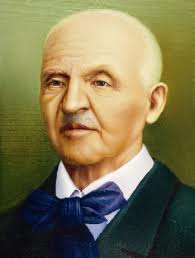
Childhood
Anton Bruckner was born on September 4, 1824, in the small village of Ansfelden, near Linz, in Upper Austria. His father, a schoolmaster and church organist, introduced him to music early, nurturing his son’s natural talent. The rural environment of Bruckner’s childhood—with its religious rituals, folk tunes, and sound of village church music—left an indelible impression on him.
When Bruckner was barely eleven, the death of his father forced him to leave home to join the boys’ choir at St. Florian Abbey. The abbey became formative in his life: he received rigorous musical training, studied the organ, and absorbed the sacred atmosphere that would later infuse his symphonies and choral works. St. Florian was not just a school; it was the spiritual center that shaped his artistic identity.
Youth
During his teenage years and early adulthood, Bruckner trained as a teacher while deepening his musical skills. He served in various teaching posts in rural Upper Austria, occupations that did not satisfy his artistic ambitions but provided stability. All the while, he continued to study harmony, counterpoint, and organ performance, often pushing himself to extremes of discipline.
His reputation as a brilliant improviser on the organ grew steadily. He was known for astonishing performances that combined technical mastery with emotional depth. Yet, despite his talent, Bruckner felt an almost constant fear of inadequacy. This insecurity drove him to seek further formal study, even far past the age when most composers had already developed their voice.
In his thirties, he undertook demanding courses in harmony and counterpoint with Simon Sechter, a strict Viennese theorist. Bruckner’s dedication bordered on obsession; he followed Sechter’s methods relentlessly, producing exercises in enormous quantity. Later, he studied orchestration and free composition with Otto Kitzler, who introduced him to the music of Wagner—an encounter that transformed his artistic direction.
Adulthood
Bruckner’s mature life was defined by a dual existence: respected as a world-class organist, but questioned—sometimes ridiculed—as a symphonic composer. In 1868, he succeeded Sechter as professor of harmony and counterpoint at the Vienna Conservatory and later taught at the University of Vienna. Despite his appointments, he faced resistance from elements of the Viennese musical establishment, particularly supporters of Brahms who viewed Bruckner’s admiration for Wagner with suspicion.
Personally, Bruckner was modest, devout, and socially awkward. He suffered bouts of anxiety and low self-esteem, often seeking validation from teachers and conductors. His proposals of marriage—frequently directed toward young women decades younger than himself—were rejected repeatedly, contributing to his loneliness.
Yet, he persevered. His symphonies grew in scope and ambition, blending cathedral-like grandeur with bold harmonic experimentation. Some early performances were poorly received, but others gradually won enthusiastic supporters. By the 1880s and 1890s, Bruckner’s works began to find their audience, and he slowly acquired the recognition he had long craved.
Major Compositions
Anton Bruckner’s output includes symphonies, masses, motets, organ works, and chamber music, but he is best known for his monumental symphonies, which form the core of his legacy.
Symphonies
Bruckner composed eleven symphonies, including the early “Study Symphony” and “Nullte” (or “No. 0”). His most celebrated symphonies include:
- Symphony No. 3 in D minor – Dedicated to Wagner, this work marked the first fully mature expression of Bruckner’s symphonic voice.
- Symphony No. 4 in E-flat major (“Romantic”) – His most accessible and popular symphony, characterized by noble themes and sweeping orchestral writing.
- Symphony No. 7 in E major – A deeply emotional work, featuring a celebrated Adagio written in anticipation of Wagner’s death.
- Symphony No. 8 in C minor – His grandest and most complex symphony, often considered one of the greatest symphonic achievements of the nineteenth century.
- Symphony No. 9 in D minor – Left unfinished at his death, this symphony stands as a powerful spiritual testament, dedicated “to the dear Lord.”
Sacred Works
Bruckner’s Catholic faith inspired a series of important choral compositions:
- Mass No. 2 in E minor – A masterpiece of a cappella writing and contrapuntal skill.
- Te Deum – A jubilant, large-scale work he considered worthy to stand beside his Ninth Symphony if he could not finish it.
- Motets – Including “Ave Maria,” “Os Justi,” and “Locus Iste,” which remain central to the choral repertoire.
Organ and Other Works
As an organist, he produced a handful of works but was best known for his improvisations. He also wrote chamber pieces early in life, though these are less frequently performed.
Death
In his final years, Bruckner lived in a modest apartment in the Belvedere Wing of the Imperial Palace in Vienna, granted to him by Emperor Franz Joseph in recognition of his achievements. His health declined steadily as he struggled to complete the finale of his Ninth Symphony.
Anton Bruckner died on October 11, 1896, at age seventy-two. He was buried in the crypt beneath the organ at St. Florian Abbey, fulfilling his lifelong wish to rest in the place that had shaped him as both musician and man.
Conclusion
Anton Bruckner’s life traces a path from rural obscurity to posthumous glory. Though plagued by insecurity and dismissed by critics during his lifetime, he remained uncompromising in his artistic vision. His symphonies, with their vast architecture and spiritual depth, profoundly influenced later generations of composers—including Gustav Mahler—and have become essential pillars of the orchestral canon.
Bruckner’s story is a testament to perseverance, humility, and the enduring power of faith and creativity. Today, his music stands among the most transformative and transcendent achievements of the Romantic era, a legacy as towering and majestic as the cathedrals that inspired him.
Comments are closed