
Anton Rubinstein – A Complete Biography
Introduction
Anton Rubinstein stands as one of the towering figures of nineteenth-century music—celebrated pianist, prolific composer, influential conductor, and a pioneering educator whose vision shaped the development of Russian classical music. Known in his lifetime as one of the greatest pianists since Franz Liszt, Rubinstein helped build the institutional foundations that produced later Russian masters such as Tchaikovsky, Rachmaninoff, and Scriabin. His career intertwined virtuosity, creativity, and cultural leadership, leaving a legacy that continues to resonate in the history of Western music.
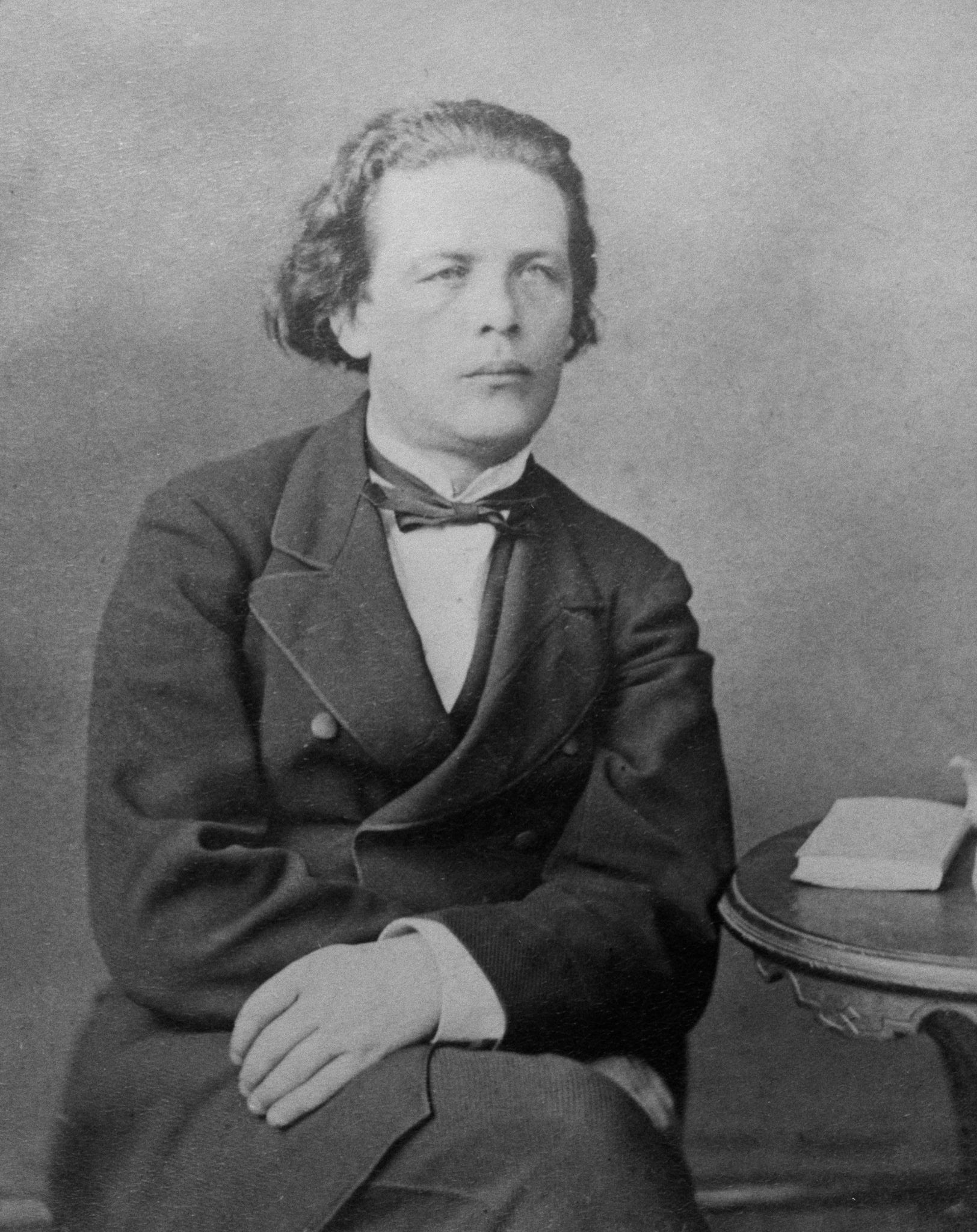
Childhood
Anton Grigoryevich Rubinstein was born on November 28, 1829, in the village of Vikhvatinets, then part of the Russian Empire. His family was of Jewish descent but had converted to Russian Orthodoxy. His mother, a cultivated pianist, recognized Anton’s talent early and provided his first lessons. By the age of six, he demonstrated remarkable aptitude, performing pieces with a maturity unusual for a child.
In 1835, the Rubinstein family moved to Moscow, where Anton continued his musical studies. There he received instruction from Alexander Villoing, a distinguished piano teacher who quickly identified the boy’s extraordinary promise. Villoing took an active role in Anton’s upbringing, refining both his technical foundation and his exposure to European musical traditions. By the time Rubinstein was nine years old, his precocious ability was widely acknowledged, paving the way for his early public appearances.
Youth
At age ten, Rubinstein embarked on his first major tour with Villoing, performing in Paris and other major European cities. In Paris, he played for Frédéric Chopin, who encouraged his development—a formative moment for the young musician. Rubinstein also witnessed the final years of the great pianistic tradition shaped by Liszt and Thalberg, giving him insight into the standards of virtuosity that would later define his own career.
During his teenage years, he lived and studied in Berlin, where he absorbed German musical culture and studied composition and theory under Siegfried Dehn. This period exposed him to the central traditions of Western classical music, especially the works of Beethoven, Mendelssohn, and Schumann. He also established relationships with influential musicians and intellectuals, which broadened his artistic worldview. Although financial difficulties forced him to return to Russia, his experiences abroad laid the foundation for his later achievements as a cosmopolitan artist.
Adulthood
Rubinstein’s adult career blossomed in St. Petersburg, where he emerged not only as a virtuoso pianist but also as a cultural organizer and educator. In the 1850s, he gave legendary concert tours across Europe and the United States—performances that cemented his reputation as one of the most formidable pianists of the age. His playing was characterized by power, brilliance, and expressive intensity, often compared to the great Liszt himself.
In 1862, Rubinstein founded the St. Petersburg Conservatory, the first permanent music academy in Russia, which transformed the nation’s musical landscape. His dedication to high artistic standards established a new professional model for Russian musicians. Among his early students was Pyotr Ilyich Tchaikovsky, who later credited Rubinstein with shaping his musical development.
Rubinstein also served as conductor of the Imperial Russian Musical Society, promoting performances of Western and Russian orchestral literature. Though often outspoken and strong-willed, he was deeply committed to elevating musical culture in Russia. His advocacy for rigorous training and artistic excellence positioned him as both a reformer and a leading intellectual voice of his era.
Major Compositions
Although Anton Rubinstein is often remembered primarily as a pianist, he was also an exceptionally prolific composer, producing hundreds of works across nearly every major genre. His music reflects a blend of German Romantic tradition with distinctly Russian melodic impulses.
Symphonic Works
Rubinstein composed several symphonies, among them the “Ocean” Symphony, which underwent multiple revisions and became one of his most performed orchestral works. His symphonic writing displays rich orchestration, dramatic gestures, and a grand sense of scale.
Concertos
He wrote five piano concertos, which highlight his formidable understanding of the instrument. These compositions combine virtuosity with lyrical expression and remain admired by pianists who appreciate their ambitious technical and emotional scope.
Chamber and Vocal Music
Rubinstein produced numerous chamber works, including string quartets, trios, and sonatas. His art songs, written in German and Russian, reveal his gift for melody and expressive nuance.
Operas and Sacred Works
Among his operas, The Demon stands out as a significant contribution to Russian dramatic music, blending dark romantic themes with powerful orchestration. In sacred music, his extensive oratorio The Tower of Babel and the biblical opera Moses demonstrate his fascination with large-scale spiritual narratives.
While Rubinstein did not achieve the same lasting compositional legacy as some of his contemporaries, his works remain an important part of nineteenth-century repertoire and reflect his creative ambition and broad musical intellect.
Death
Anton Rubinstein’s health declined in the early 1890s. After decades of concerts, administrative work, and constant travel, he retired to Peterhof, near St. Petersburg. He died there on November 20, 1894, just days before his sixty-fifth birthday.
His death was widely mourned in Russia and across Europe. Musicians, critics, and former students honored him as one of the great architects of Russian musical identity. Tributes emphasized not only his extraordinary career as a pianist but also his monumental influence on music education.
Conclusion
Anton Rubinstein occupies a unique and influential place in music history. As a pianist, he was one of the greatest virtuosos of the nineteenth century. As a composer, he produced a vast body of work that blended Romantic tradition with Russian character. Most importantly, as an educator and institution-builder, he played a pivotal role in shaping Russian musical culture, laying the foundation for generations of composers and performers who followed.
His life reflects a fusion of artistic brilliance, intellectual ambition, and a tireless commitment to elevating musical standards. Through his performances, compositions, and educational leadership, Anton Rubinstein helped transform Russia into one of the world’s major centers of classical music—an achievement that endures long after his own notes have faded from the concert hall.
Comments are closed