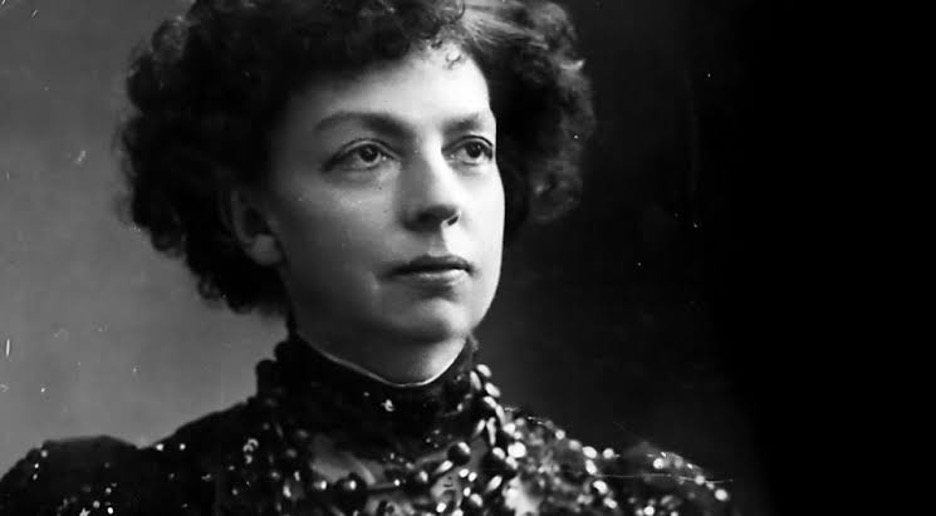
Cécile Chaminade – A Complete Biography
Introduction
Cécile Louise Stéphanie Chaminade (August 8, 1857 – April 1944) was a French pianist and composer who achieved remarkable international success during the late nineteenth and early twentieth centuries. Renowned primarily for her piano miniatures, art songs, and select orchestral works, she became one of the most frequently performed and published women composers of her era. Her music, admired for its melodic clarity, elegance, and refined craftsmanship, was especially popular in France, England, and the United States. In recognition of her artistic achievements, she was awarded the Légion d’honneur in 1913, a rare distinction for a woman composer at the time.
Childhood
Chaminade was born in Paris into a cultivated, upper-middle-class family. Her mother, an accomplished amateur pianist, recognized her daughter’s musical talent early and became her first teacher. From a young age, Chaminade demonstrated exceptional musical aptitude, composing short pieces and improvising at the piano while still a child. Although her father supported her musical interests, he opposed her admission to the Paris Conservatoire, believing that a formal conservatory education was unsuitable for a young woman of her social standing. As a result, she received private instruction from respected teachers in piano, harmony, and composition. Her early promise attracted attention from prominent musicians within Parisian artistic circles.
Youth
During her adolescence and early adulthood, Chaminade steadily developed her identity as both a performer and a composer. She began presenting public concerts featuring her own compositions, an unusual practice for a young woman of the period. Her early works were primarily piano pieces and songs designed for salon performance, a popular cultural setting in nineteenth-century France. These compositions were well received for their charm, accessibility, and technical polish. By her early twenties, Chaminade had established a growing reputation and had secured publishing agreements that allowed her music to circulate widely.
Adulthood
From the 1880s onward, Chaminade enjoyed sustained professional success. She toured extensively as a pianist throughout France, England, and later the United States, where she was greeted with enthusiastic audiences. Her popularity in America was particularly notable, inspiring the formation of numerous “Chaminade Clubs,” organizations dedicated to the performance and appreciation of her music. She embraced new technologies, making early recordings and piano rolls that further broadened her audience. Despite her commercial success, critical responses to her larger-scale works were often ambivalent, shaped in part by the gender biases prevalent in musical criticism at the time. Nonetheless, she maintained a steady output and financial independence through composition and performance.
Major Compositions
Cécile Chaminade was a prolific composer, producing hundreds of works across multiple genres. Her piano output includes many short character pieces that became staples of the salon repertoire, such as Scarf Dance (Danse des écharpes), Automne, and her brilliant Toccata. Among her orchestral works, the Concertino for Flute and Orchestra, Op. 107 remains her most enduringly popular composition and continues to be widely performed today. She also composed a Concertstück for piano and orchestra, chamber music, choral works, and stage music, including the ballet Callirhoé. Her music is distinguished by lyrical melodies, clear formal structures, and idiomatic instrumental writing.
Death
In her later years, Chaminade’s public presence diminished as musical tastes shifted and personal difficulties increased. Health problems and emotional strain contributed to her withdrawal from the concert stage and compositional activity. She spent much of her final years in Monaco, living in relative seclusion. Cécile Chaminade died in Monte Carlo in April 1944. She was later laid to rest in Paris, the city of her birth and early artistic development.
Conclusion
Cécile Chaminade occupies an important place in music history as one of the most successful women composers of her time. Her career demonstrates both the possibilities and the limitations faced by female musicians in a male-dominated musical culture. While much of her music was long dismissed as lightweight or overly sentimental, modern reassessment has highlighted its technical skill, stylistic refinement, and historical significance. Today, her works—especially her piano pieces, songs, and flute concertino—are increasingly appreciated for their craftsmanship and expressive appeal, securing her legacy as a distinctive and influential voice in late Romantic music.
Comments are closed