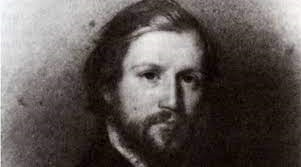
Charles Valentin Alkan – A Complete Biography
Introduction
Charles-Valentin Alkan (born Charles-Henri-Valentin Morhange; November 30, 1813 – March 29, 1888) was a French composer and virtuoso pianist whose music occupies a singular and often isolated place within nineteenth-century classical music. Renowned during his lifetime for his astonishing technical command and intellectual depth, Alkan developed a reputation as one of the most formidable pianists of his era. Despite his early acclaim, he spent much of his later life in seclusion, producing a body of piano music of exceptional originality, scale, and difficulty. Today, he is recognized as one of the most distinctive voices of the Romantic period.
Childhood
Charles-Valentin Alkan was born in Paris into a Jewish family of Alsatian origin. His father was a music teacher and ran a small private music school, providing the household with both musical instruction and professional discipline. The family adopted “Alkan” as their public surname, a name that all of the children used in their musical careers.
Alkan displayed prodigious talent at an extremely young age. He entered the Paris Conservatory as a child and quickly distinguished himself, winning multiple prizes in solfège, piano, harmony, and later organ. His early education combined rigorous academic training with exposure to the most advanced keyboard techniques of the day. These formative years laid the groundwork for the extraordinary technical and structural demands that would later define his compositions.
Youth
During his late teens and early adulthood, Alkan became an active and admired presence in Parisian musical life. He performed regularly in salons and private concerts, gaining recognition among fellow musicians and critics as a pianist of rare precision and control. His style was marked not only by brilliance but also by clarity, discipline, and intellectual rigor.
Although he moved within the same artistic circles as leading Romantic composers and pianists, Alkan was never a flamboyant public figure. Rather than cultivating an international concert career, he focused on composition, pedagogy, and select performances. His early published works attracted attention for their originality and technical innovation, establishing him as a composer of considerable promise.
Adulthood
From the 1850s onward, Alkan gradually withdrew from public performance. While the reasons for his retreat remain a matter of speculation, it is clear that he increasingly preferred solitude and private study. During this period, he devoted himself intensely to composition, producing some of the most ambitious works in the piano repertoire.
Alkan’s reclusiveness contributed to his reputation as an eccentric figure, yet his musical output during these years was neither diminished nor conventional. Instead, it became more concentrated, complex, and demanding. Though largely absent from the public stage, he remained respected among musicians who recognized the originality and depth of his work. His withdrawal from public life may have limited his immediate influence, but it also allowed him to pursue a highly personal artistic vision.
Major Compositions
Alkan’s legacy rests primarily on his piano music, which constitutes the vast majority of his surviving works. His compositions range from concise character pieces to monumental cycles that challenge traditional notions of form and instrumental capability.
Among his most significant works is the Grande sonate “Les Quatre Âges”, a programmatic sonata that depicts different stages of human life with increasing emotional gravity and structural complexity. His collections of études, particularly those written in all major and all minor keys, stand as milestones of nineteenth-century piano literature.
Most remarkable is a large cycle of études in the minor keys that contains within it a multi-movement “Symphony for Solo Piano” and a full-scale “Concerto for Solo Piano.” These works expand the expressive and architectural possibilities of the keyboard, treating the piano as a self-sufficient orchestral instrument. The set culminates in a famous theme and variations that demonstrates Alkan’s wit, contrapuntal skill, and imaginative power.
In addition to his piano works, Alkan composed chamber music, songs, and occasional choral pieces. While these are less frequently performed, they reveal a composer of broad technical mastery and stylistic range.
Death
Charles-Valentin Alkan died in Paris on March 29, 1888. At the time of his death, he had largely faded from the public eye, and his music was already beginning to fall into obscurity. For several decades, only a small number of musicians continued to champion his works.
Gradually, however, interest in Alkan was revived, particularly in the twentieth century, when pianists and scholars began to reassess his contributions to the Romantic repertoire. His music, once considered eccentric or excessively difficult, came to be appreciated for its originality, structural ingenuity, and expressive depth.
Conclusion
Charles-Valentin Alkan remains one of the most intriguing and unconventional figures in classical music history. A composer of immense technical prowess and intellectual ambition, he pursued a deeply personal artistic path that often set him apart from his contemporaries. His piano works challenge performers both physically and musically, demanding not only virtuosity but also structural understanding and expressive insight.
Today, Alkan is recognized as a composer who expanded the boundaries of piano composition and anticipated later developments in musical form and technique. Though once marginalized, his music now holds a secure place in the repertoire, standing as a testament to individuality, innovation, and uncompromising artistic vision.
Comments are closed