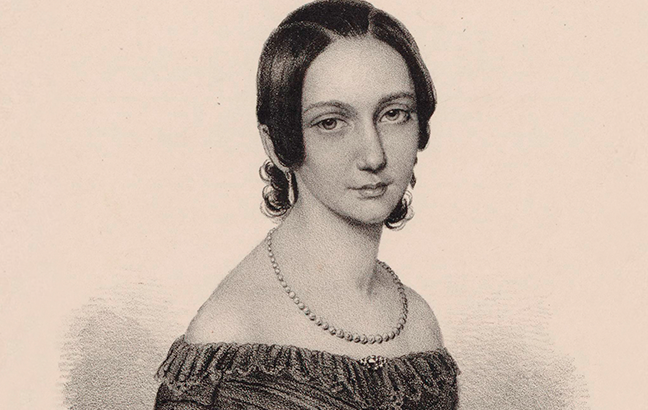
Clara Schumann – A Complete Biography
Introduction
Clara Schumann (née Clara Josephine Wieck) occupies a singular place in 19th-century music history: a world-class concert pianist who helped define the modern piano recital, a discerning musical editor and teacher, and a composer whose finest works balance Classical formal discipline with Romantic intimacy. Living across the long arc from Beethoven’s late years to the threshold of musical modernism, she became both a participant in and a witness to the era’s artistic transformation. Her career also unfolded under pressures rarely faced by male peers—public scrutiny, financial responsibility for a large household, and the emotional burden of her husband Robert Schumann’s illness—yet she sustained a lifetime of performance, pedagogy, and musical stewardship that shaped European concert life.
What endures is not only her celebrated artistry at the keyboard but also her role as a cultural force: introducing audiences to serious repertoire, championing new music, and preserving a musical legacy that might otherwise have been diluted or misunderstood. Today, her own compositions—once treated as footnotes to her performance career—are increasingly heard on their own terms.
Childhood
Clara Wieck was born on September 13, 1819, in Leipzig, a major musical center of German-speaking Europe. Her father, Friedrich Wieck, was a formidable piano pedagogue and music entrepreneur who recognized early that his daughter had unusual gifts. Her mother, Mariane (Marianne) Bargiel Wieck, was a musician as well; the household was steeped in professional musical activity and ambition.
The defining feature of Clara’s childhood was her father’s training regimen. Wieck approached pedagogy with a system builder’s precision: technique was to be mastered methodically, repertoire chosen strategically, and every public appearance treated as part of a larger career design. Clara’s education therefore differed from that of most children—even talented ones. It was vocational from the start, oriented toward public performance and artistic authority.
As a child, she began appearing in public while still very young, gradually moving from local performances to broader recognition. These early years taught her not only pianistic control but also the practical realities of a touring musician: travel, rehearsal logistics, audience management, and the psychological discipline needed to perform consistently.
Youth
Clara’s adolescence coincided with her rapid emergence as an international piano phenomenon. By her early teens, she was touring, playing major venues, and earning critical praise for an unusual combination of virtuosity and interpretive seriousness. In a period that often valued pianistic display, Clara’s artistry was already associated with clarity of musical thought and fidelity to the compositional text—traits that later became central to her influence on recital culture.
Composing was also part of her youth. Unlike many prodigies who focus exclusively on performance, Clara began writing works that reflected both her developing technique and her ear for lyrical characterization. Her early pieces—especially for solo piano—show a keen sense of pianistic color and structure. The most conspicuous youthful achievement was her Piano Concerto in A minor (Op. 7), conceived during her teenage years and performed publicly while she was still Clara Wieck. It stands as an unusually ambitious work for such a young composer, demonstrating her ability to think orchestrally and to balance solo brilliance with thematic continuity.
Her youth was also marked by a growing emotional and artistic bond with Robert Schumann, who entered the Wieck household initially as a student and later as an increasingly prominent composer. Their relationship matured under intense paternal resistance, becoming not merely a romance but an artistic partnership in which each recognized the other’s musical intelligence and vocation.
Adulthood
Marriage, motherhood, and professional identity
Clara and Robert Schumann married in 1840 after a prolonged conflict with Friedrich Wieck, whose opposition reflected both personal control and professional calculation. Marriage did not end Clara’s career; rather, it reframed it. In the 1840s and 1850s, she navigated a complex dual role: sustaining her identity as a leading pianist while also bearing and raising eight children and managing the practical life of a composer’s household.
Clara’s concert activity was not a secondary undertaking. It was central to the family’s finances and to Robert’s public reputation. She performed widely, programming not only virtuoso fare but also large-scale works and serious repertoire, helping cultivate an audience for music valued for artistic substance rather than spectacle. Over time, her programming choices contributed to the gradual shift toward the “modern” recital model—coherent programs emphasizing major composers and interpretive depth.
Crisis and resilience: Robert Schumann’s illness
The most difficult period of Clara’s adulthood began in the early-to-mid 1850s as Robert Schumann’s mental health deteriorated severely. The situation culminated in his institutionalization and, ultimately, his death in 1856. During these years, Clara managed an extraordinary burden: childcare, financial survival, touring responsibilities, and the emotional strain of separation and uncertainty. Her concert career became, in effect, the economic foundation for the family and a stabilizing professional identity when her private life was in upheaval.
Brahms, artistic circles, and legacy-building
After Robert’s decline, Clara’s artistic world expanded in new ways. Her relationship with Johannes Brahms—first met in 1853—became one of the most consequential musical friendships of the century. She supported his music publicly and privately, offered critical feedback, and helped establish him in influential musical circles. At the same time, she worked to preserve and promote Robert Schumann’s works through performance, editorial work, and careful guardianship of manuscripts and publications.
Frankfurt and teaching
In 1878, Clara accepted a teaching position at the Dr. Hoch Conservatory in Frankfurt am Main. This appointment formalized her influence as a pedagogue and positioned her as a leading authority in piano interpretation and technique. Her teaching emphasized musical architecture, tonal control, and disciplined stylistic judgment—qualities associated with her own playing. Even as health challenges accumulated with age, she maintained professional responsibilities for years, shaping a generation of pianists and transmitting an interpretive tradition rooted in the core German repertoire.
Major Compositions
Clara Schumann’s output is not large compared with some contemporaries, but it is highly concentrated in quality and revealing in artistic personality. Her compositional voice favors lyricism, tight motivic work, and clear formal thinking. Even in shorter pieces, she often writes with the performer’s instinct: textures sit naturally under the hands, and expressive effects are achieved through craft rather than excess.
Key works commonly considered central to her catalogue include:
- Piano Concerto in A minor, Op. 7: A substantial early statement combining youthful brilliance with structural ambition. It demonstrates Clara’s ability to sustain a long musical argument and integrate the piano into an orchestral fabric rather than treating the orchestra as mere accompaniment.
- Piano Trio in G minor, Op. 17: Often viewed as her mature masterpiece, the trio reveals deeper harmonic exploration and a heightened sense of chamber dialogue. Rather than spotlighting the piano alone, it balances the three instruments in a sophisticated conversational texture.
- Three Romances for Piano, Op. 11: Compact character pieces that reflect her gift for melody and her sensitivity to pianistic color. They belong to the Romantic tradition of intimate, psychologically nuanced miniatures.
- Three Romances for Violin and Piano, Op. 22: Works that show her fluency in chamber idioms and her ability to write lyrical lines that suit string phrasing while giving the piano a rich, integrated role.
- Songs (Lieder): Her vocal works, though less frequently programmed historically, reflect an attentive response to text and an instinct for vocal contour, aligning her with the central German art-song tradition.
A striking feature of her creative life is the way composition became harder to sustain amid the demands of performance, family responsibility, and later legacy-work. Clara herself understood composition as an arena requiring sustained time and inner freedom—resources often denied her by circumstance. Yet the works she did complete demonstrate that she was not composing as an accessory to her performing career; she was composing from an authentic artistic center, capable of originality, structural command, and emotional directness.
Death
In the 1890s, Clara’s health declined, and her public activity narrowed. Her final years were spent largely in Frankfurt, where she had taught and built a stable professional base. She died on May 20, 1896, in Frankfurt am Main.
She was buried in Bonn’s Old Cemetery (Alter Friedhof), where Robert Schumann had also been laid to rest decades earlier. The burial site reflects, in a symbolic way, the intertwined nature of their historical identities: two musicians connected by marriage, artistic exchange, and a shared legacy that Clara spent much of her life safeguarding and projecting into public consciousness.
Conclusion
Clara Schumann’s biography is not adequately captured by any single label—virtuoso, muse, widow, teacher, or “composer’s wife.” She was a primary agent in the musical culture of her time, exercising authority through performance choices, interpretive standards, teaching, and the practical labor of sustaining a major musical household. Her life also illustrates a broader historical reality: women’s creative work was often constrained not by talent but by access to time, institutional power, and the social permission to prioritize composition.
In recent decades, as her music has returned to the concert hall and recording studio, a more accurate portrait has emerged. Clara Schumann was not an exception who succeeded despite composing; she was a complete musician whose compositions belong to the central Romantic conversation. Her life story—marked by brilliance, struggle, discipline, and artistic integrity—continues to reshape how we understand the 19th century and the people who defined its sound.
Comments are closed