Introduction
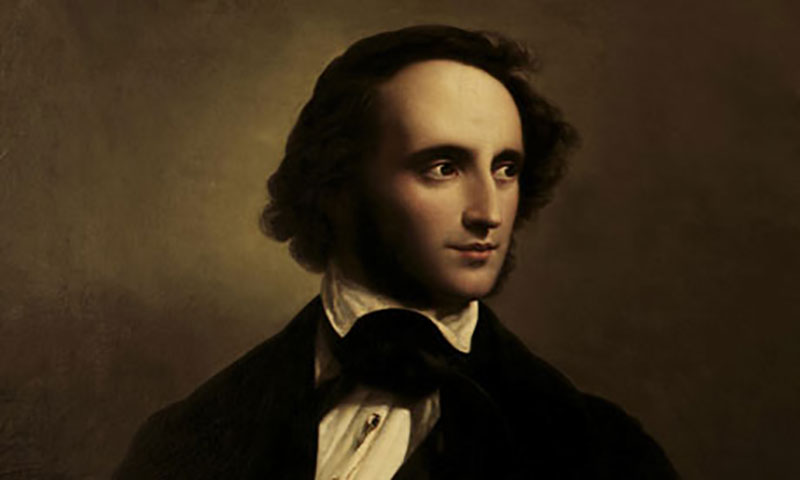
Felix Mendelssohn stands among the most influential composers of the Romantic era. Renowned for his exceptional talent as a composer, pianist, conductor, and music educator, he successfully bridged the Classical traditions of Wolfgang Amadeus Mozart and Ludwig van Beethoven with the expressive qualities of Romanticism. His compositions are celebrated for their elegance, clarity, lyricism, and emotional depth.
Born into a cultured and affluent family in early nineteenth-century Germany, Mendelssohn displayed extraordinary musical gifts from a young age. Throughout his relatively short life, he produced a remarkable body of work that continues to be performed worldwide. His contributions extended beyond composition, as he played a crucial role in reviving interest in the music of Johann Sebastian Bach and helping shape the development of modern concert life.
Childhood
Felix Mendelssohn was born Jakob Ludwig Felix Mendelssohn on February 3, 1809, in Hamburg, Germany. He was the second of four children born to Abraham Mendelssohn and Lea Salomon Mendelssohn. His family was wealthy, intellectual, and deeply connected to the cultural life of Europe. His grandfather was the famous philosopher Moses Mendelssohn, one of the leading figures of the German Enlightenment.
In 1811, the family moved to Berlin to escape the political instability caused by the Napoleonic Wars. There, young Felix grew up in an environment that encouraged artistic and intellectual achievement. His parents provided him with an excellent education, exposing him to literature, philosophy, languages, and the arts.
Felix began studying piano at an early age under the guidance of his mother, who quickly recognized his exceptional abilities. By the age of six, he was already displaying remarkable musical talent. He later studied composition with Carl Friedrich Zelter, a respected teacher and admirer of Johann Sebastian Bach.
The Mendelssohn household became a gathering place for artists, scholars, and musicians. Regular musical performances were organized at the family home, allowing Felix to hear and perform sophisticated music from an early age. This environment nurtured his creativity and accelerated his development as a composer.
Even as a child, Mendelssohn demonstrated extraordinary productivity. Before reaching his teenage years, he had composed numerous piano pieces, chamber works, and orchestral compositions that revealed an astonishing level of maturity.
Youth
During his teenage years, Mendelssohn’s reputation as a musical prodigy spread rapidly throughout Europe. Unlike many child prodigies who struggled to develop beyond their early success, Mendelssohn continued to mature artistically while maintaining his exceptional technical abilities.
At the age of sixteen, he composed the String Octet in E-flat Major, one of the most remarkable works ever written by a teenager. The piece displayed a sophisticated command of form, harmony, and orchestration that rivaled the achievements of much older composers.
The following year, he composed the overture to A Midsummer Night’s Dream, inspired by William Shakespeare’s play. This brilliant orchestral work showcased his gift for musical storytelling and remains one of his most beloved compositions.
Mendelssohn also traveled extensively during his youth. These journeys exposed him to diverse musical traditions and artistic influences. Visits to England, Scotland, Italy, Switzerland, and France broadened his cultural horizons and inspired many future compositions.
A pivotal moment occurred in 1829 when he conducted a historic performance of Johann Sebastian Bach’s St. Matthew Passion. At the time, Bach’s large-scale vocal works had largely fallen into obscurity. Mendelssohn’s successful revival sparked renewed interest in Bach’s music and contributed significantly to the modern appreciation of the Baroque master.
Adulthood
As an adult, Mendelssohn became one of Europe’s most respected musicians. His career encompassed composing, conducting, performing, and teaching.
Throughout the 1830s and 1840s, he enjoyed considerable success in England, where audiences enthusiastically embraced his music. He visited the country numerous times and developed strong relationships with British musicians and patrons.
In 1835, Mendelssohn was appointed conductor of the Leipzig Gewandhaus Orchestra. Under his leadership, the orchestra achieved new levels of artistic excellence and became one of Europe’s most admired musical institutions. His conducting style was praised for its precision, discipline, and sensitivity.
Mendelssohn was also deeply committed to music education. In 1843, he helped establish the Leipzig Conservatory, one of the first major music schools in Germany. The institution attracted talented students from across Europe and played an important role in shaping future generations of musicians.
Despite his professional achievements, Mendelssohn faced personal challenges. He often struggled with the pressures of his demanding career and the expectations placed upon him by society. Nevertheless, he maintained a productive creative life and continued composing some of his finest works.
His marriage to Cécile Jeanrenaud in 1837 brought stability and happiness. The couple had five children and enjoyed a close family life. Friends and colleagues frequently remarked on Mendelssohn’s warmth, kindness, and devotion to his family.
Major Compositions
Felix Mendelssohn’s catalog includes masterpieces across nearly every major musical genre. His works combine Classical balance with Romantic expression, making them both accessible and sophisticated.
A Midsummer Night’s Dream
Perhaps his most famous orchestral work, A Midsummer Night’s Dream began as an overture written when he was seventeen years old. Years later, he expanded it into complete incidental music for Shakespeare’s play. The famous “Wedding March” originates from this composition and remains popular at wedding ceremonies worldwide.
Symphony No. 3 (“Scottish”)
Inspired by his travels in Scotland, the Scottish Symphony captures the landscapes, history, and atmosphere of the country. Its dramatic and evocative character exemplifies Romantic nationalism.
Symphony No. 4 (“Italian”)
Composed following his travels in Italy, the Italian Symphony reflects the brightness, energy, and beauty of Mediterranean life. It remains one of his most frequently performed symphonic works.
Violin Concerto in E Minor
Widely regarded as one of the greatest violin concertos ever written, this masterpiece combines technical brilliance with lyrical beauty. It remains a cornerstone of the violin repertoire and is regularly performed by leading soloists around the world.
Elijah
The oratorio Elijah is considered one of Mendelssohn’s greatest achievements in sacred music. Premiered in England in 1846, it received immediate acclaim and became one of the most popular choral works of the nineteenth century.
Songs Without Words
This collection of lyrical piano pieces demonstrates Mendelssohn’s ability to express emotion without the use of text. The works remain favorites among pianists of all skill levels.
String Octet in E-flat Major
Composed during his youth, this chamber masterpiece is often regarded as one of the finest works ever written for strings.
Piano Trios
Mendelssohn’s piano trios are admired for their melodic richness, structural clarity, and expressive depth. They continue to occupy an important place in the chamber music repertoire.
Death
The final years of Mendelssohn’s life were marked by increasing emotional and physical strain. One of the most devastating events occurred in 1847 when his beloved sister Fanny Mendelssohn died unexpectedly. The loss deeply affected him, and he never fully recovered from the shock.
Following Fanny’s death, Mendelssohn experienced declining health and suffered a series of strokes. Despite attempts to continue working, his condition worsened rapidly.
On November 4, 1847, Felix Mendelssohn died in Leipzig, Germany, at the age of thirty-eight. His premature death shocked the musical world. Many contemporaries believed that Europe had lost one of its greatest artistic talents at the height of his creative powers.
He was buried in Berlin, where family, friends, musicians, and admirers mourned his passing. Tributes poured in from across Europe, reflecting the profound respect he had earned during his lifetime.
Conclusion
Felix Mendelssohn occupies a unique position in music history. He combined extraordinary technical mastery with lyrical beauty, intellectual sophistication, and emotional restraint. His compositions helped define the Romantic era while preserving the structural elegance of Classical traditions.
Beyond his achievements as a composer, Mendelssohn transformed musical culture through his work as a conductor, educator, and advocate for earlier music. His revival of Bach’s masterpieces changed the course of music history, while his leadership in Leipzig helped establish enduring standards of musical excellence.
Although his life was tragically short, Mendelssohn’s influence has endured for generations. His symphonies, concertos, chamber works, piano pieces, and choral compositions remain central to the classical repertoire. Today, he is remembered not only as one of the greatest composers of the nineteenth century but also as a musician whose artistry continues to inspire performers and audiences around the world.
Comments are closed