Introduction
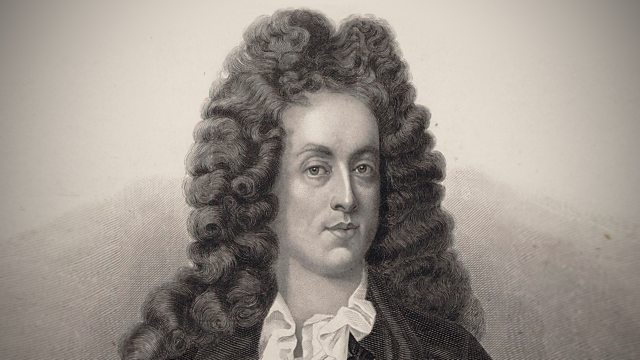
Henry Purcell stands among the greatest composers in English musical history. Often celebrated as the most significant English composer before the twentieth century, Purcell combined the traditions of Renaissance polyphony with the emerging Baroque style to create music of extraordinary beauty, emotional depth, and originality. His compositions encompassed sacred music, secular songs, instrumental works, chamber music, and music for the theater. Though his life was remarkably short, Purcell left behind a legacy that profoundly influenced English music and secured his reputation as one of the finest composers of the Baroque era.
Born in seventeenth-century London during a period of political and cultural transformation, Purcell witnessed the restoration of the monarchy and the revival of artistic life in England. His music reflected both the grandeur of royal ceremonies and the emotional nuances of human experience. Today, his works continue to be performed worldwide, admired for their elegance, expressive power, and technical mastery.
Childhood
Henry Purcell was born on September 10, 1659, in Westminster, London, England. He was born into a musical family deeply connected to the English royal court. His father, also named Henry Purcell, was a Gentleman of the Chapel Royal and a respected musician. The family environment exposed the young Purcell to music from an early age, fostering his extraordinary talent.
The England of Purcell’s childhood was recovering from years of political upheaval. Following the English Civil War and the Commonwealth period, the restoration of King Charles II in 1660 brought renewed support for music, theater, and the arts. This cultural revival created favorable conditions for the development of gifted young musicians such as Purcell.
When Purcell was still a child, his father died, leaving the responsibility for his musical education largely to his uncle, Thomas Purcell, another distinguished musician associated with the royal court. Recognizing Henry’s exceptional abilities, his family ensured that he received excellent musical training.
As a boy, Purcell became a chorister in the Chapel Royal, where he studied singing, composition, and instrumental performance. The Chapel Royal served as one of the most prestigious musical institutions in England, providing him with access to leading musicians and composers. During these formative years, he developed a strong foundation in both traditional English music and contemporary European styles.
Youth
Purcell’s teenage years marked the beginning of his professional career. His remarkable talent became evident at an early age, and he began composing while still a student. Several of his earliest works date from his adolescence, demonstrating a maturity far beyond his years.
At the Chapel Royal, Purcell studied under prominent musicians, including Captain Henry Cooke, Pelham Humfrey, and John Blow. These teachers introduced him to the latest musical developments from continental Europe, particularly from France and Italy. Purcell absorbed these influences while maintaining a distinctly English musical voice.
After his voice changed, he continued his association with the Chapel Royal as an instrumentalist and assistant. He learned the craft of organ performance and developed expertise in composition. By the age of eighteen, he had already earned recognition as one of England’s most promising young musicians.
In 1677, Purcell succeeded Matthew Locke as composer for the King’s Violins, an important royal ensemble. This appointment marked a significant step in his career and demonstrated the confidence that the musical establishment placed in his abilities. His growing reputation soon led to even greater opportunities.
Adulthood
Purcell’s adult life was characterized by extraordinary productivity and professional success. In 1679, at only nineteen years old, he was appointed organist of Westminster Abbey, one of the most prestigious musical positions in England. This role allowed him to compose and perform music for major religious and state occasions.
Throughout the 1680s, Purcell produced an impressive body of sacred music, including anthems, services, and ceremonial works. His compositions for the Anglican Church displayed exceptional craftsmanship and emotional depth. At the same time, he continued to write instrumental music and court compositions for royal events.
In 1682, he became one of the organists of the Chapel Royal, further strengthening his connection to the royal court. These appointments provided him with financial stability and opportunities to compose for important national ceremonies.
Purcell married Frances Peters around 1680, and the couple had several children. Although not all survived infancy—a common tragedy during the period—the family appears to have enjoyed a stable and affectionate relationship.
During the later years of his career, Purcell became increasingly involved with London’s thriving theatrical world. The restoration of public theaters created new opportunities for composers, and Purcell quickly established himself as the leading musical figure of the English stage. He composed incidental music, songs, overtures, dances, and dramatic works that enhanced theatrical productions.
His ability to combine expressive vocal writing with vivid orchestral accompaniment made him particularly successful in dramatic music. Through his theater works, Purcell helped shape a uniquely English form of musical drama.
Major Compositions
Henry Purcell’s output was remarkably diverse, encompassing nearly every musical genre of his time. His compositions reveal a mastery of melody, harmony, counterpoint, and dramatic expression.
Among his most celebrated works is Dido and Aeneas, composed around 1689. This opera is widely regarded as one of the greatest achievements in English music. Based on the story from Virgil’s Aeneid, the work combines emotional intensity with elegant musical craftsmanship. The final lament of Dido, “When I Am Laid in Earth,” remains one of the most moving arias in the operatic repertoire.
Purcell also composed several semi-operas, including King Arthur, The Fairy Queen, The Indian Queen, and Dioclesian. These works combined spoken drama with elaborate musical scenes, choruses, dances, and instrumental interludes. They represent some of the finest examples of English theatrical music from the Baroque period.
His sacred compositions include numerous anthems and church services, such as Hear My Prayer, O Lord and the Te Deum and Jubilate in D major. These works demonstrate his ability to unite technical sophistication with profound spiritual expression.
Purcell’s instrumental music was equally influential. His collections of sonatas reflected Italian innovations while preserving English musical traditions. Works such as the Twelve Sonatas of Three Parts and Ten Sonatas in Four Parts showcased his skill in chamber music composition.
His keyboard music, including suites and organ pieces, remains an important part of the Baroque repertoire. Purcell’s songs, often characterized by expressive texts and memorable melodies, further enhanced his reputation. Songs such as “Music for a While,” “If Music Be the Food of Love,” and “Fairest Isle” continue to be performed and recorded extensively.
Death
Despite his remarkable achievements, Henry Purcell’s life was tragically brief. He died on November 21, 1695, in Westminster, London, at the age of thirty-six.
The exact cause of his death remains uncertain. Various theories have been proposed over the centuries, including tuberculosis and other illnesses common during the period. Regardless of the cause, his death shocked England’s musical community, which recognized the loss of a composer at the height of his creative powers.
Purcell was buried in Westminster Abbey, near the organ he had played for many years. His burial within one of England’s most revered national monuments reflected the esteem in which he was held by his contemporaries.
Many prominent figures mourned his passing, and memorial tributes were written in his honor. Fellow musicians and admirers recognized that England had lost a uniquely gifted artist whose contributions had elevated the nation’s musical culture.
Conclusion
Henry Purcell occupies a central place in the history of Western music and remains one of England’s greatest composers. Despite living only thirty-six years, he created a body of work remarkable for its originality, emotional power, and technical brilliance. His music bridged the gap between Renaissance traditions and the emerging Baroque style, establishing a distinctly English voice within European music.
Through his sacred works, instrumental compositions, songs, and theatrical music, Purcell demonstrated extraordinary versatility and creativity. His opera Dido and Aeneas and his semi-operas continue to captivate audiences, while his church music remains a cornerstone of the Anglican repertoire.
Purcell’s influence extended far beyond his lifetime. Later generations of composers admired his achievements, and his works experienced a significant revival in the twentieth century. Today, he is celebrated not only as a national treasure of England but also as one of the most important composers of the Baroque era. His music continues to inspire performers, scholars, and listeners around the world, ensuring that his legacy endures centuries after his death.
Comments are closed