Introduction
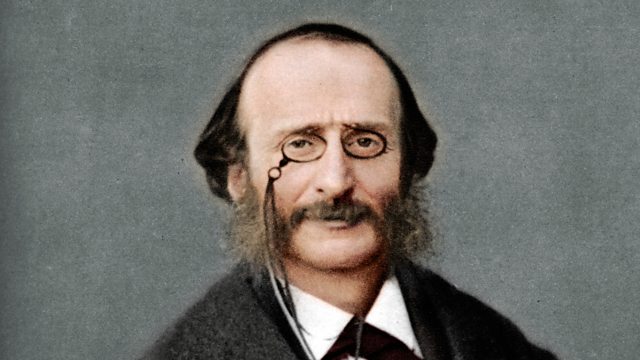
Jacques Offenbach was one of the most influential composers of the nineteenth century and a central figure in the development of French operetta. Renowned for his wit, melodic brilliance, and theatrical flair, he transformed musical theater and helped establish a genre that would later influence modern musical comedy. Though born in Germany, Offenbach became a naturalized French citizen and spent most of his career in Paris, where he achieved immense popularity.
His works combined humor, satire, memorable melodies, and sophisticated orchestration. Operettas such as Orpheus in the Underworld, La Belle Hélène, and La Vie Parisienne captivated audiences throughout Europe and beyond. Even today, Offenbach remains celebrated for his lively music and his ability to capture the spirit of his age.

Childhood
Jacques Offenbach was born Jakob Offenbach on June 20, 1819, in Cologne, then part of the Kingdom of Prussia. He was the seventh of ten children born to Isaac Juda Eberst, a synagogue cantor, music teacher, and composer, and his wife Marianne Rindskopf.
His father adopted the surname “Offenbach” after his birthplace, Offenbach am Main, a common practice among Jewish families at the time. Music played a central role in family life, and young Jakob displayed remarkable musical talent from an early age. His father recognized his potential and provided him with musical instruction, particularly on the violin and cello.
The young musician quickly distinguished himself through his exceptional abilities. While many children were still learning basic musical skills, Jakob was already demonstrating an unusual gift for performance and composition. His family encouraged his development and sought opportunities for him to pursue a professional musical career.
Youth
In 1833, at the age of fourteen, Jakob and his older brother Julius traveled to Paris to study at the prestigious Paris Conservatory. The French capital was then one of Europe’s most vibrant cultural centers, offering immense opportunities for aspiring musicians.
Upon arriving in France, Jakob began using the French form of his name, Jacques Offenbach. Although he enrolled at the Conservatory, he found the institution’s rigid structure restrictive and left after about a year. Nevertheless, his time there provided valuable training and connections.
To support himself, Offenbach worked as a cellist in Parisian orchestras and theaters. His extraordinary skill on the cello soon attracted attention. He performed in salons frequented by aristocrats, artists, and intellectuals, earning a reputation as one of the finest cellists in Paris.
During these years, Offenbach also began composing. He wrote chamber music, dances, and songs while developing an understanding of theatrical audiences. The experience he gained performing in theaters would later prove essential to his success as a composer of stage works.
In 1844, he married Herminie d’Alcain, the daughter of a Spanish Carlist officer. Their marriage was long and stable, producing several children and providing Offenbach with personal support throughout his demanding career.
Adulthood
The 1840s and 1850s marked the beginning of Offenbach’s rise in the Parisian musical world. He served as conductor at the Comédie-Française and composed numerous theatrical pieces. However, he remained ambitious and sought greater artistic independence.
In 1855, he founded the Théâtre des Bouffes-Parisiens, a theater dedicated primarily to light musical works. This venture became the launching pad for his greatest successes. Through this theater, Offenbach developed and popularized the operetta, a genre that combined spoken dialogue with musical numbers and emphasized comedy, satire, and entertainment.
The political climate of the Second French Empire under Napoleon III provided fertile ground for Offenbach’s artistic style. His operettas gently mocked mythology, society, politics, and human behavior while remaining accessible and entertaining. Audiences were delighted by his clever humor and sparkling music.
Throughout the 1860s, Offenbach enjoyed extraordinary success. His works were performed not only in France but across Europe and eventually in North America. He became one of the most famous composers of his generation.
However, the outbreak of the Franco-Prussian War in 1870 created difficulties. Because he was German-born and closely associated with France, he found himself viewed with suspicion by some on both sides of the conflict. His popularity temporarily declined, and he experienced financial challenges.
Despite these setbacks, Offenbach continued composing and conducting. He traveled extensively, including successful tours in the United States, where audiences welcomed his music enthusiastically. Gradually, his reputation recovered, and he remained an important figure in musical theater until the end of his life.
Major Compositions
Jacques Offenbach composed more than one hundred stage works during his career. His most significant compositions include:
Orpheus in the Underworld (1858)
Perhaps Offenbach’s most famous operetta, this satirical retelling of the Greek myth of Orpheus shocked and delighted audiences. The work is especially remembered for its energetic “Galop Infernal,” which later became associated with the can-can dance.
Geneviève de Brabant (1859)
This comic operetta further established Offenbach’s reputation for blending humor, parody, and memorable melodies.
La Belle Hélène (1864)
A witty reinterpretation of the story of Helen of Troy, this operetta became one of Offenbach’s greatest international successes.
Barbe-Bleue (Bluebeard) (1866)
Based on the famous fairy tale, this work showcased Offenbach’s gift for comic storytelling and satirical characterization.
La Vie Parisienne (1866)
This operetta offered a humorous portrait of Parisian society and became a celebrated example of Offenbach’s ability to capture contemporary life.
La Grande-Duchesse de Gérolstein (1867)
A brilliant satire of militarism and political authority, this work enjoyed immense popularity throughout Europe.
La Périchole (1868)
Inspired by historical figures in Peru, this operetta combined humor, romance, and emotional depth.
Les Brigands (1869)
This work satirized corruption and social hypocrisy while maintaining Offenbach’s characteristic wit and musical charm.
The Tales of Hoffmann (1881)
Although unfinished at the time of his death, this opera is often considered Offenbach’s masterpiece. Unlike his operettas, it explores darker and more serious themes. Based on stories by the German writer E. T. A. Hoffmann, the opera contains some of the most beautiful and enduring music in the operatic repertoire.
Death
By the late 1870s, Offenbach’s health had begun to decline. Nevertheless, he remained determined to complete The Tales of Hoffmann, hoping it would establish his reputation as a serious opera composer.
He worked tirelessly despite suffering from various health problems. Unfortunately, he was unable to finish the opera before his death.
Jacques Offenbach died in Paris on October 5, 1880, at the age of sixty-one. His passing was widely mourned in France and throughout Europe. He was buried at Montmartre Cemetery in Paris, where his grave continues to attract admirers of his music.
Following his death, The Tales of Hoffmann was completed and premiered in 1881, achieving great success and securing an important place in the operatic canon.
Conclusion
Jacques Offenbach was a revolutionary figure in nineteenth-century music. Through his creativity, humor, and theatrical genius, he transformed operetta into a major artistic form and influenced generations of composers and playwrights.
His music captured the spirit of Paris during a period of immense cultural vitality, while his satirical works provided audiences with both entertainment and social commentary. From the exuberant energy of Orpheus in the Underworld to the lyrical beauty of The Tales of Hoffmann, Offenbach demonstrated remarkable versatility and artistic vision.
Today, he is remembered not only as the “Father of Operetta” but also as one of the most inventive and enduring composers of musical theater. His works continue to be performed around the world, ensuring that his legacy remains vibrant more than a century after his death.
Comments are closed