Introduction
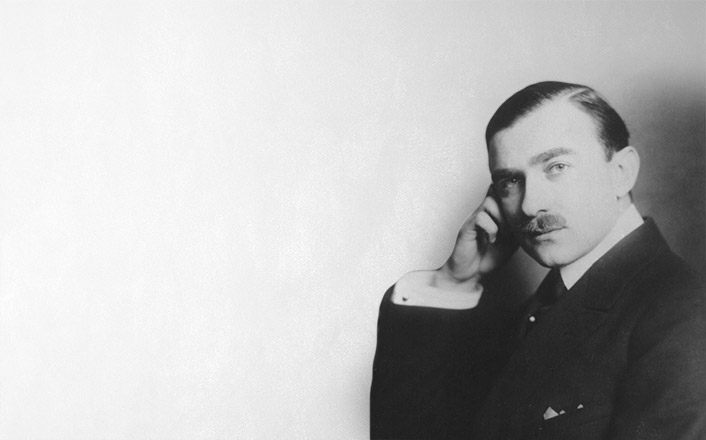
Karol Szymanowski stands among the most important composers in the history of Polish classical music. Often regarded as the greatest Polish composer after Frédéric Chopin, Szymanowski helped shape the transition from Romanticism to Modernism during the early twentieth century. His music combined rich harmonies, vivid orchestral colors, and influences from European, Mediterranean, and Polish folk traditions. Through his innovative compositions, he established a distinctive musical voice that brought international recognition to Polish music.
Born during a period when Poland did not exist as an independent nation, Szymanowski developed a strong cultural identity that later influenced his artistic vision. His career unfolded amid political upheavals, world wars, and rapid changes in musical styles. Despite chronic health problems and financial difficulties, he produced a remarkable body of work that continues to be performed worldwide.
Childhood
Karol Maciej Szymanowski was born on October 3, 1882, on his family’s estate in Tymoszówka, a region that is now part of Ukraine but was then within the Russian Empire. He came from a wealthy Polish noble family that valued culture, education, and the arts. Music occupied an important place in family life, and the young Karol was exposed to piano playing and musical performances from an early age.
His father, Stanisław Korwin-Szymanowski, was an educated landowner and amateur musician who encouraged his son’s musical interests. Karol began studying piano as a child and soon demonstrated exceptional talent. Because of his fragile health and a leg injury suffered in childhood, he spent much of his early years at home, where he devoted considerable time to music and reading.
Recognizing his potential, his family arranged for him to receive formal instruction. He studied at the music school of Gustav Neuhaus in Elisavetgrad, where he learned piano, theory, and composition. These formative years provided the technical foundation that would support his future career.
The rural environment of Tymoszówka also played a significant role in shaping his imagination. Surrounded by nature and immersed in Polish cultural traditions, Szymanowski developed a sensitivity to folklore and national identity that would later emerge in his mature compositions.
Youth
In 1901, Szymanowski moved to Warsaw to continue his musical education. There he studied harmony with Marek Zawirski and composition with Zygmunt Noskowski, one of Poland’s leading composers and teachers. Warsaw exposed the young musician to a broader artistic world and introduced him to many of the intellectual and cultural figures who would influence his development.
During these years, Szymanowski became associated with a group of young composers seeking to modernize Polish music. Together with Grzegorz Fitelberg, Ludomir Różycki, and Apolinary Szeluto, he helped establish the Young Poland in Music movement. The group’s goal was to promote contemporary Polish compositions and connect Polish music with broader European artistic trends.
Szymanowski’s early works reflected the influence of German Romantic composers such as Richard Wagner and Richard Strauss, as well as the Russian composer Alexander Scriabin. His first piano works, songs, and orchestral pieces revealed a composer with exceptional technical skill and a growing desire to explore new harmonic possibilities.
Travel became increasingly important during this period. Szymanowski visited Germany, Italy, and other European countries, encountering different artistic traditions and expanding his cultural horizons. These experiences encouraged him to move beyond national boundaries and develop a more cosmopolitan artistic outlook.
Adulthood
The years before and during World War I marked a period of profound artistic growth. Szymanowski traveled extensively throughout Europe, North Africa, and the Mediterranean region. Visits to Italy, Sicily, and other cultural centers left a lasting impression on him. Ancient Greek culture, Middle Eastern art, and Mediterranean landscapes inspired some of his most original compositions.
During World War I, he remained largely at his family estate, where he devoted himself to composition, literature, and philosophical studies. This period produced many of his most innovative works, characterized by exotic harmonies, colorful orchestration, and a highly personal musical language.
The Russian Revolution of 1917 dramatically altered his life. The family estate at Tymoszówka was destroyed, and Szymanowski was forced to leave the place that had shaped his childhood. The loss deeply affected him emotionally and financially.
After the war, he settled in Warsaw and gradually gained international recognition. Concert tours in Europe and the United States introduced audiences to his music. Prominent musicians such as Artur Rubinstein and Paweł Kochański championed his works and helped establish his reputation abroad.
In the 1920s, Szymanowski underwent another artistic transformation. He became increasingly interested in Polish folk traditions, particularly the music of the highland people of the Tatra Mountains. This fascination led him to create a distinctive national style that merged modern techniques with authentic folk elements.
In 1927, he accepted the position of Director of the Warsaw Conservatory. Although he worked tirelessly to modernize musical education in Poland, administrative responsibilities often frustrated him. His efforts nonetheless contributed significantly to the development of Polish musical institutions.
Throughout his adult life, Szymanowski struggled with tuberculosis. Frequent stays in sanatoriums became necessary, and medical expenses placed a heavy burden on his finances. Nevertheless, he continued composing and remained one of Europe’s most respected musical figures.
Major Compositions
Szymanowski’s musical output is generally divided into three major stylistic periods.
Early Period
His early compositions were influenced by late Romanticism and German musical traditions. Important works from this era include:
- Symphony No. 1 (1907)
- Symphony No. 2 (1909–1910)
- Piano Sonata No. 2
- Numerous songs and piano pieces
These works demonstrate rich orchestration, complex harmonies, and the influence of Wagner, Strauss, and Scriabin.
Middle Period
His middle period is considered one of the most original phases of his career. Inspired by Mediterranean cultures, mythology, and Eastern influences, he composed:
- Violin Concerto No. 1 (1916)
- Symphony No. 3, “Song of the Night” (1916)
- Métopes (1915)
- Myths (1915)
- Masques (1916)
- Opera King Roger (1918–1924)
Among these works, King Roger is widely regarded as his masterpiece. The opera explores themes of spirituality, desire, and personal transformation through a highly sophisticated musical language.
Late Period
During his final years, Szymanowski turned toward Polish folk traditions. Major works from this period include:
- Stabat Mater (1926)
- Mazurkas for Piano
- Harnasie (1923–1931)
- Symphony No. 4, “Symphonie Concertante” (1932)
- Violin Concerto No. 2 (1933)
These compositions successfully integrated authentic Polish folk elements into modern classical forms. They helped establish a uniquely Polish musical identity for the twentieth century.
Death
By the 1930s, Szymanowski’s health had deteriorated significantly. Tuberculosis increasingly limited his ability to travel and work. Although he continued composing, much of his time was spent seeking medical treatment in various European sanatoriums.
In 1936, he traveled to southern France for further treatment, but his condition continued to worsen. Eventually, he was admitted to a sanatorium in Lausanne, Switzerland.
Karol Szymanowski died on March 29, 1937, at the age of fifty-four. His death marked the end of one of the most influential careers in modern Polish music. His body was returned to Poland, where he received a national funeral and was buried in Kraków among many of the country’s most distinguished cultural figures.
The loss was deeply felt throughout the musical world. By the time of his death, Szymanowski had become an internationally respected composer whose work represented both artistic innovation and national pride.
Conclusion
Karol Szymanowski transformed Polish music during a period of extraordinary cultural and political change. Drawing inspiration from Romanticism, Impressionism, Mediterranean culture, and Polish folk traditions, he created a musical language that was both deeply personal and universally appealing.
His career reflected a constant search for artistic renewal. From his early Romantic compositions to the exotic masterpieces of his middle years and the folk-inspired works of his final period, Szymanowski continually reinvented himself while maintaining a unique artistic identity.
Today, he is recognized as one of the leading composers of the twentieth century. Works such as King Roger, Violin Concerto No. 1, Symphony No. 3, Stabat Mater, and Harnasie remain central to the international concert repertoire. His influence extends far beyond Poland, and his music continues to inspire performers, scholars, and audiences around the world.
Karol Szymanowski’s legacy endures as a testament to creativity, cultural exploration, and artistic courage. Through his compositions, he secured a permanent place among the great figures of classical music history.
Comments are closed