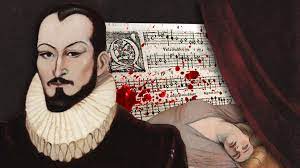
Carlo Gesualdo: The Visionary Composer Ahead of His Time
Carlo Gesualdo (1566–1613), Prince of Venosa, remains one of the most fascinating and unconventional figures in the history of Renaissance music. Celebrated for his daring harmonic language, expressive chromaticism, and emotionally charged vocal writing, Gesualdo composed works that were centuries ahead of their time. While his dramatic personal life has often attracted attention, his enduring legacy rests firmly on the originality and brilliance of his music.
His compositions pushed the boundaries of late Renaissance polyphony, creating intense emotional landscapes that continue to captivate performers, scholars, and audiences alike. The following five works and collections represent the pinnacle of Gesualdo’s musical achievement.
1. Madrigals, Book VI (1611)
Gesualdo’s Sixth Book of Madrigals is widely regarded as his greatest masterpiece and one of the most extraordinary collections in Renaissance music. Published in 1611, it demonstrates the full maturity of his revolutionary musical language.
The collection is filled with extreme chromatic harmonies, unexpected modulations, dramatic contrasts, and vivid word painting. Every musical gesture serves to intensify the emotional meaning of the poetry, creating an unprecedented level of expressive realism.
Among its most celebrated madrigals are:
- Moro, lasso, al mio duolo
- Beltà, poi che t’assenti
- Tu piangi, o Filli mia
- Alme d’Amor rubelle
Moro, lasso, al mio duolo is especially admired for its astonishing harmonic progressions, which sound remarkably modern even by contemporary standards.
Why it matters
The Sixth Book represents the culmination of Renaissance madrigal composition and remains one of the most influential vocal collections ever written.
2. Tenebrae Responsories (Responsoria et alia ad Officium Hebdomadae Sanctae)
Published in 1611, the Tenebrae Responsories are among the greatest sacred works of the late Renaissance.
Written for the liturgy of Holy Week, these twenty-seven responsories accompany the services of Maundy Thursday, Good Friday, and Holy Saturday. Gesualdo combines profound religious devotion with extraordinary emotional intensity, using chromatic harmonies to portray suffering, grief, betrayal, and redemption.
Unlike many sacred composers of his era, Gesualdo infused liturgical music with the same expressive power found in his secular madrigals.
Notable responsories include:
- Tristis est anima mea
- Tenebrae factae sunt
- O vos omnes
- Ecce quomodo moritur justus
Why it matters
The Tenebrae Responsories stand among the finest achievements in Renaissance sacred music and demonstrate Gesualdo’s unparalleled ability to unite spiritual depth with musical innovation.
3. Madrigals, Book V (1611)
The Fifth Book of Madrigals serves as the perfect bridge between Gesualdo’s earlier style and the astonishing experimentation of Book VI.
Here, listeners encounter increasingly adventurous harmonic language while maintaining exceptional contrapuntal craftsmanship. Themes of love, longing, despair, jealousy, and death dominate the poetry, allowing Gesualdo to explore every emotional nuance through music.
Famous pieces include:
- Asciugate i begli occhi
- Dolcissima mia vita
- Mercè, grido piangendo
- O dolorosa gioia
The emotional contrasts throughout the collection reveal Gesualdo’s unique ability to transform poetic imagery into musical drama.
Why it matters
Book V represents one of the greatest collections of late Renaissance madrigals and marks the point where Gesualdo’s mature style fully emerges.
4. Sacrae Cantiones (1603)
The Sacrae Cantiones is a remarkable collection of sacred motets that illustrates another side of Gesualdo’s compositional genius.
Published in 1603, these works display refined counterpoint while introducing the expressive harmonic vocabulary that would later define his mature style. The motets reveal a composer equally comfortable writing for liturgical worship and emotional expression.
The surviving collection includes settings of Latin sacred texts that combine devotional seriousness with sophisticated vocal writing.
Characteristic features include:
- Rich polyphonic textures
- Bold chromatic passages
- Elegant voice leading
- Dramatic textual interpretation
Why it matters
The Sacrae Cantiones demonstrate that Gesualdo’s innovations extended well beyond secular music, influencing the development of sacred vocal composition.
5. Madrigals, Book IV (1596)
Although Gesualdo’s later books receive the greatest attention, the Fourth Book of Madrigals is an essential milestone in his artistic evolution.
Published in 1596, it reveals a composer beginning to challenge traditional harmonic conventions while still working within established Renaissance forms. The music already displays the intense emotional expression and adventurous chromaticism that would later become his signature.
Important madrigals include:
- Sparge la morte al mio Signor
- Luci serene e chiare
- Arde il mio cor
Throughout the collection, listeners can hear the gradual emergence of Gesualdo’s unmistakable musical voice.
Why it matters
Book IV marks the transition from conventional late Renaissance madrigal writing to the radical musical language that would make Gesualdo one of history’s most original composers.
Gesualdo’s Musical Legacy
Carlo Gesualdo occupies a unique position in music history. His fearless use of chromatic harmony, daring dissonances, and intense emotional expression challenged the conventions of his time and anticipated musical developments that would not become common until the nineteenth and twentieth centuries.
Modern composers such as Igor Stravinsky, Alfred Schnittke, and Luigi Dallapiccola admired Gesualdo’s remarkable originality, while contemporary ensembles continue to perform and record his works with growing enthusiasm.
Far more than a historical curiosity, Gesualdo is now recognized as one of the most innovative composers of the late Renaissance.
Conclusion
The five compositions and collections highlighted above demonstrate the extraordinary breadth of Carlo Gesualdo’s artistry. From the emotionally overwhelming Sixth Book of Madrigals to the profound spirituality of the Tenebrae Responsories, his music remains a landmark in Western classical tradition.
Comments are closed