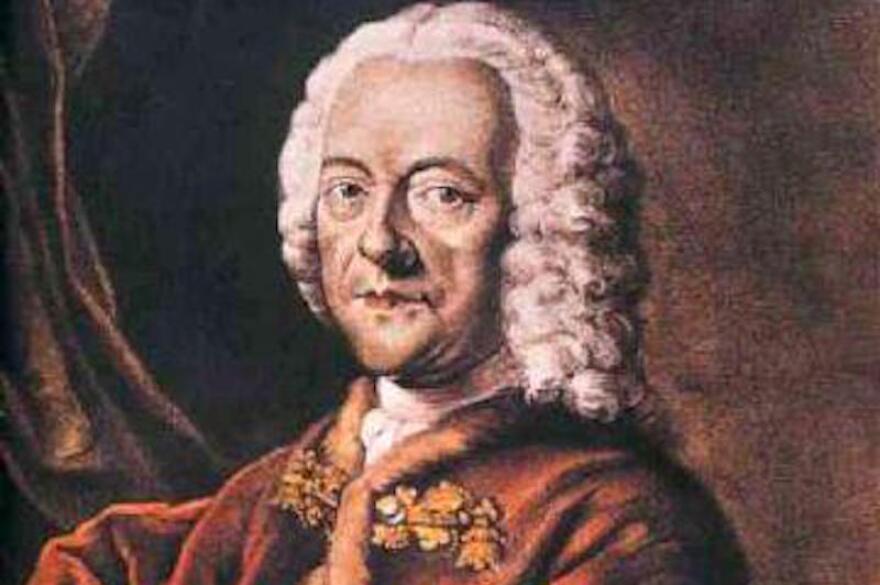
Georg Philipp Telemann – A Complete Biography
Introduction
Georg Philipp Telemann (1681–1767) was a German Baroque composer known for his astonishing productivity, stylistic versatility, and lasting influence on the music of his time. A contemporary of Johann Sebastian Bach and George Frideric Handel, Telemann was one of the most celebrated composers of the 18th century. His work bridged national styles and helped shape the evolution of Western classical music, contributing significantly to sacred, secular, instrumental, and vocal traditions.
Childhood
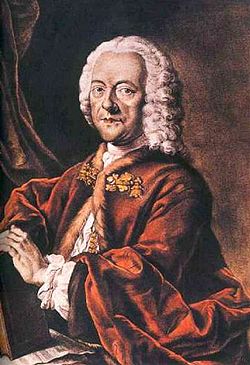
Telemann was born on March 14, 1681, in Magdeburg, Germany. He came from a family deeply rooted in the Lutheran church, and his father, a clergyman, passed away when Telemann was just four years old. His mother, hoping to steer him toward a more stable and respectable career, strongly opposed his musical ambitions. Nonetheless, young Georg displayed remarkable musical talent at an early age, teaching himself to play several instruments and secretly composing music.
Despite his mother’s attempts to keep him from music—including sending him to schools that would discourage musical pursuits—Telemann continued to nurture his passion in secret. By age 10, he had begun composing and was proficient on several instruments, including the violin, recorder, and keyboard.
Youth
In 1701, Telemann enrolled at the University of Leipzig to study law, as his family desired. However, music quickly took precedence. He founded a student musical society known as the Collegium Musicum, which performed publicly and laid the foundation for many of his later achievements. He also became music director at the Leipzig opera and served as organist at the Neukirche.
During this time, Telemann developed a deep interest in opera, sacred music, and instrumental forms. His exposure to the musical styles of France, Italy, and Poland broadened his compositional approach, allowing him to create a unique blend of European influences that would define much of his work.
Adulthood
After leaving Leipzig, Telemann held musical posts in several cities, including Sorau, Eisenach, and Frankfurt. In these roles, he composed cantatas, orchestral suites, sonatas, and other instrumental music, steadily gaining reputation and influence. He also developed important connections with court and church musicians, expanding his reach throughout German-speaking Europe.
In 1721, Telemann moved to Hamburg, where he was appointed music director of the city’s five principal churches. He remained in this role for the rest of his life. Hamburg provided the perfect environment for his creativity to flourish. He organized public concerts, directed church music, composed operas, and continued to publish his works widely.
Telemann was also an innovative music publisher. He printed and sold his own compositions, increasing both his financial independence and artistic control. Despite personal hardships, including a troubled second marriage and financial losses due to his wife’s debts, he continued to compose prolifically.
Major Compositions
Telemann was one of the most prolific composers in Western music history, with an estimated output of over 3,000 works. His music spans nearly every genre of the time, including sacred cantatas, passions, orchestral suites, concertos, chamber music, operas, and keyboard pieces.
One of his most famous collections is Tafelmusik (Table Music), published in 1733. It contains orchestral suites, chamber music, and solo pieces designed for entertainment at aristocratic banquets. Another important set is the Paris Quartets, which blend French elegance, Italian lyricism, and German structure.
Telemann also composed dozens of passions, many of which were performed annually in Hamburg’s churches. These works reveal his sensitivity to drama and deep understanding of the sacred tradition. His style often emphasized melody, clarity, and charm over the complex counterpoint of his contemporaries.
Death
Georg Philipp Telemann died on June 25, 1767, in Hamburg, at the age of 86. At the time of his death, he was one of the most respected musicians in Europe. His passing marked the end of a long and influential career that spanned more than six decades.
He was succeeded in his Hamburg post by his godson, Carl Philipp Emanuel Bach, the son of Johann Sebastian Bach. This succession symbolized the continuity between Baroque and Classical traditions and highlighted Telemann’s role in shaping the music of future generations.
Conclusion
Georg Philipp Telemann’s life and music reflect a rare combination of creativity, discipline, and innovation. Self-taught and determined, he rose to prominence in a time when music was both a craft and a calling. He mastered numerous genres, fused national styles, and elevated public concert life and music publishing in Germany.
Though his fame was later eclipsed by figures like Bach and Handel, modern scholarship has restored Telemann’s reputation as one of the great composers of the Baroque era. His immense catalog continues to be performed and studied, offering insight into a rich and varied musical world shaped by one of its most resourceful and imaginative minds.
Comments are closed