
Giuseppe Torelli – A Complete Biography
Introduction
Giuseppe Torelli (1658–1709) was a pivotal figure in the development of Baroque music, particularly renowned for his contributions to the instrumental concerto. An Italian violinist, violist, teacher, and composer, Torelli’s innovations laid much of the groundwork for the concerto form that would later be perfected by composers such as Antonio Vivaldi and Johann Sebastian Bach. His work, especially his concertos for strings and trumpet, significantly influenced the musical landscape of the late 17th and early 18th centuries. This biography will delve into Torelli’s life, from his early years and musical training to his major compositions and lasting impact on classical music.
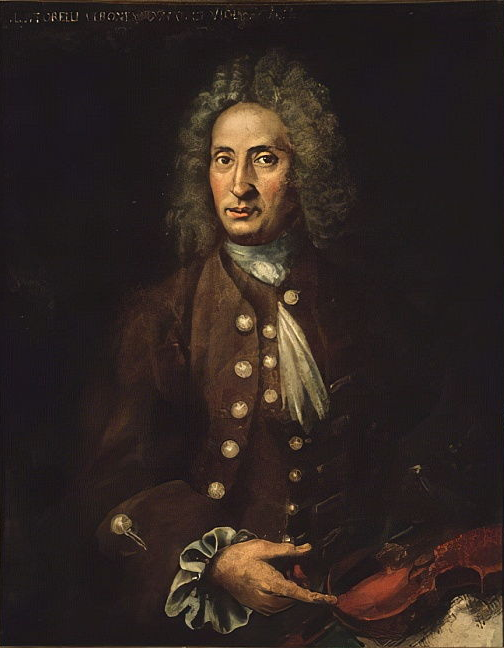
Childhood
Giuseppe Torelli was born in Verona, Italy, on April 22, 1658 [Wikipedia]. While specific details about his earliest musical training remain somewhat obscure, it is believed that he began his studies in Verona. Speculation suggests he may have been a pupil of Leonardo Brugnoli or Bartolomeo Laurenti, though this is not definitively confirmed [Bach Cantatas]. Another possible early teacher, due to his proximity in Verona, was Giuliano Massaroti [Bach Cantatas, HOASM]. Despite the lack of concrete information regarding his initial instructors, it is evident that Torelli displayed prodigious talent on both the violin and viola from a young age [Sheet Music International]. His early life in Verona laid the foundation for his future as a significant figure in the Baroque musical scene.
Youth
Torelli’s youth marked a crucial period of development and relocation. Around 1681, he departed Verona and moved to Bologna, a city that would become central to his musical career [Bach Cantatas, HOASM]. In Bologna, he furthered his musical education, studying composition with the esteemed Giacomo Antonio Perti [Wikipedia, Bach Cantatas, Italy On This Day]. This tutelage proved instrumental in shaping Torelli’s compositional skills. On June 27, 1684, at the age of 26, Torelli achieved a significant milestone by becoming a member of the prestigious Accademia Filarmonica as a suonatore di violino (violin player) [Wikipedia, Bach Cantatas, HOASM, Italy On This Day]. This membership was a testament to his already considerable skill as a performer. Two years later, in 1686, he secured a position as a viola player in the orchestra of the Basilica di San Petronio in Bologna, a renowned musical institution [Wikipedia, Bach Cantatas, Italy On This Day]. This period in Bologna, from 1686 to 1695, was highly formative, immersing him in a vibrant musical culture and providing the perfect environment for his creative development within the
Bolognese School [Sheet Music International].
Adulthood
Torelli’s adulthood was marked by significant contributions to musical form and a period of travel. During his first tenure in Bologna (1684-1696), he played a central role in the development of both the concerto grosso and the solo concerto [Sheet Music International]. His early published works, such as the Sonate a 3 (1686) and Concerto da camera (1686), showcased his evolving style [Bach Cantatas]. He also began composing for the trumpet around 1690, an unusual endeavor for a string player, likely influenced by the virtuoso trumpeter Giovanni Pellegrino Brandi, who performed with the San Petronio orchestra [Bach Cantatas, Sheet Music International].
In 1696, due to financial constraints, the San Petronio orchestra was temporarily disbanded, leading Torelli to seek employment elsewhere [Bach Cantatas, Italy On This Day]. He traveled north of the Alps, likely stopping in Vienna, before securing a prestigious position as maestro di concerto at the court of Georg Friedrich II, Margrave of Brandenburg-Ansbach, in Germany by 1698 [Wikipedia, Bach Cantatas, HOASM, Sheet Music International]. During his time in Ansbach, he conducted the orchestra and collaborated with the castrato Francesco Antonio Pistocchi [Wikipedia, Bach Cantatas, Sheet Music International]. This period was productive, and he likely composed many of his famous trumpet sonatas and concertos here, exporting Italian instrumental innovations to Europe [Sheet Music International].
By 1701, Torelli returned to Bologna, rejoining the newly re-formed cappella musicale at San Petronio as a violinist, where he remained until his death [Wikipedia, Bach Cantatas, HOASM, Sheet Music International]. His final years were dedicated to perfecting the violin concerto, culminating in his most important collection, the 12 Concerti musicali a quattro, Op. 8, published posthumously in 1709 [Wikipedia, Bach Cantatas, Sheet Music International]. These works, particularly the six solo violin concertos, are considered among the first fully realized examples of the form and significantly influenced subsequent composers like Antonio Vivaldi and Johann Sebastian Bach [Sheet Music International].
Major Compositions
Giuseppe Torelli’s compositional output was instrumental in shaping the Baroque concerto. His works are primarily for strings and trumpets, showcasing his innovative approach to instrumental music. Some of his most notable compositions include:
•10 Sonate a 3, Op. 1 (1686): These sonatas for three instruments with basso continuo were among his earliest published works, demonstrating his early mastery of chamber music [Wikipedia, Bach Cantatas].
•12 Concerto da camera, Op. 2 (1686): Written for two violins and basso continuo, these concertos further explored the chamber music format [Wikipedia, Bach Cantatas].
•12 Sinfonie, Op. 3 (1687): These sinfonias for two to four instruments marked a step towards more orchestral writing [Wikipedia, Bach Cantatas].
•12 Concertino per camera, Op. 4 (1688): This collection featured concertinos for violin and cello [Wikipedia, Bach Cantatas].
•12 Sinfonie a 3 e concerti a 4, Op. 5 (1692): This publication continued his exploration of both sinfonias and concertos [Wikipedia, Bach Cantatas].
•12 Concerti musicali a quattro, Op. 6 (1698): These concertos were published during his time in Ansbach and are significant examples of his mature style [Wikipedia, Bach Cantatas].
•12 Concerti grossi con una pastorale per il Santissimo Natale, Op. 8 (published posthumously 1709): This collection is considered the pinnacle of his achievements, particularly for its six solo violin concertos, which are regarded as some of the first fully realized solo violin concertos ever published. It also includes the popular “Christmas Eve Concerto” [Wikipedia, Bach Cantatas, Sheet Music International].
•Over 30 Concertos for 1 to 4 Trumpets: Torelli was a pioneer in writing for the trumpet, treating it as a virtuosic solo instrument. Many of these works, composed after 1702, were unpublished during his lifetime [Wikipedia, Sheet Music International]. His trumpet concertos are particularly celebrated for their athletic passagework and ceremonial grandeur.
His systematic approach to contrasting solo instruments against the full orchestra in these compositions laid the essential groundwork for the development of the concerto form, influencing generations of composers who followed.
Death
Giuseppe Torelli died in Bologna, Italy, on February 8, 1709, at the age of 50 [Wikipedia, Bach Cantatas, Italy On This Day, Sheet Music International]. His manuscripts are preserved in the San Petronio archives in Bologna, a testament to his significant contributions to music [Wikipedia, Bach Cantatas]. Although relatively little is known about his final years, it is understood that he composed less music during this period, with his last major effort being the 12 Concerti grossi con una pastorale, Op. 8, which was published posthumously [Bach Cantatas, Sheet Music International]. His death marked the end of a life dedicated to musical innovation and the development of the concerto form.
Conclusion
Giuseppe Torelli stands as a towering figure in the history of Baroque music, often hailed as the “Father of the Concerto” [Sheet Music International]. His pioneering work in codifying the three-movement structure (fast-slow-fast) and establishing the clear distinction between solo and orchestral parts revolutionized instrumental music. Through his innovative compositions for violin, viola, and especially trumpet, Torelli not only showcased his own virtuosity but also provided a foundational framework that profoundly influenced subsequent generations of composers. His legacy is evident in the works of Antonio Vivaldi, Johann Sebastian Bach, and countless others who built upon the concerto form he so meticulously developed. Torelli’s life, though at times marked by relocation and financial constraints, was consistently dedicated to pushing the boundaries of musical expression. His enduring contributions ensure his place as a master of the Baroque era and a visionary whose impact continues to resonate in classical music today.
Comments are closed