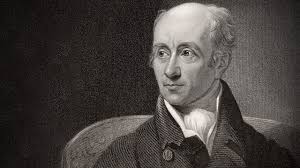
Muzio Clementi – A Complete Biography
Introduction
Muzio Clementi, often hailed as the “Father of the Pianoforte,” was one of the most influential figures in the transition from the Classical to the Romantic era of Western music. Born in Rome in 1752, Clementi’s life and work were deeply intertwined with the evolution of the piano as a dominant musical instrument. As a composer, performer, teacher, publisher, and piano manufacturer, his impact reached far beyond his own compositions. His sonatas and didactic works laid the foundation for generations of pianists, including Ludwig van Beethoven and John Field, who drew inspiration from his style and technical innovations.
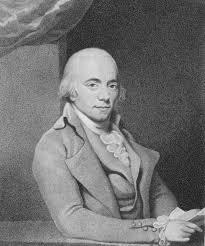
Childhood
Muzio Filippo Vincenzo Francesco Saverio Clementi was born on January 23, 1752, in Rome, Italy. His father, Niccolò Clementi, was a silversmith, and his mother, Magdalena Kaiser, was of Swiss descent. From an early age, Clementi showed a remarkable aptitude for music. By the age of seven, he was receiving lessons in figured bass, counterpoint, and composition from several local teachers, including Antonio Boroni, organist Cordicelli, and Gaetano Carpani.
At just nine years old, he became the organist at the Church of San Lorenzo in Damaso in Rome—a remarkable achievement that demonstrated his precocious musical abilities. His early compositions, though not widely circulated, already displayed a keen sense of melodic development and harmonic control that would later characterize his mature works.
Youth
Clementi’s life took a significant turn in 1766 when the English nobleman Sir Peter Beckford visited Rome. Impressed by the young prodigy’s skill, Beckford persuaded Clementi’s father to allow his son to move to England. Under a long-term arrangement, Clementi relocated to Beckford’s estate in Dorset, where he was provided with education, board, and access to musical instruments in exchange for his services as a musician.
During this period, Clementi immersed himself in the works of composers such as Johann Sebastian Bach, George Frideric Handel, and Domenico Scarlatti. This intensive study shaped his compositional technique, deepening his understanding of counterpoint and keyboard virtuosity. By the time he reached his late teens, he had developed a refined and distinctly personal style that blended the contrapuntal rigor of the Baroque with the elegant phrasing and structural clarity of the Classical period.
Adulthood
In 1774, Clementi moved to London, where he began performing as a pianist and composer. His public debut took place in 1775, and he quickly gained a reputation as one of the leading keyboard virtuosos of his time. His fame spread throughout Europe, especially after his celebrated musical duel with Wolfgang Amadeus Mozart in Vienna in 1781, organized by Emperor Joseph II. While Mozart later expressed mixed opinions about Clementi’s style, both men profoundly influenced each other.
Clementi remained in England for much of his adult life, establishing himself not only as a composer and performer but also as a successful businessman. He became a partner in the music publishing firm Longman & Broderip, which later evolved into Clementi & Co. The company published music by leading composers of the day, including Beethoven, whom Clementi greatly admired.
In addition to his publishing ventures, Clementi was deeply involved in piano manufacturing. His company’s instruments were renowned for their craftsmanship and were used by professional musicians across Europe.
As a teacher, Clementi was highly sought after. He trained a generation of pianists who carried his methods and musical philosophy into the nineteenth century. His pupils included notable figures such as John Field, Johann Baptist Cramer, Ignaz Moscheles, and Friedrich Kalkbrenner—all of whom contributed significantly to the development of Romantic piano music.
Major Compositions
Clementi’s compositional output was extensive, though his piano works remain his most enduring legacy. Among his most significant compositions are his “Gradus ad Parnassum” (1817–1826), a monumental collection of 100 studies designed to develop both technique and musical expression. This work became a cornerstone of piano pedagogy and was later studied by composers such as Claude Debussy, who referenced it in his suite Children’s Corner.
His Piano Sonatas, especially those written between 1770 and 1820, display remarkable formal innovation and technical sophistication. Works such as the Sonata in B-flat major, Op. 24 No. 2, and the Sonata in F-sharp minor, Op. 25 No. 5, exhibit a dramatic range and harmonic boldness that anticipated the Romantic style.
Clementi also composed symphonies, concertos, orchestral overtures, and chamber music, although these are less frequently performed today. His Symphony in D major and Symphony in G major, often compared to the early symphonies of Beethoven, reveal his command of orchestration and structure.
Death
In his later years, Clementi gradually withdrew from public life to focus on teaching and revising his compositions. He spent much of his final decade in the countryside near Evesham, Worcestershire, where he lived a comfortable and respected life. Despite declining health, he continued to be active in music until the end.
Muzio Clementi died on March 10, 1832, at the age of 80. He was buried in Westminster Abbey in London, among other great figures of British musical history—a testament to the esteem in which he was held by his contemporaries.
Conclusion
Muzio Clementi’s legacy is both profound and multifaceted. He was a composer of great imagination, a teacher of remarkable influence, a pioneering piano manufacturer, and a visionary music publisher. His works helped shape the modern conception of piano technique and style, serving as a bridge between the Classical clarity of Mozart and Haydn and the emotional depth of Beethoven and Schubert.
Through his sonatas, studies, and pedagogical writings, Clementi laid the foundation for the Romantic piano tradition and inspired countless musicians to follow in his footsteps. Today, he is remembered not only as a virtuoso and innovator but as a true architect of the modern piano era—a figure whose artistry and intellect continue to resonate across centuries.
Comments are closed