Samuel Barber – A Complete Biography
Introduction
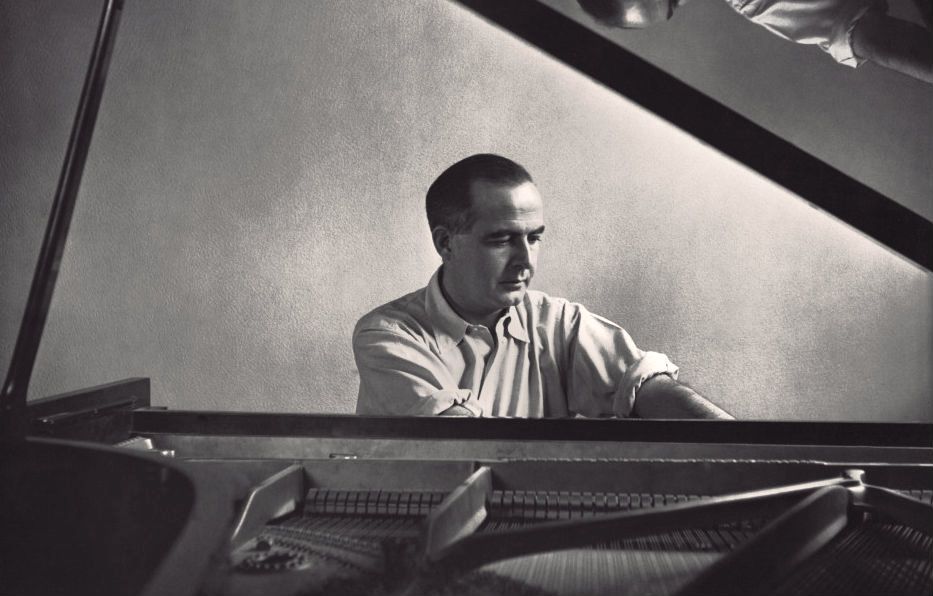
Samuel Osmond Barber II (1910–1981) was a distinguished American classical music composer, pianist, conductor, and music educator. Celebrated as one of the most significant composers of the mid-20th century, Barber’s work is characterized by its lyrical quality and emotional depth, often embracing a traditional 19th-century harmonic language. While he primarily adhered to a Romantic aesthetic, he subtly integrated elements of modernism into his compositions later in his career. His profound influence is evident in the enduring popularity and critical acclaim of works such as his iconic “Adagio for Strings.”
Childhood (1910–1923)
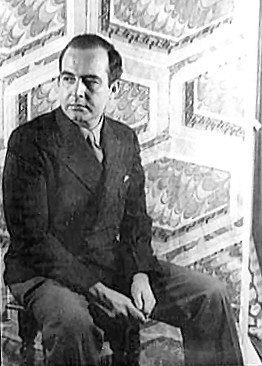
Born on March 9, 1910, in West Chester, Pennsylvania, Samuel Barber hailed from an accomplished and cultured American family. His father was a physician, and his mother, a pianist, fostered an environment rich in artistic appreciation. His maternal aunt, Louise Homer, a renowned contralto at the Metropolitan Opera, and his uncle, Sidney Homer, a respected composer, significantly influenced his early musical inclinations. Barber began piano lessons at the tender age of six and composed his first piece, “Sadness,” a 23-measure solo piano work, at seven. Despite his family’s initial desire for him to pursue more conventional paths, including athletics, Barber’s dedication to music was unwavering. At nine, he famously wrote to his mother, declaring his destiny as a composer. By age ten, he had already penned an operetta titled “The Rose Tree,” and by twelve, he served as an organist at a local church, demonstrating his precocious talent and commitment to music.
Youth (1924–1941)
At fourteen, Barber entered the prestigious Curtis Institute of Music in Philadelphia, embarking on a decade-long period of intensive study where he excelled as a triple prodigy in composition, voice, and piano. His education at Curtis was comprehensive, encompassing piano studies with George Frederick Boyle and Isabelle Vengerova, composition with Rosario Scalero, conducting with Fritz Reiner, and voice with Emilio de Gogorza. It was during this formative period, in 1928, that he met Gian Carlo Menotti, who would become his lifelong partner and frequent collaborator. Barber’s early compositions, marked by their tonal harmony, lyrical melodies, and moderate chromaticism, quickly garnered attention. He was twice awarded the Joseph H. Bearns Prize from Columbia University, first for a violin sonata (now lost) and later for his orchestral overture, “The School for Scandal,” which premiered successfully in 1933 with the Philadelphia Orchestra.
His youth also involved extensive travels across Europe, where he continued his musical development in cities such as Paris, Vienna, and Turin. Barber briefly pursued a career as a baritone, performing on NBC Radio in the mid-1930s, an experience that deeply informed his prolific output of vocal music. His “Symphony in One Movement” achieved international recognition, premiering in Rome in 1936 and subsequently performed at the Salzburg Festival in 1937.
Adulthood (Mid-career: 1942–1966)
Barber’s “Adagio for Strings,” derived from the slow movement of his String Quartet, Op. 11, gained widespread fame after its performance by the NBC Symphony Orchestra under Arturo Toscanini in 1938. This work solidified his reputation and became one of his most recognizable pieces. During World War II, Barber served in the Army Air Corps, composing works like the “Commando March.” He also produced his Cello Concerto and Second Symphony during this time, though he later withdrew the latter. In 1943, Barber and Menotti purchased ‘Capricorn,’ a home north of New York City, which served as their artistic sanctuary and a fertile ground for Barber’s most productive compositional years. Here, he created significant works such as the ballet suite “Medea” and the evocative “Knoxville: Summer of 1915.”
The “Piano Sonata” of 1949, premiered by Vladimir Horowitz, was a major critical triumph. Throughout the 1950s, Barber actively conducted his own works internationally and held the position of vice president of the International Music Council. He developed a significant artistic partnership with soprano Leontyne Price, who premiered his “Hermit Songs” and “Prayers of Kierkegaard.” Barber was honored with the Pulitzer Prize for Music twice: in 1958 for his opera “Vanessa,” which premiered at the Metropolitan Opera with a libretto by Menotti, and again in 1962 for his “Piano Concerto.” His final opera, “Antony and Cleopatra,” debuted at the opening of the new Metropolitan Opera House in 1966. Despite its initial mixed reception, which Barber attributed to an overly elaborate production, he believed it contained some of his finest work and spent the subsequent decade revising it.
Adulthood (Later years: 1966–1981)
Following the challenging premiere of “Antony and Cleopatra” in 1966, Barber faced periods of depression and struggled with alcoholism, which affected his creative output. He divided his time between New York and a chalet in Santa Cristina Gherdëina, often seeking solitude. The romantic relationship with Gian Carlo Menotti concluded in 1970, and their shared home, Capricorn, was sold in 1972, though they maintained a close friendship. Despite these personal struggles, Barber continued to compose. In 1967, he adapted his renowned “Adagio for Strings” into the choral work “Agnus Dei,” which has since become a widely performed piece. His song cycle “Despite and Still” (1969) explored themes of loneliness and lost love, reflecting his personal state and incorporating a more dissonant harmonic language. His cantata “The Lovers” (1971) was well-received, and his “Third Essay for Orchestra” (1978) marked his last major work.
Barber battled cancer in his final years, enduring frequent hospitalizations. He passed away on January 23, 1981, at the age of 70, in his New York City apartment. He was laid to rest in Oaklands Cemetery in West Chester, Pennsylvania. His final composition, “Canzonetta for oboe and string orchestra,” was published posthumously, an unfinished work originally intended as the second movement of an oboe concerto.
Major Compositions
Samuel Barber’s extensive oeuvre includes a wide range of compositions across various genres. Some of his most significant works include:
•Dover Beach (Op. 3, 1931): A setting for medium voice and string quartet.
•The School for Scandal (Op. 5, 1931): An overture that established his early reputation.
•Cello Sonata (Op. 6, 1932): An early chamber work.
•Music for a Scene from Shelley (Op. 7, 1933): An orchestral piece inspired by Percy Bysshe Shelley.
•(First) Symphony in One Movement (Op. 9, 1936): His first internationally recognized orchestral work.
•Adagio for Strings (1936): Originally the slow movement of his String Quartet, Op. 11, it became his most famous work.
•Essay for Orchestra (Op. 12, 1938) and Second Essay for Orchestra (Op. 17, 1942): Pioneering works in a new orchestral genre.
•Violin Concerto (Op. 14, 1939): A lyrical and technically demanding concerto.
•Capricorn Concerto (Op. 21, 1944): A neoclassical work for flute, oboe, trumpet, and string orchestra.
•Cello Concerto (Op. 22, 1945): A significant addition to the cello repertoire.
•Medea (Op. 23, 1946): A ballet suite, later adapted into “Medea’s Dance of Vengeance.”
•Knoxville: Summer of 1915 (Op. 24, 1948): A setting for soprano and orchestra of a prose text by James Agee.
•Sonata for Piano (Op. 26, 1949): A landmark in 20th-century American piano music.
•Hermit Songs (Op. 29, 1953): A song cycle based on medieval Irish texts.
•Prayers of Kierkegaard (Op. 30, 1954): A cantata for soprano, choir, and orchestra.
•Vanessa (Op. 32, 1957): His first Pulitzer Prize-winning opera.
•Piano Concerto (Op. 38, 1962): His second Pulitzer Prize-winning work.
•Agnus Dei (1967): A choral adaptation of “Adagio for Strings.”
•Antony and Cleopatra (Op. 40, 1966, revised 1974): His final opera.
Death
Samuel Barber passed away on January 23, 1981, at the age of 70, in his New York City apartment, after a prolonged battle with cancer. His funeral was held at the First Presbyterian Church of West Chester, and he was interred in Oaklands Cemetery in his hometown of West Chester, Pennsylvania. His final composition, the “Canzonetta for oboe and string orchestra,” was published posthumously, a poignant testament to his lifelong dedication to music, even in his last days.
Conclusion
Samuel Barber’s legacy as a composer is profound and enduring. Despite facing critical challenges for his adherence to traditional tonality during an era dominated by modernist experimentation, Barber remained steadfast in his artistic vision, famously stating his commitment to composing as he wished. His music, characterized by its lyrical beauty, emotional intensity, and masterful craftsmanship, continues to resonate with audiences and performers worldwide. Works like “Adagio for Strings” have transcended the classical realm, becoming cultural touchstones. His numerous awards, including two Pulitzer Prizes, underscore his significant contributions to American and global classical music. Barber’s ability to infuse traditional forms with a distinctive, modern sensibility ensures his place as one of the 20th century’s most cherished and frequently performed composers, a testament to the timeless quality of his art.
Comments are closed