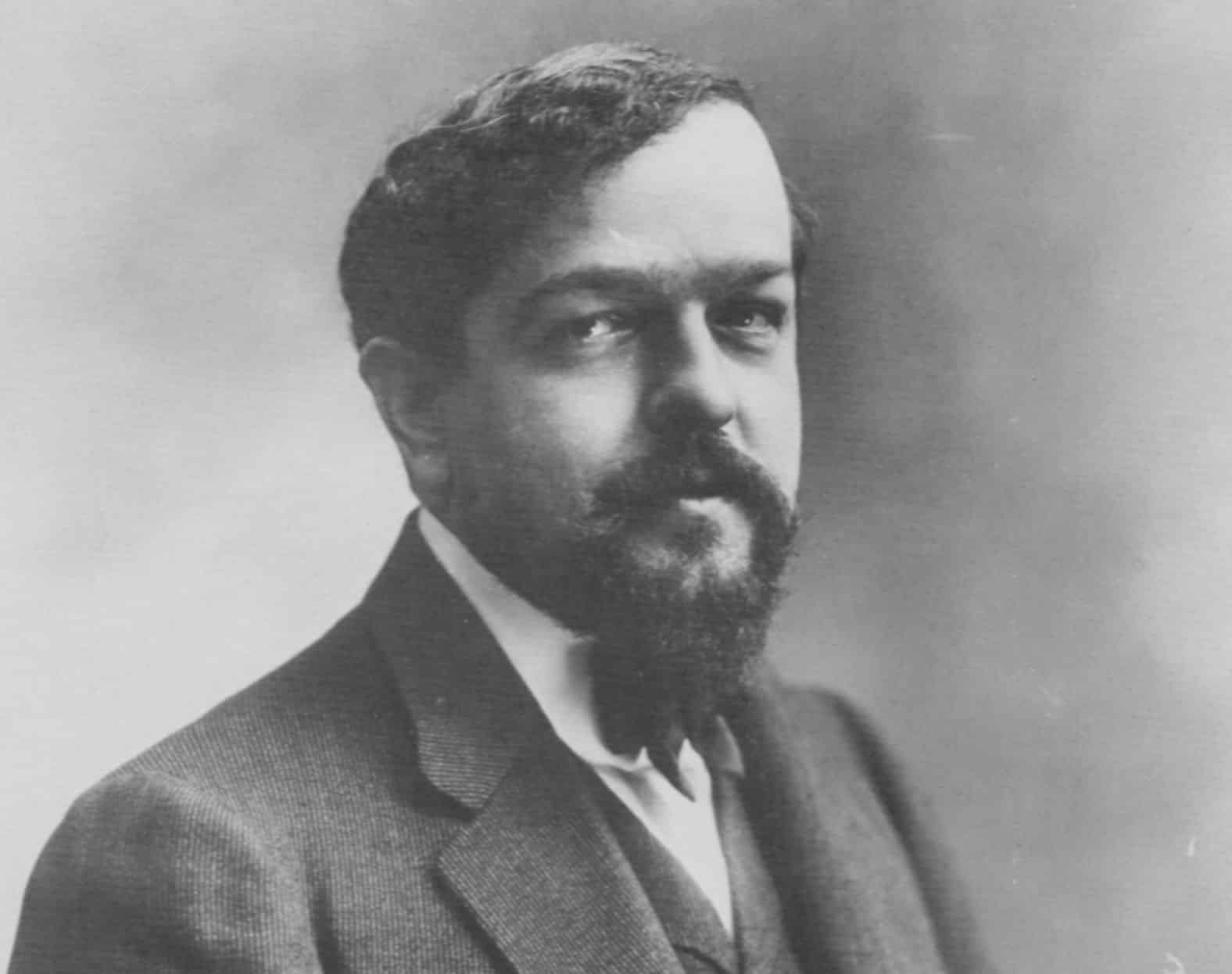
Claude Debussy – A Complete Biography
Introduction
Achille-Claude Debussy (August 22, 1862 – March 25, 1918) was a French composer whose innovations in harmony, timbre, form, and orchestral color helped define early twentieth-century music. Frequently associated with musical Impressionism, a label he personally rejected, Debussy sought to liberate music from the rigid formal and tonal conventions of the Romantic era. His work emphasizes atmosphere, nuance, and suggestion rather than explicit narrative or dramatic development. Through his piano works, orchestral music, songs, chamber pieces, and his singular opera, Debussy reshaped Western art music and left an enduring influence on modern composition.
Childhood
Claude Debussy was born in Saint-Germain-en-Laye, a small town near Paris, into a modest family. His father operated a china shop and later worked various jobs, while his mother was a seamstress. The family had no significant musical tradition, yet Debussy showed an early sensitivity to sound and melody. He began piano lessons at a young age, and his natural aptitude soon became evident.
At the age of ten, Debussy was admitted to the Paris Conservatory, an extraordinary achievement that placed him among the most promising young musicians in France. There he studied piano, solfège, harmony, and composition. Although he demonstrated technical skill, he also revealed an independent and sometimes rebellious spirit, often challenging academic rules and established aesthetic values. His childhood education laid the foundation for both his technical mastery and his later resistance to musical orthodoxy.
Youth
During his teenage years and early adulthood, Debussy continued his studies at the Conservatory while increasingly distancing himself from its conservative ideals. He absorbed the dominant musical influences of the time, including French lyric opera and the music of Richard Wagner, yet he gradually became disillusioned with heavy orchestration and conventional harmonic progression.
A pivotal moment came when Debussy won the prestigious Prix de Rome, which required him to reside at the Villa Medici in Rome. Although the award provided financial stability and recognition, Debussy found the experience artistically stifling. His correspondence from this period reveals dissatisfaction with academic expectations and a growing desire to pursue a more personal musical language.
Upon returning to Paris, Debussy became deeply engaged with the city’s artistic and literary circles. He encountered Symbolist poets, painters, and thinkers whose emphasis on suggestion, ambiguity, and emotional resonance strongly influenced his aesthetic development. Exposure to non-Western music, particularly Javanese gamelan performances, further expanded his harmonic and rhythmic imagination.
Adulthood
Debussy’s mature career began in the 1890s, when his distinctive voice emerged fully. The orchestral work Prélude à l’après-midi d’un faune marked a turning point in modern music, challenging traditional notions of form, rhythm, and harmonic function. Rather than following clear tonal direction, the piece unfolds through shifting colors and fluid motifs, creating a dreamlike sound world.
In the years that followed, Debussy composed many of his most celebrated works, including Nocturnes, La Mer, and the opera Pelléas et Mélisande. The opera, based on a Symbolist play, rejected grand operatic spectacle in favor of psychological subtlety and speech-like vocal lines. Its premiere established Debussy as a leading figure in European music.
Throughout his adult life, Debussy maintained a complex personal existence marked by financial difficulties, strained relationships, and public controversy. He worked as a music critic, offering sharp and often provocative commentary on contemporary musical life. Despite these challenges, his creative output remained substantial, and his artistic vision continued to evolve toward greater economy and clarity.
Major Compositions
Debussy’s major compositions span several genres, each reflecting his innovative approach to musical language.
His piano works form a central part of his legacy. Pieces such as Clair de Lune, Estampes, Images, and the two books of Préludes explore new textures, scales, and harmonic colors. These works often carry evocative titles that suggest moods or images rather than explicit programs.
In orchestral music, Debussy redefined sound itself. Prélude à l’après-midi d’un faune, Nocturnes, and La Mer expanded the expressive capacity of the orchestra, emphasizing timbre and atmosphere over thematic development. La Mer, in particular, stands as one of the most influential orchestral works of the twentieth century.
Debussy’s only completed opera, Pelléas et Mélisande, occupies a unique position in operatic history. Its understated drama, fluid declamation, and subtle orchestration represent a radical departure from both Italian verismo and German music drama.
Late in his career, Debussy turned toward chamber music, composing a series of sonatas intended as a return to French musical tradition. These works reveal a leaner, more concentrated style, shaped by wartime austerity and declining health.
Death
In his final years, Debussy’s health deteriorated as he battled cancer. The hardships of World War I, including material shortages and emotional strain, further affected his well-being. Despite these difficulties, he continued to compose, completing several late works that reflect introspection and restraint.
Claude Debussy died in Paris on March 25, 1918, during the final year of the war. His death occurred before the full scope of his influence could be realized, yet his reputation was already firmly established. He was laid to rest in Paris, and his passing was widely mourned by the musical community.
Conclusion
Claude Debussy transformed the course of Western music by challenging inherited traditions and redefining the expressive possibilities of sound. His emphasis on color, atmosphere, and harmonic ambiguity opened new paths for composers in Europe, the Americas, and beyond. While often labeled an Impressionist, Debussy ultimately defies categorization, standing instead as a singular creative voice whose work bridges the nineteenth and twentieth centuries.
Today, Debussy’s music remains central to concert repertory and musical education. Its surface beauty continues to captivate listeners, while its structural innovations reward deeper study. More than a stylistic revolutionary, Debussy was a composer who reshaped how music could suggest, evoke, and communicate the ineffable.
Comments are closed