Introduction
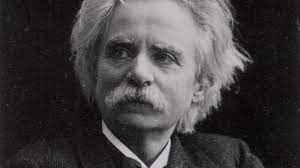
Edvard Grieg stands among the most celebrated composers of the Romantic era and remains Norway’s most internationally recognized musical figure. Through his distinctive blending of European Romantic traditions with Norwegian folk melodies and rhythms, Grieg helped establish a national musical identity for Norway. His compositions, characterized by lyrical beauty, rich harmonies, and vivid emotional expression, continue to be performed and admired throughout the world.
Although he composed orchestral works, chamber music, songs, and piano pieces, Grieg is perhaps best known for his Piano Concerto in A Minor and the incidental music he wrote for Henrik Ibsen’s drama Peer Gynt. His music captured the landscapes, legends, and spirit of Norway, making him both a national hero and an important figure in international classical music.
This biography explores the life, career, and enduring legacy of Edvard Grieg, tracing his journey from a young musical prodigy in Bergen to one of the most influential composers of the nineteenth century.
Childhood
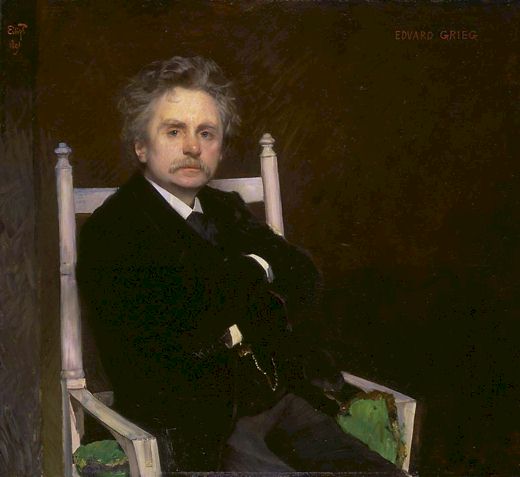
Edvard Hagerup Grieg was born on June 15, 1843, in Bergen, Norway. He was the fourth of five children born to Alexander Grieg, a successful merchant and British vice-consul, and Gesine Hagerup Grieg, a gifted pianist and music teacher.
Music played an important role in the Grieg household. His mother provided his earliest piano lessons and quickly recognized his unusual musical talent. Under her guidance, he developed technical skills and an appreciation for the works of composers such as Mozart, Beethoven, and Chopin.
As a child, Grieg was often shy and physically fragile. He preferred spending time at the piano rather than participating in social activities. Despite his reserved personality, he possessed a vivid imagination and a deep sensitivity to the natural beauty surrounding Bergen. The mountains, fjords, and landscapes of western Norway would later become a significant source of inspiration in his music.
A pivotal event occurred when the renowned Norwegian violinist Ole Bull visited the Grieg family. Bull immediately recognized the young boy’s musical gifts and advised his parents to send him to a conservatory in Germany. This recommendation would profoundly influence Grieg’s future.
Youth
At the age of fifteen, Grieg enrolled at the Leipzig Conservatory in Germany, one of Europe’s leading musical institutions. There he studied piano, composition, and music theory. His teachers exposed him to the traditions of German Romantic music, particularly the works of Mendelssohn, Schumann, and other major composers.
Although Grieg received a solid musical education, he later expressed dissatisfaction with certain aspects of the conservatory’s rigid teaching methods. Nevertheless, his years in Leipzig helped refine his technical abilities and broaden his understanding of composition.
During his studies, Grieg suffered a severe illness that damaged one of his lungs. The health problems resulting from this illness would affect him throughout his life. Despite these challenges, he graduated in 1862 and began pursuing a professional career as a musician.
After leaving Leipzig, Grieg spent time in Copenhagen, where he encountered a vibrant artistic community. There he met several Scandinavian musicians and intellectuals who encouraged him to embrace his Norwegian heritage. Among the most influential was composer Rikard Nordraak, who became a close friend. Nordraak’s passionate belief in Norwegian nationalism inspired Grieg to incorporate native folk elements into his music.
This period marked a turning point in Grieg’s artistic development. He increasingly sought to create music that reflected Norway’s unique cultural identity rather than merely imitating German traditions.
Adulthood
The years following Grieg’s return to Scandinavia were marked by growing artistic success. In 1867, he married his cousin, Nina Hagerup, a talented singer who became one of the foremost interpreters of his vocal music. Their marriage was generally supportive, though it faced periods of difficulty and personal tragedy.
The couple had one child, Alexandra, who died from illness at the age of thirteen months. The loss devastated both parents and left a lasting emotional impact on Grieg.
During the late 1860s and 1870s, Grieg’s reputation steadily expanded. His compositions attracted attention throughout Scandinavia and eventually across Europe. He received financial support from the Norwegian government, allowing him greater freedom to compose.
One of the most important milestones of his career occurred in 1876 when he completed the incidental music for Henrik Ibsen’s dramatic poem Peer Gynt. The music achieved enormous popularity and introduced Grieg’s work to a much wider audience.
Throughout the following decades, Grieg traveled extensively as a conductor, pianist, and cultural ambassador. He performed in major European cities, including London, Paris, Berlin, and Vienna. His concerts were highly successful, and many prominent musicians admired his work.
Despite international recognition, Grieg remained deeply connected to Norway. He frequently returned to his home near Bergen, known as Troldhaugen, where he composed many of his later works. The house became a gathering place for artists, musicians, and visitors from around the world.
As his fame grew, Grieg developed friendships with leading cultural figures of his time. He corresponded with composers, writers, and performers across Europe and became one of the most respected musicians of the late nineteenth century.
Major Compositions
Edvard Grieg produced a substantial body of work that reflects both Romantic traditions and Norwegian national influences.
Piano Concerto in A Minor, Op. 16
Completed in 1868, this concerto remains Grieg’s most famous large-scale composition. Its dramatic opening, lyrical melodies, and brilliant piano writing have made it a cornerstone of the piano repertoire.
Peer Gynt Suites
Derived from his incidental music for Henrik Ibsen’s play, the two Peer Gynt Suites contain some of Grieg’s most beloved pieces. Movements such as “Morning Mood,” “Anitra’s Dance,” and “In the Hall of the Mountain King” are recognized worldwide.
Lyric Pieces
Grieg composed numerous short piano works collectively known as the Lyric Pieces. These miniatures display remarkable charm, poetic sensitivity, and technical refinement. They remain popular among pianists of all levels.
Norwegian Dances, Op. 35
Inspired by traditional folk music, these dances showcase Grieg’s ability to transform native melodies and rhythms into sophisticated concert works.
Holberg Suite, Op. 40
Written in 1884 to commemorate the bicentenary of writer Ludvig Holberg, this suite combines Baroque forms with Romantic expression and remains one of Grieg’s most frequently performed orchestral compositions.
Violin Sonata No. 3 in C Minor, Op. 45
Among Grieg’s finest chamber works, this sonata demonstrates his mature compositional style and mastery of thematic development.
Songs and Vocal Music
Grieg composed more than one hundred songs, many of which set texts by Norwegian and Danish poets. These works occupy an important place in Scandinavian vocal literature.
Death
In his later years, Grieg continued to compose, perform, and promote Norwegian music despite declining health. Chronic respiratory problems increasingly limited his activities, yet he remained active almost until the end of his life.
In 1907, his condition worsened significantly. He was admitted to a hospital in Bergen, where he died on September 4, 1907, at the age of sixty-four.
His death was widely mourned both in Norway and abroad. Thousands attended memorial ceremonies, and tributes arrived from musicians and cultural leaders throughout Europe.
Following his wishes, Grieg’s ashes and those of his wife Nina were placed in a mountain tomb near Troldhaugen, overlooking the landscape that had inspired so much of his music.
Conclusion
Edvard Grieg occupies a unique position in the history of classical music. By combining the expressive language of Romanticism with the melodies, rhythms, and spirit of Norwegian folk traditions, he created a musical voice that was both national and universal.
His works continue to captivate audiences with their emotional warmth, melodic beauty, and vivid evocation of nature. From the powerful Piano Concerto in A Minor to the enchanting music of Peer Gynt, Grieg’s compositions remain central to the classical repertoire.
More than a century after his death, Grieg endures as a symbol of Norwegian culture and as one of the most beloved composers of the Romantic era. His music continues to inspire performers, scholars, and listeners around the globe, ensuring that his artistic legacy remains vibrant and enduring.
Comments are closed