Introduction
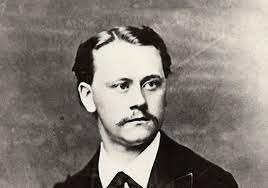
Henri Duparc was one of the most remarkable and enigmatic composers of the French Romantic era. Although his surviving output is relatively small, his influence on French art song, or mélodie, has been profound. His compositions are celebrated for their emotional depth, rich harmonic language, and exquisite sensitivity to poetry. While many composers achieved fame through vast catalogs of symphonies, operas, and chamber works, Duparc secured a lasting place in music history through fewer than twenty songs.
His life was marked by extraordinary artistic promise, personal suffering, and a tragic withdrawal from composition at a relatively young age. Despite composing actively for less than two decades, he created works that remain staples of the vocal repertoire and are widely regarded as masterpieces of French music.
Childhood
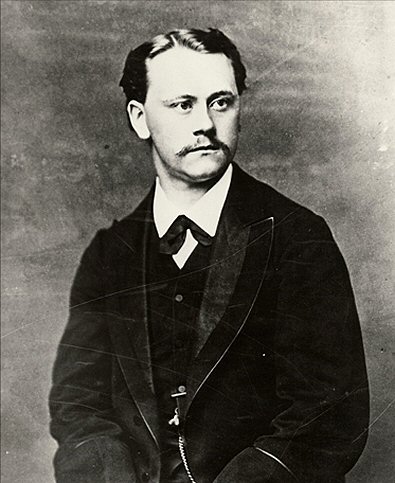
Henri Duparc was born Eugène Marie Henri Fouques Duparc on January 21, 1848, in Paris, France. He came from a prosperous and aristocratic family. His father, Charles Fouques-Duparc, held an important position in the French railway system, while his mother, Amélie de Guaita, was deeply religious and devoted to the education of children.
From an early age, Duparc displayed considerable intellectual and artistic abilities. He attended the Jesuit College of Vaugirard in Paris, where he received a rigorous education. Although his family initially expected him to pursue a conventional professional career, his musical talents became increasingly evident during his school years.
While still a student, he began composing piano pieces and demonstrated a natural aptitude for music. His education was strict and disciplined, which shaped his character and contributed to the perfectionism that would later define both his artistic achievements and his personal struggles.
A crucial event in his childhood was meeting César Franck, who served as his piano teacher. Franck quickly recognized the young musician’s exceptional gifts and became one of the most influential figures in Duparc’s life.
Youth
During his teenage years, Duparc devoted himself increasingly to music. Under the guidance of César Franck, he studied composition and developed a sophisticated understanding of harmony and musical structure. Franck reportedly considered him among his most talented pupils.
Despite his growing passion for music, Duparc’s father encouraged him to study law. Consequently, the young composer attempted to balance legal studies with his musical education. Ultimately, however, music proved to be his true vocation.
In the late 1860s, Duparc began publishing his first compositions. Among these were piano works and songs that revealed a remarkable sensitivity to literary texts. He became particularly interested in setting poetry to music, a genre that would become his greatest artistic achievement.
During this period, he fell in love with Ellen MacSwiney, a Scottish woman who would later become his wife. Their relationship encountered family opposition, delaying their marriage for several years. Nevertheless, the emotional intensity of this romance inspired some of his earliest and most expressive compositions.
Duparc also expanded his artistic horizons through travel. In 1869, he visited Weimar, where he met the legendary composer Franz Liszt. He also became fascinated by the music dramas of Richard Wagner, whose innovative harmonic language would leave a lasting impression on his musical style.
The outbreak of the Franco-Prussian War in 1870 interrupted his artistic pursuits. Like many young Frenchmen of his generation, he served in the military during the conflict.
Adulthood
Following the war, Duparc entered the most productive phase of his career. In 1871, he married Ellen MacSwiney, beginning a lifelong partnership that provided emotional support throughout his turbulent life.
That same year, he helped establish the Société Nationale de Musique alongside notable figures such as Camille Saint-Saëns and Romain Bussine. The organization sought to promote French music at a time when German cultural influence was particularly strong. Duparc served as an energetic advocate for contemporary French composers and became deeply involved in the nation’s musical life.
Throughout the 1870s and early 1880s, he composed the songs for which he is best remembered today. His works combined Wagnerian harmonic richness with distinctly French elegance and refinement. Rather than writing simple accompaniments, Duparc treated the piano as an equal partner to the voice, creating highly expressive musical landscapes.
However, beneath his professional success lay increasing psychological difficulties. He suffered from severe anxiety, depression, and a nervous disorder that physicians of the time described as neurasthenia. His perfectionism became increasingly debilitating, leading him to destroy many compositions that he judged unworthy.
In 1885, at only thirty-seven years of age, Duparc abruptly ceased composing. The reasons remain complex and have been the subject of scholarly debate. Mental illness, chronic pain, obsessive self-criticism, and neurological problems all appear to have contributed to his artistic silence.
Although he occasionally revised earlier works and completed minor orchestrations, he never returned to regular composition. He devoted himself instead to family life, drawing, painting, reading, and religious contemplation.
As the years passed, his health continued to deteriorate. He suffered progressive loss of vision, eventually becoming completely blind. Despite these hardships, he maintained friendships with musicians, writers, and intellectuals, remaining an admired figure within French artistic circles.
Major Compositions
Henri Duparc’s reputation rests primarily upon his extraordinary mélodies. Although only seventeen survive, they are considered among the finest examples of the genre.
Chanson Triste (1868)
One of his earliest masterpieces, Chanson Triste reveals Duparc’s gift for combining lyrical melody with poetic sensitivity. The song remains one of the most frequently performed works in the French vocal repertoire.
Soupir (1869)
Based on a poem by Sully Prudhomme, Soupir demonstrates the refined emotional expression that would become characteristic of Duparc’s mature style.
L’Invitation au Voyage (1870)
Inspired by a poem from Charles Baudelaire’s Les Fleurs du mal, this song is often regarded as Duparc’s greatest achievement. Its dreamlike atmosphere and luxurious harmonies create a vivid musical vision of an idealized paradise.
Phidylé (1882)
One of the composer’s most dramatic songs, Phidylé is admired for its powerful emotional arc and sophisticated harmonic structure. Many singers consider it one of the supreme challenges of the French art-song repertoire.
Extase (1874)
This intensely expressive work captures a mood of mystical ecstasy through delicate melodic writing and subtle harmonic shifts.
La Vie Antérieure (1884)
Composed near the end of his creative career, La Vie Antérieure represents the culmination of his artistic development. Based on another poem by Baudelaire, it combines emotional intensity with remarkable musical sophistication.
Other Significant Works
Additional notable songs include:
- Le Manoir de Rosemonde
- Au Pays où se Fait la Guerre
- Testament
- Élégie
- Sérénade Florentine
- La Vague et la Cloche
Outside the realm of song, Duparc also composed orchestral works, including Lenore, a symphonic poem inspired by the poetry of Gottfried August Bürger. However, much of his non-vocal music was destroyed by the composer himself.
Death
During the final decades of his life, Duparc lived quietly, spending periods in Switzerland and southern France. Increasing blindness and physical weakness limited his activities, while his religious faith became a central aspect of his existence.
Despite his long silence as a composer, musicians continued to admire and perform his surviving works. Younger generations increasingly recognized the extraordinary quality of his songs, and his reputation gradually grew.
Henri Duparc died on February 12, 1933, in Mont-de-Marsan, France, at the age of eighty-five. He was later buried in the famous Père Lachaise Cemetery in Paris, where many of France’s most celebrated cultural figures rest.
His death marked the end of a life characterized by both artistic brilliance and personal suffering.
Conclusion
Henri Duparc occupies a unique position in the history of music. Unlike many great composers whose reputations rest upon vast bodies of work, his legacy depends upon a remarkably small collection of compositions. Yet those works possess such extraordinary beauty and emotional power that they have secured him a permanent place among the masters of French music.
His songs transformed the French mélodie, bringing unprecedented depth, sophistication, and poetic unity to the genre. Influenced by César Franck and Richard Wagner but ultimately developing a distinctive voice of his own, Duparc created music that remains both deeply personal and universally moving.
Although illness silenced his creative voice prematurely, the surviving works of Henri Duparc continue to inspire performers, scholars, and audiences around the world. His life stands as a testament to the enduring power of artistic perfection and the ability of a small number of masterpieces to achieve immortality.
Comments are closed