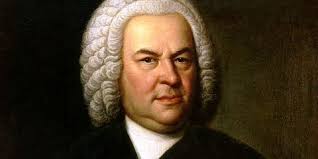
Introduction
Johann Sebastian Bach stands among the greatest composers in the history of Western music. His mastery of harmony, counterpoint, and musical structure established standards that continue to influence composers, performers, and scholars centuries after his death. A central figure of the Baroque era, Bach created a vast body of work that includes sacred music, orchestral compositions, chamber music, keyboard pieces, and organ works. Although he was highly respected during his lifetime as an organist and teacher, his reputation as one of history’s supreme musical geniuses grew significantly after his death. Today, his compositions are considered foundational to the development of classical music and remain regularly performed throughout the world.

Childhood
Johann Sebastian Bach was born on March 31, 1685, in Eisenach, Germany. He belonged to a remarkable musical family that had produced professional musicians for several generations. His father, Johann Ambrosius Bach, worked as a town musician and introduced young Johann Sebastian to the fundamentals of music at an early age.
Growing up in a household filled with music, Bach was exposed to instrumental performance, composition, and musical traditions from childhood. The Bach family was highly respected in central Germany, and music was deeply woven into everyday life. Johann Sebastian quickly demonstrated exceptional talent and a keen interest in learning various instruments.
Tragedy struck during his early years. His mother died in 1694 when he was nine years old, and his father passed away only months later. Orphaned at the age of ten, Bach moved to Ohrdruf to live with his older brother, Johann Christoph Bach, who served as an organist. Under his brother’s guidance, he continued his musical education and studied keyboard performance, composition, and music theory.
Young Bach displayed extraordinary curiosity and determination. According to tradition, he secretly copied musical manuscripts by moonlight because he was eager to learn works that were not readily available to him. These early experiences helped cultivate the discipline and dedication that would characterize his entire career.
Youth
In 1700, Bach received a scholarship to attend St. Michael’s School in Lüneburg. The institution provided him with a strong academic education while also exposing him to a wider range of musical influences. During this period, he became familiar with French, Italian, and North German musical styles, broadening his artistic horizons.
Lüneburg offered Bach opportunities to hear distinguished musicians and explore important musical centers. He frequently traveled to nearby cities to study renowned organists and observe their techniques. Among those who greatly influenced him was Georg Böhm, whose organ compositions and performance style left a lasting impression.
After completing his studies, Bach sought employment as a musician. In 1703, he secured a position as a court musician in Weimar. Shortly afterward, he became organist at the New Church in Arnstadt. Although his exceptional talent as an organist was widely recognized, his independent nature occasionally led to conflicts with church authorities.
During his years in Arnstadt and later in Mühlhausen, Bach continued refining his compositional skills. He composed organ works, sacred cantatas, and other pieces that revealed increasing maturity and originality. These early professional experiences laid the groundwork for the extraordinary achievements that would follow.
Adulthood
Bach’s adult life was marked by continuous artistic growth and professional advancement. In 1707, he married Maria Barbara Bach, his second cousin. The couple had seven children, several of whom survived into adulthood. Following Maria Barbara’s death in 1720, Bach married Anna Magdalena Wilcke in 1721. Together they had thirteen children. Among Bach’s offspring were several talented musicians, including Carl Philipp Emanuel Bach and Johann Christian Bach.
In 1708, Bach returned to Weimar as court organist and later became concertmaster. During this period, he composed numerous organ masterpieces and began producing a significant number of cantatas. His reputation as both performer and composer expanded throughout Germany.
In 1717, Bach accepted a position as Kapellmeister at the court of Prince Leopold of Anhalt-Köthen. Since the court was Calvinist and required relatively little church music, Bach focused heavily on instrumental composition. This proved to be one of the most productive periods of his career. He composed many of his celebrated orchestral works, chamber pieces, and keyboard compositions during these years.
In 1723, Bach accepted the prestigious position of Thomaskantor in Leipzig. As director of music for the city’s principal churches, he assumed responsibility for composing, performing, and overseeing sacred music. This role remained his primary occupation for the rest of his life.
The Leipzig years witnessed an astonishing outpouring of creativity. Bach composed hundreds of church cantatas, major choral works, and educational compositions. Despite administrative challenges and occasional disputes with city officials, he maintained an extraordinary level of productivity. His commitment to musical excellence transformed Leipzig into one of Europe’s leading centers of sacred music.
Major Compositions
Johann Sebastian Bach’s catalog includes more than one thousand surviving works, spanning nearly every musical genre of his time except opera.
Among his most famous keyboard compositions is The Well-Tempered Clavier, a collection of preludes and fugues in all major and minor keys. The work demonstrated the possibilities of modern tuning systems and became a cornerstone of keyboard literature.
Another monumental achievement is the Goldberg Variations, a masterful set of variations that showcases extraordinary creativity, technical brilliance, and structural sophistication.
Bach’s organ works remain among the most celebrated pieces ever written for the instrument. Compositions such as the Toccata and Fugue in D Minor, Passacaglia and Fugue in C Minor, and numerous chorale preludes continue to be performed by organists worldwide.
His orchestral output includes the Brandenburg Concertos, six works that display remarkable imagination, instrumental color, and contrapuntal skill. These compositions are considered among the finest examples of Baroque orchestral music.
In sacred music, Bach reached unparalleled heights. The St. Matthew Passion and St. John Passion rank among the greatest religious works in Western culture. Combining dramatic storytelling, profound spirituality, and musical sophistication, they remain central works of the choral repertoire.
The Mass in B Minor is often regarded as Bach’s crowning achievement. Although not intended for regular liturgical use, it represents a comprehensive synthesis of his compositional mastery and spiritual vision.
Other notable works include the Christmas Oratorio, Magnificat, Musical Offering, The Art of Fugue, and hundreds of church cantatas that reveal his remarkable ability to combine theological depth with musical innovation.
Death
During his later years, Bach’s eyesight gradually deteriorated. Despite his health challenges, he continued composing, teaching, and revising earlier works. His intellectual and creative powers remained strong even as his physical condition declined.
In 1750, Bach underwent eye surgery performed by an itinerant surgeon. The procedure was unsuccessful and led to further complications. Although he reportedly experienced a brief improvement shortly before his death, his health quickly worsened.
Johann Sebastian Bach died in Leipzig on July 28, 1750, at the age of sixty-five. His passing marked the end of an extraordinary musical career. He was buried in Leipzig, though the exact location of his original grave was later lost. His remains were eventually identified and reinterred, and today they rest in St. Thomas Church, where he had served as music director for many years.
At the time of his death, Bach was admired primarily as an organist and teacher. His compositions were respected but not universally recognized as the masterpieces they would later become.
Conclusion
Johann Sebastian Bach’s legacy is unparalleled in the history of classical music. Through his extraordinary command of harmony, counterpoint, form, and expression, he created works that transcend their historical period and continue to inspire audiences around the globe.
Although musical tastes shifted after his death, later generations rediscovered the depth and brilliance of his compositions. The nineteenth-century revival led by musicians such as Felix Mendelssohn helped establish Bach as one of Western civilization’s greatest artistic figures.
Today, Bach’s music serves as both a source of inspiration and a model of technical excellence. His works are studied in conservatories, performed in concert halls, and cherished by listeners of every generation. More than two and a half centuries after his death, Johann Sebastian Bach remains a towering symbol of artistic achievement, spiritual depth, and musical genius.
Comments are closed