Introduction
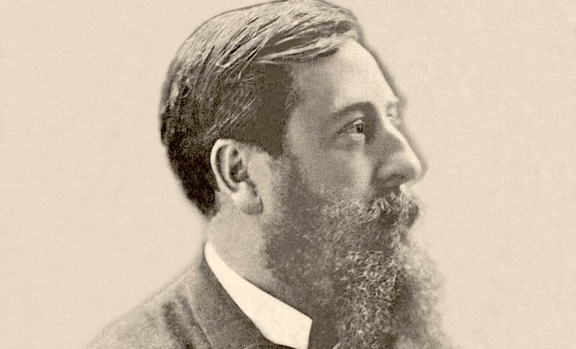
Léo Delibes was one of the most influential French composers of the nineteenth century, remembered primarily for his elegant ballets and operas that helped shape the future of French musical theater. Born during a period of significant artistic transformation in France, Delibes became a master of melody, orchestration, and dramatic expression. His ballets Coppélia and Sylvia remain central works in the classical ballet repertoire, while his opera Lakmé continues to be admired for its lyrical beauty and exotic atmosphere. Through his innovative approach to dance music and opera, Delibes elevated genres that had often been regarded as secondary forms of musical expression, earning a lasting place among the great composers of the Romantic era.
Childhood
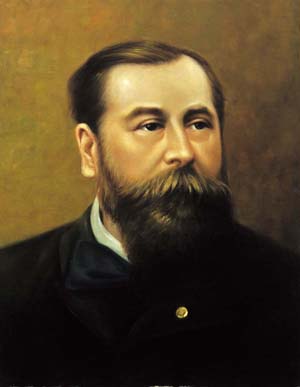
Clément Philibert Léo Delibes was born on February 21, 1836, in the town of Saint-Germain-du-Val, near La Flèche, in the Sarthe department of France. He came from a family with strong artistic connections. His father worked as a postal employee, while his mother was a talented amateur musician who played an important role in encouraging her son’s musical interests.
When Delibes was still a child, his father died, leaving the family in difficult financial circumstances. His mother subsequently moved with him to Paris, where better educational opportunities were available. The French capital was rapidly becoming one of Europe’s foremost cultural centers, exposing the young Delibes to a vibrant musical environment.
His musical aptitude became evident early. Recognizing his talent, his family arranged for him to receive formal training. At the age of twelve, he was admitted to the prestigious Paris Conservatoire, one of the leading musical institutions in Europe. There he began a rigorous education that would provide the foundation for his future career.
Youth
At the Paris Conservatoire, Delibes studied under distinguished teachers and developed skills in piano performance, composition, harmony, and organ playing. Among his instructors were notable musicians who instilled in him a strong understanding of both classical traditions and contemporary musical practices.
Although he demonstrated considerable talent, Delibes did not initially achieve outstanding academic success. Unlike some of his contemporaries who quickly gained recognition through prestigious competitions, his path was more gradual. To support himself financially, he worked as a church organist and accompanist while continuing his studies.
During his teenage and early adult years, Delibes became increasingly involved in Parisian musical life. He attended performances, observed theatrical productions, and absorbed the influences of leading composers of the day. The city’s thriving opera houses and theaters provided valuable practical experience and inspiration.
His first compositions included songs, operettas, and smaller theatrical works. These early efforts revealed his natural gift for melody and dramatic pacing, qualities that would later distinguish his mature masterpieces.
Adulthood
Delibes’s professional career began to flourish during the 1850s and 1860s. He secured employment at the Théâtre-Lyrique and later became associated with the Paris Opéra. These positions allowed him to gain firsthand experience with stage production and orchestral writing.
His earliest successes came through operettas and comic operas, genres that were highly popular in France during the Second Empire. These works established his reputation as a skilled composer capable of crafting appealing melodies and effective dramatic situations.
A major turning point occurred in 1870 with the premiere of Coppélia. The ballet achieved immediate acclaim and transformed Delibes into an internationally recognized composer. Unlike many earlier ballet scores, which often served merely as accompaniment to dancing, Coppélia featured richly developed music capable of standing on its own artistic merits. Its success demonstrated that ballet music could possess the same sophistication and emotional depth as opera.
Delibes expanded upon this achievement with Sylvia in 1876. The score displayed remarkable orchestral color, melodic invention, and structural coherence. Many later composers, including some of the greatest figures of French music, admired the work for its refinement and innovation.
Alongside his achievements in ballet, Delibes continued composing operas. His greatest operatic triumph came with Lakmé, first performed in 1883. Set in British India, the opera reflected the nineteenth-century European fascination with exotic cultures. Its famous “Bell Song” and “Flower Duet” became enduring favorites and remain among the most recognizable pieces in the operatic repertoire.
Delibes also served as a professor of composition at the Paris Conservatoire, where he influenced a younger generation of French musicians. His reputation as both a composer and educator grew steadily throughout the final decades of his life.
Major Compositions
Coppélia (1870)
Based on stories by E.T.A. Hoffmann, Coppélia tells the tale of a mysterious inventor and a life-sized mechanical doll. The ballet combines humor, fantasy, and romance. Its lively dances and memorable melodies quickly made it one of the most beloved ballets in history.
Le Roi l’a dit (1873)
This comic opera demonstrated Delibes’s talent for theatrical storytelling and elegant vocal writing. It further strengthened his standing within French operatic circles.
Sylvia (1876)
Inspired by classical mythology, Sylvia is widely regarded as one of the greatest ballet scores ever written. The work’s sophisticated orchestration and dramatic unity influenced later composers and choreographers.
Jean de Nivelle (1880)
This opera showcased Delibes’s ability to combine lyrical beauty with dramatic effectiveness, further expanding his operatic reputation.
Lakmé (1883)
Often considered his operatic masterpiece, Lakmé contains some of the most famous arias and duets in French opera. The “Flower Duet” has achieved extraordinary popularity and continues to appear in concerts, recordings, films, and television productions worldwide.
Kassya (Posthumously Completed)
Delibes worked on this opera during his final years but did not live to complete it. The unfinished score was later completed by another composer and staged after his death.
Death
During the final years of his life, Delibes continued teaching and composing despite declining health. He remained a respected figure within French musical society and enjoyed widespread recognition for his artistic achievements.
Léo Delibes died in Paris on January 16, 1891, at the age of fifty-four. His death marked the loss of one of France’s most gifted composers. He was buried in the renowned cemetery of Montmartre, where many distinguished French artists and intellectuals have been laid to rest.
The musical world mourned the passing of a composer whose works had transformed ballet music and enriched the operatic tradition. His influence continued to be felt long after his death through the enduring popularity of his compositions.
Conclusion
Léo Delibes occupies a unique position in the history of classical music. At a time when ballet music was often considered secondary to opera, he demonstrated that it could achieve the highest artistic standards. His ballets Coppélia and Sylvia helped redefine the genre, influencing future composers and choreographers for generations. Meanwhile, his opera Lakmé secured his reputation as a master of melody and theatrical expression.
His music is characterized by elegance, charm, vivid orchestration, and memorable lyricism. These qualities have ensured the continued performance of his works in opera houses, concert halls, and ballet theaters throughout the world. More than a century after his death, Delibes remains one of the most celebrated figures of French Romantic music, admired for his lasting contributions to both ballet and opera.
Comments are closed