Introduction
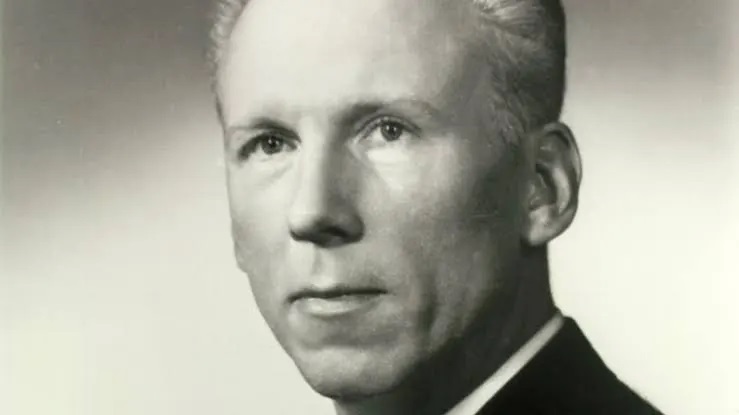
Leroy Anderson was one of the most beloved American composers of the twentieth century. Renowned for his light orchestral music, he created a unique musical style that combined classical craftsmanship with popular appeal. His compositions, characterized by memorable melodies, inventive orchestration, and playful humor, became staples of concert programs worldwide. Works such as Sleigh Ride, The Syncopated Clock, Blue Tango, and The Typewriter continue to delight audiences decades after their creation.
Although often associated with light concert music, Anderson was a highly educated musician whose mastery of composition, orchestration, and conducting earned the admiration of fellow composers and conductors. His contributions helped bridge the gap between classical and popular music, making orchestral music accessible to millions of listeners.
Childhood
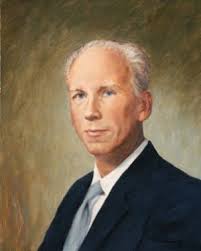
Leroy Anderson was born on June 29, 1908, in Cambridge, Massachusetts. He was the son of Swedish immigrants who valued education, culture, and music. His mother, a church organist, introduced him to music at an early age and gave him his first piano lessons. His father encouraged his musical development and ensured that he had opportunities to learn various instruments.
From childhood, Anderson displayed exceptional musical talent. He studied piano and later learned to play several other instruments, including the organ, trombone, cello, and double bass. His remarkable aptitude for languages also became evident early in life. Throughout his life, he would become fluent in several languages, a skill that later proved useful during his military service.
Growing up in a culturally rich household, Anderson developed a deep appreciation for both European musical traditions and American popular music. This combination would later become a defining characteristic of his compositions.
Youth
Anderson attended Cambridge Latin School, where he excelled academically and musically. During his school years, he composed songs for graduating classes and conducted student ensembles, demonstrating leadership abilities that foreshadowed his future career.
In 1925, he entered Harvard University. There, he studied music theory, composition, orchestration, counterpoint, and conducting under some of the most respected educators of the period. He graduated magna cum laude in 1929 with a Bachelor of Arts degree in Music and was elected to Phi Beta Kappa for his academic excellence.
Following his undergraduate studies, Anderson continued at Harvard and earned a Master of Arts degree in Music in 1930. He also pursued advanced studies in German and Scandinavian languages. During this period, he directed the Harvard University Band and gained valuable experience arranging music and conducting ensembles.
His years at Harvard were crucial in shaping his artistic identity. While many future composers focused exclusively on serious symphonic works, Anderson developed an interest in creating concise, engaging orchestral pieces that could communicate directly with audiences.
Adulthood
After completing his studies, Anderson worked as an arranger, conductor, and organist in the Boston area. His exceptional arranging skills attracted the attention of Arthur Fiedler, the celebrated conductor of the Boston Pops Orchestra. This relationship would become one of the most important partnerships of Anderson’s career.
Fiedler recognized Anderson’s extraordinary talent and encouraged him to compose original works. In 1938, Anderson achieved his first major success with Jazz Pizzicato, a witty orchestral miniature that immediately captured audience attention.
During World War II, Anderson served in the United States Army. Thanks to his linguistic abilities, he worked as a translator and intelligence officer. He served in Iceland and later at the Pentagon, where he became Chief of the Scandinavian Desk in Military Intelligence.
Despite his military responsibilities, Anderson continued composing. During this period, he wrote some of his most famous pieces, including The Syncopated Clock and Promenade. After the war, he resumed his musical career with renewed energy.
The 1950s marked the peak of Anderson’s popularity. His composition Blue Tango became a major international hit and earned a Gold Record. Throughout the decade, he produced a series of successful works that established him as America’s leading composer of light orchestral music.
Anderson married Eleanor Jane Firke in 1942. Together they raised three children and lived in Woodbury, Connecticut. Despite his fame, he maintained a relatively private life and devoted much of his time to composing and conducting.
Major Compositions
Leroy Anderson’s catalog consists primarily of short orchestral works distinguished by their originality and craftsmanship.
Sleigh Ride (1948)
Perhaps Anderson’s most famous composition, Sleigh Ride has become a holiday classic performed throughout the world. Although commonly associated with Christmas, it was originally conceived as a purely instrumental depiction of a winter sleigh journey. Its cheerful melodies, horse-whinny effects, and festive atmosphere have made it one of the most frequently performed orchestral pieces in America.
The Syncopated Clock (1945)
This work cleverly imitates the sounds and rhythms of a clock. Through inventive orchestration, Anderson transformed a simple everyday object into a charming musical character. The piece became a favorite of orchestras and radio audiences alike.
Blue Tango (1951)
Blue Tango represented a significant commercial breakthrough. Combining Latin-inspired rhythms with elegant orchestral writing, the composition became an international bestseller and one of the first orchestral recordings to achieve widespread popular success.
The Typewriter (1950)
One of Anderson’s most inventive works, The Typewriter incorporates an actual typewriter as a percussion instrument. The piece humorously depicts the sounds of office work and remains a favorite concert novelty.
A Trumpeter’s Lullaby (1949)
Written for trumpet and orchestra, this piece demonstrated Anderson’s ability to create lyrical and expressive music. Rather than emphasizing the trumpet’s traditional military associations, Anderson presented the instrument in a gentle and soothing role.
Other Notable Works
Among his many other successful compositions are Fiddle-Faddle, The Waltzing Cat, Bugler’s Holiday, Serenata, Irish Suite, Belle of the Ball, Forgotten Dreams, and Sandpaper Ballet. Each work reveals his remarkable gift for melody, orchestral color, and musical storytelling.
Death
In his later years, Anderson remained active as a composer, conductor, and respected figure in American musical life. He continued to receive honors and recognition for his contributions to orchestral music.
On May 18, 1975, Leroy Anderson died of cancer at his home in Woodbury, Connecticut. He was sixty-six years old. His death marked the loss of one of America’s most distinctive musical voices.
Following his passing, numerous tributes celebrated his achievements. Conductors, composers, and musicians praised his ability to combine technical mastery with broad popular appeal. His music remained firmly established in concert repertoires around the world.
Conclusion
Leroy Anderson occupies a unique place in American musical history. At a time when many composers pursued increasingly complex and experimental styles, he demonstrated that sophistication and accessibility could coexist. His works are concise yet expertly crafted, entertaining yet musically substantial.
Through his partnership with the Boston Pops Orchestra and Arthur Fiedler, Anderson brought orchestral music to countless listeners who might otherwise never have engaged with classical performance. His compositions continue to be performed by professional orchestras, community ensembles, school bands, and holiday concerts across the globe.
More than fifty years after his death, Leroy Anderson remains one of the most frequently performed American composers. His music endures because it captures qualities that are timeless: joy, wit, elegance, and an unmistakable sense of humanity. His legacy lives on every time audiences smile at the ticking rhythms of The Syncopated Clock, laugh at the antics of The Typewriter, or celebrate the festive spirit of Sleigh Ride.
Comments are closed