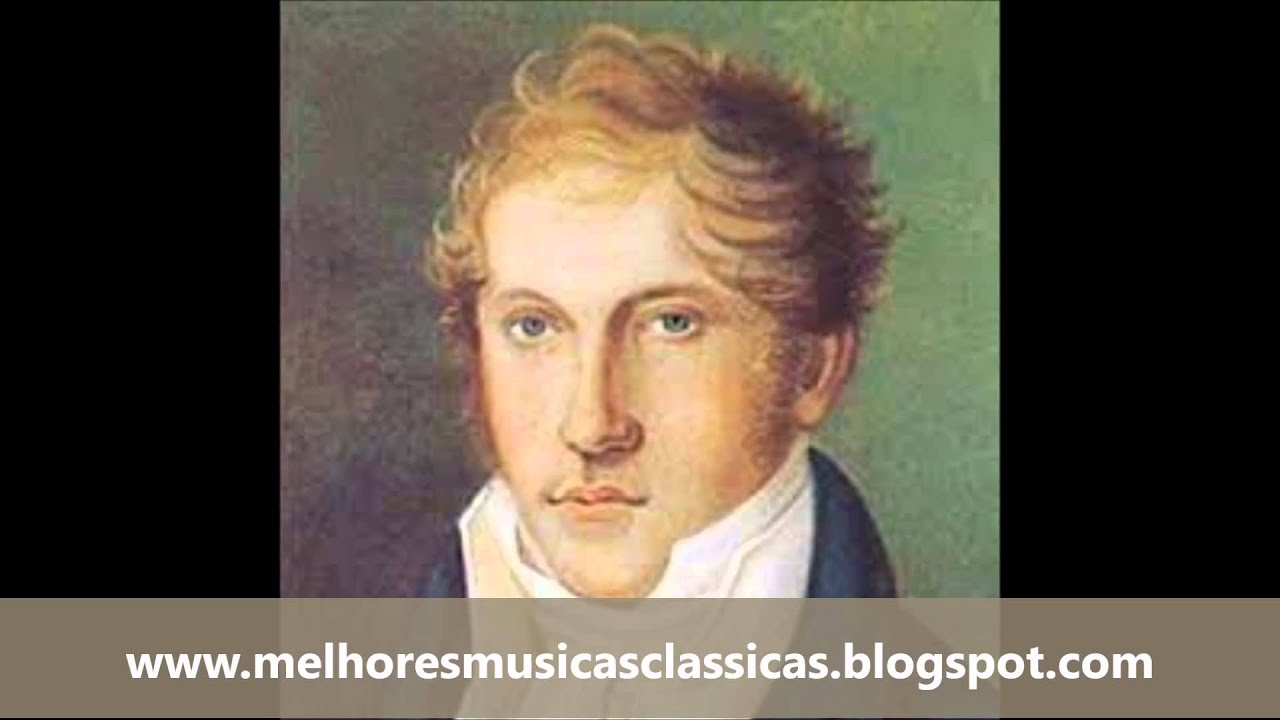
Introduction
Ludwig Spohr was one of the most celebrated musicians of the nineteenth century. Renowned as a violin virtuoso, composer, conductor, and teacher, he played a significant role in shaping the musical landscape of the late Classical and early Romantic periods. During his lifetime, Spohr enjoyed immense fame throughout Europe, often ranking alongside composers such as Beethoven, Weber, and Mendelssohn in public esteem. His contributions to violin technique, orchestral conducting, chamber music, opera, and sacred compositions left a lasting mark on the development of Western classical music.
Although his reputation declined after his death, modern scholars and performers have increasingly recognized the originality and craftsmanship of his works. Spohr’s extensive catalog includes symphonies, operas, concertos, chamber music, and religious compositions that reflect both technical mastery and expressive depth. His life was characterized by artistic dedication, innovation, and a commitment to elevating musical standards throughout Europe.

Childhood
Louis Spohr, later known internationally as Ludwig Spohr, was born on April 5, 1784, in Brunswick, Germany. He grew up in a cultured and intellectually stimulating household. His father, Karl Heinrich Spohr, was a physician, while his mother, Ernestine Henke, possessed strong artistic interests and encouraged musical activities within the family.
Music became a central part of Spohr’s life at an early age. His parents recognized his exceptional talent and ensured that he received formal instruction. As a child, he studied violin, piano, and various aspects of music theory. His natural aptitude quickly became evident, and by the age of six he was already demonstrating remarkable musical abilities.
The family later moved to Seesen, where Spohr continued his musical studies. During his youth, he formed small musical ensembles with friends and family members, gaining valuable experience in ensemble performance. These early opportunities helped develop the skills that would later distinguish him as both a performer and composer.
His progress on the violin was particularly impressive. Local audiences were astonished by the young musician’s technical abilities and musical sensitivity. Recognizing his extraordinary promise, influential patrons began to support his education and career development.
Youth
Spohr’s formal musical career began during his teenage years. In 1799, at the age of fifteen, he entered the service of Duke Karl Wilhelm Ferdinand of Brunswick. The Duke quickly recognized the young violinist’s talent and provided financial assistance that allowed him to pursue advanced studies.
One of the most important experiences of Spohr’s youth was his period of study with the distinguished violinist Franz Eck. Accompanying Eck on a concert tour throughout northern Germany, Spohr gained exposure to professional performance practices and broader musical traditions. The tour greatly enhanced his technical skills and confidence as a performer.
By the early 1800s, Spohr had begun establishing himself as both a violin virtuoso and composer. His concert appearances attracted growing attention, and he quickly earned a reputation for elegance, precision, and expressive playing. Unlike many virtuosos of the period, Spohr sought to combine technical brilliance with artistic substance.
During these years, he composed numerous works for violin, including concertos and chamber music pieces that showcased his abilities. His compositions reflected a blend of Classical structure and emerging Romantic expression. Audiences throughout Germany responded enthusiastically to his performances, and his fame spread rapidly.
The Napoleonic Wars disrupted many aspects of European cultural life, but Spohr continued to build his career. Through perseverance and artistic excellence, he established himself as one of the leading musicians of his generation.
Adulthood
Spohr’s adulthood was marked by remarkable professional success and widespread recognition. In 1806, he obtained a position as concertmaster at the court of Gotha. This appointment provided stability and opportunities for further artistic growth.
A significant personal milestone occurred in 1806 when he married Dorette Scheidler, a talented harpist. The couple frequently toured together, performing concerts that featured violin and harp. Their partnership became one of the most admired musical collaborations of the era and inspired several compositions for their instruments.
Throughout the following decades, Spohr traveled extensively across Europe. He performed in major cultural centers including Vienna, Paris, London, Rome, and other important cities. His reputation as a violin virtuoso reached international dimensions, and audiences praised both his technical mastery and refined musicianship.
In addition to performing, Spohr became increasingly active as a conductor. He was among the pioneers of modern conducting practices. Notably, he helped popularize the use of the baton, which contributed to greater precision and coordination in orchestral performance. His influence on conducting techniques extended well beyond his own lifetime.
In 1822, Spohr accepted the prestigious position of Kapellmeister at Kassel. He remained there for much of the rest of his career. Under his leadership, the musical institutions of Kassel flourished, and he oversaw numerous important performances of contemporary and classical works.
Spohr also became a highly respected teacher. His violin students came from various parts of Europe, and many achieved distinguished careers of their own. His influential violin method helped codify technical principles and performance practices that continued to shape violin pedagogy for generations.
As a composer, Spohr remained extraordinarily productive throughout his adult life. He composed across virtually every major genre, consistently demonstrating craftsmanship, imagination, and a distinctive Romantic voice. His music often balanced lyrical beauty with structural sophistication.
Major Compositions
Ludwig Spohr’s output was vast and diverse, encompassing more than one hundred opus numbers and numerous additional works. His compositions reveal both technical mastery and a strong commitment to expressive musical storytelling.
Among his most significant achievements are his violin concertos. The Violin Concertos Nos. 8 and 9 became particularly famous during his lifetime. These works combined virtuosity with lyrical elegance and helped expand the expressive possibilities of the concerto form.
His symphonies also occupy an important place in his legacy. The Symphony No. 4, subtitled The Consecration of Sound, is especially noteworthy for its programmatic elements and imaginative orchestration. The work anticipated later developments in Romantic symphonic writing.
Spohr was also a successful opera composer. His opera Faust, premiered in 1816, is considered one of the earliest important German Romantic operas. It helped establish dramatic and musical approaches that influenced later composers. Other operas, including Jessonda, enjoyed considerable popularity and demonstrated his skill in theatrical composition.
In the field of chamber music, Spohr produced an impressive body of work that includes string quartets, quintets, septets, octets, and other ensemble pieces. These compositions are admired for their melodic richness, technical sophistication, and innovative treatment of instrumental textures.
His sacred music represents another major achievement. The oratorio The Last Judgment became one of his most widely performed works and remained popular for many decades. Other religious compositions further demonstrated his ability to combine dramatic expression with spiritual depth.
Spohr also composed songs, clarinet concertos, harp works, and numerous compositions for violin. His music often reflects a unique blend of Classical balance and Romantic expressiveness, making him a significant transitional figure in nineteenth-century music.
Death
During his later years, Spohr remained active despite declining health. Although advancing age gradually limited his public appearances, he continued composing, teaching, and participating in musical life. His influence as an elder statesman of German music remained considerable.
The political upheavals and social changes of the mid-nineteenth century affected many aspects of European cultural life, but Spohr maintained his commitment to artistic excellence. He witnessed the rise of younger composers and the transformation of musical styles during the Romantic era.
Ludwig Spohr died on October 22, 1859, in Kassel, Germany, at the age of seventy-five. His death marked the end of a remarkable career that had spanned more than six decades. Musicians and admirers throughout Europe mourned the loss of a figure who had contributed significantly to the advancement of music.
He was buried in Kassel, where he had spent many of his most productive years. His passing represented the conclusion of one of the most influential musical careers of the nineteenth century.
Conclusion
Ludwig Spohr stands as one of the most important musical figures of the early Romantic era. As a violin virtuoso, composer, conductor, and teacher, he helped shape the direction of nineteenth-century music and influenced generations of performers and composers.
His innovations in violin technique, orchestral conducting, and musical composition established standards that continued to resonate long after his death. While his reputation diminished during parts of the twentieth century, modern scholarship and renewed performances have restored appreciation for his achievements.
Spohr’s extensive body of work reveals a musician of exceptional creativity, discipline, and artistic vision. From his celebrated violin concertos and symphonies to his operas, chamber music, and sacred compositions, he demonstrated remarkable versatility and craftsmanship. Today, Ludwig Spohr is increasingly recognized as a vital link between the Classical traditions of Mozart and Haydn and the Romantic innovations of Mendelssohn, Schumann, and later composers.
His legacy endures not only through his compositions but also through his lasting contributions to performance practice, music education, and the broader development of Western classical music.
Comments are closed