Introduction
William Byrd stands among the greatest composers of the Renaissance and is widely regarded as one of the most important figures in English music history. Living during a period of profound political, religious, and cultural transformation, Byrd succeeded in creating a remarkable body of sacred and secular music that has endured for more than four centuries. His compositions demonstrated extraordinary technical mastery, emotional depth, and artistic innovation, influencing generations of composers who followed him.
Born during the reign of King Henry VIII and living through the turbulent religious changes of the Tudor era, Byrd navigated a complex social and political landscape while maintaining his Catholic faith. Despite the challenges this presented, he earned royal favor and became one of England’s most respected musicians. His contributions to church music, keyboard works, madrigals, and consort music established him as a central figure of the English Renaissance and secured his place among the greatest composers of all time.
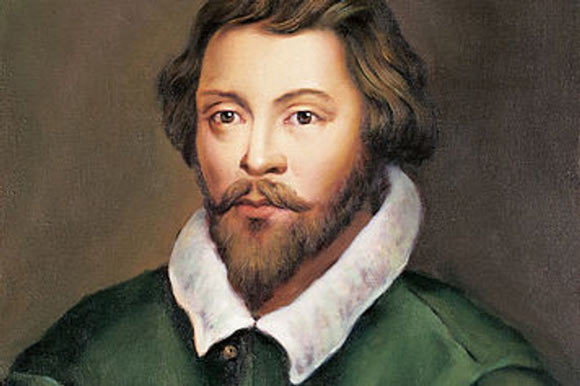
Childhood
The exact date of William Byrd’s birth remains uncertain, though historians generally place it around 1540. He was born in London, England, during a period of major transformation in English society and religion. The English Reformation was reshaping the nation’s religious institutions, and music played a significant role in both worship and court life.
Little documentation survives concerning Byrd’s early years, but evidence suggests that he received an excellent musical education. It is widely believed that he sang as a chorister in the Chapel Royal, the most prestigious musical institution in England. There he would have encountered some of the finest musicians and composers of the day.
One of the most significant influences on the young Byrd was the composer Thomas Tallis, who later became both his colleague and mentor. Under such guidance, Byrd developed exceptional skills in composition, organ performance, and vocal music. His early exposure to sophisticated sacred music laid the foundation for the artistic achievements that would define his career.
Byrd grew up in an environment where music was closely connected to both religion and royal authority. This upbringing provided him with opportunities to study complex polyphonic techniques and to become familiar with the musical traditions of continental Europe, which would later influence his own compositions.
Youth
By the late 1550s and early 1560s, Byrd had established himself as a promising young musician. His first major professional appointment came in 1563 when he became organist and master of the choristers at Lincoln Cathedral. This position marked an important milestone in his career and allowed him to develop his skills as both a composer and performer.
At Lincoln Cathedral, Byrd was responsible for training singers, providing music for services, and composing works suitable for liturgical use. During these years he began producing sacred music that demonstrated remarkable technical sophistication. His compositions displayed a mastery of counterpoint and a sensitivity to text that distinguished him from many of his contemporaries.
In 1568, Byrd married Juliana Birley. Their marriage would endure for many years and produce a large family. Despite the demands of his professional life, Byrd maintained strong family ties and built a stable household.
During his years in Lincoln, Byrd’s reputation grew steadily. His talent attracted attention beyond the cathedral, and he became recognized as one of England’s leading young composers. This growing acclaim paved the way for an even more prestigious appointment in the years ahead.
Adulthood
A major turning point occurred in 1572 when Byrd was appointed Gentleman of the Chapel Royal. This prestigious position brought him to the center of English musical life and placed him among the most respected musicians in the kingdom. Working alongside Thomas Tallis, Byrd provided music for royal ceremonies and religious services attended by Queen Elizabeth I.
In 1575, Queen Elizabeth granted Byrd and Tallis an exclusive license to print and publish music in England. This privilege effectively gave them a monopoly on music publishing and reflected the high regard in which both composers were held. Although the venture did not immediately bring significant financial success, it represented an important milestone in the history of English music publishing.
Despite serving a Protestant monarch, Byrd remained a devoted Roman Catholic throughout his life. His religious convictions often placed him in a delicate position, as Catholics faced increasing restrictions and suspicion in Elizabethan England. Nevertheless, Byrd enjoyed the Queen’s protection and continued to receive professional opportunities.
During the 1580s and 1590s, Byrd composed some of his most profound sacred works. Many of these pieces were intended for private Catholic worship and reflected the spiritual struggles of English Catholics during a period of religious persecution. His Latin motets and masses combined technical brilliance with deep emotional expression.
Byrd eventually moved to the village of Stondon Massey in Essex, where he spent much of his later life. There he continued composing prolifically, producing sacred music, keyboard works, and secular compositions. His later years were characterized by artistic maturity and a continued commitment to musical excellence.
Throughout his adulthood, Byrd maintained relationships with influential patrons who supported his work. These connections helped him navigate the political and religious complexities of his era while allowing him to pursue ambitious artistic projects.
Major Compositions
William Byrd’s output was extraordinarily diverse and encompassed nearly every important musical genre of his time. His works reveal a composer of exceptional imagination and technical mastery.
Among his most celebrated sacred compositions are the three Masses for Catholic worship: the Mass for Three Voices, the Mass for Four Voices, and the Mass for Five Voices. These works remain among the finest examples of Renaissance liturgical music.
His collections of Latin motets, especially those published in the volumes known as Cantiones Sacrae, demonstrate his ability to combine intricate counterpoint with powerful emotional expression. Equally significant are his Gradualia collections, which provide music for the Catholic liturgical year and represent some of the most sophisticated sacred compositions of the period.
Byrd was also a pioneer of English secular vocal music. His contributions to the madrigal tradition helped establish the genre in England. Works such as “Though Amaryllis Dance in Green” and “This Sweet and Merry Month of May” remain admired examples of Renaissance secular song.
His keyboard music occupies a central place in the history of English instrumental music. Compositions preserved in collections such as the Fitzwilliam Virginal Book include dances, variations, fantasias, and character pieces that showcase remarkable inventiveness. Works such as “The Carman’s Whistle,” “The Bells,” and “Sellinger’s Round” are considered masterpieces of keyboard literature.
Byrd also composed consort music for ensembles of viols and other instruments. These works contributed significantly to the development of instrumental chamber music in England.
Across all genres, Byrd’s music is characterized by expressive melodies, intricate polyphony, careful text setting, and a remarkable balance between intellectual rigor and emotional depth.
Death
William Byrd spent his final years at Stondon Massey, continuing to compose and maintain his reputation as England’s foremost musician. Even in old age, he remained productive and respected by both fellow musicians and patrons.
Byrd died on July 4, 1623, at approximately eighty-three years of age, an exceptionally long life for the period. He was buried in the churchyard of St. Peter and St. Paul in Stondon Massey, Essex.
His death marked the end of an era in English music. Having lived through the reigns of several monarchs and witnessed dramatic changes in religious and political life, Byrd left behind a musical legacy unmatched by any English composer of the Renaissance.
Although many composers achieved fame during his lifetime, Byrd’s reputation endured long after his death. His works continued to be studied, performed, and admired by musicians across Europe and beyond.
Conclusion
William Byrd remains one of the towering figures of Western music. Through his sacred compositions, secular songs, keyboard works, and instrumental music, he elevated English Renaissance music to unprecedented heights. His ability to maintain artistic excellence amid religious and political challenges demonstrates both personal resilience and creative genius.
As a composer, Byrd combined technical mastery with profound emotional expression, producing works that continue to inspire performers and audiences centuries later. His influence can be traced through the development of English music and the broader tradition of Western classical composition.
Today, William Byrd is remembered not only as the greatest English composer of the Renaissance but also as one of the most important musical voices in history. His music remains a testament to the enduring power of artistic creativity and spiritual conviction.
Comments are closed