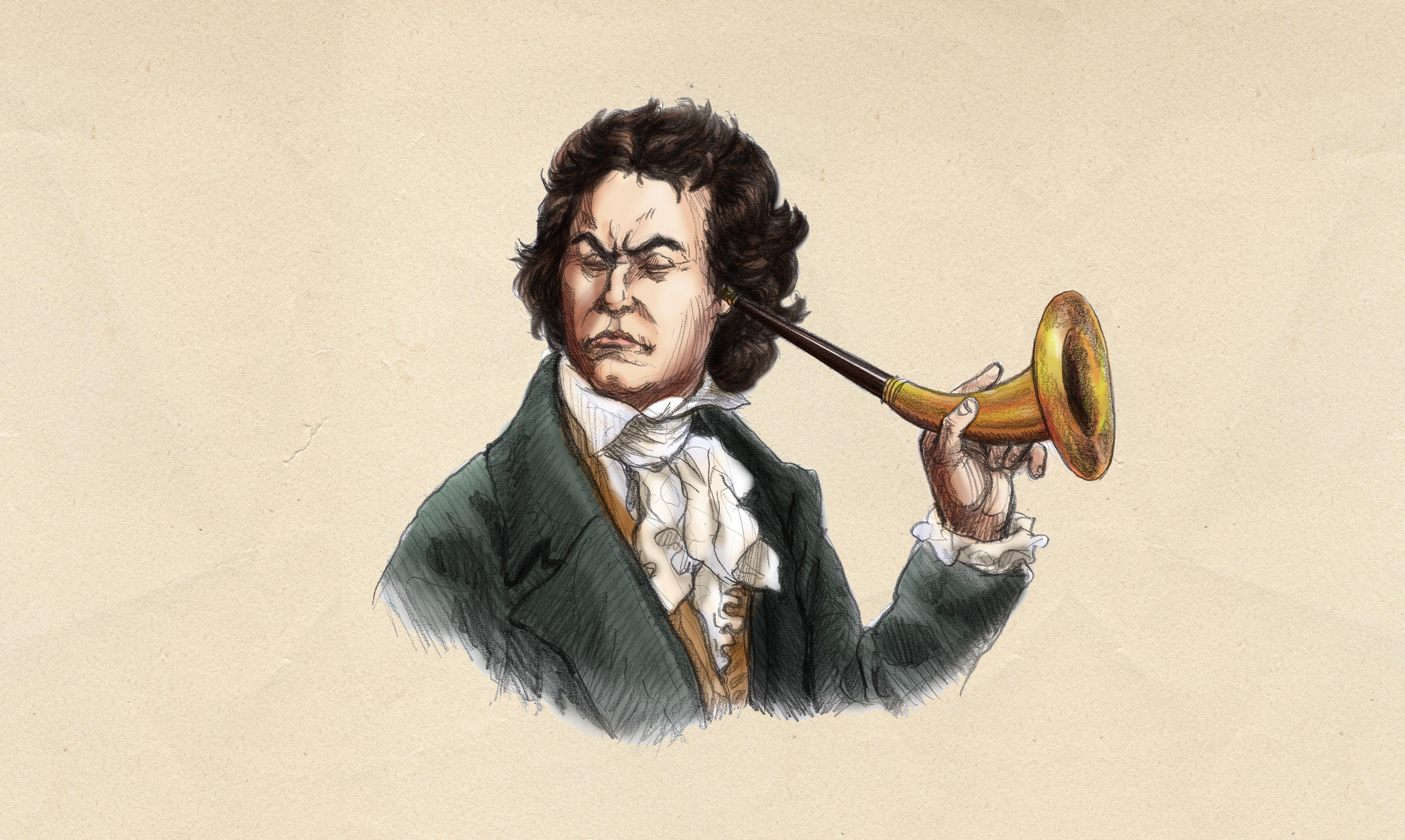
Ludwig van Beethoven is widely regarded as one of the greatest composers in the history of classical music. His groundbreaking compositions, powerful emotions, and remarkable determination continue to inspire musicians and audiences around the world. Born in Germany in 1770, Beethoven helped bridge the Classical and Romantic eras of music, creating masterpieces that remain popular more than two centuries later.
In this article, we explore five fascinating facts about Beethoven that reveal why he remains such an important figure in music history.

1. Beethoven Continued Composing After Losing His Hearing
One of the most extraordinary facts about Beethoven is that he gradually lost his hearing during his adult life. The first signs of hearing problems appeared when he was in his late twenties, and his condition worsened over the years until he became almost completely deaf.
For most musicians, hearing loss would mean the end of a career. However, Beethoven refused to give up. He continued composing some of his greatest works despite being unable to hear them in the traditional sense. His famous Symphony No. 9, which includes the celebrated “Ode to Joy,” was composed when he was already profoundly deaf.
His perseverance remains a powerful example of determination and creativity overcoming adversity.
2. He Was a Child Prodigy
Beethoven showed exceptional musical talent from a very young age. His father, Johann van Beethoven, recognized his son’s abilities and began giving him intensive music lessons. Hoping to create another child prodigy like Wolfgang Amadeus Mozart, Beethoven’s father pushed him to perform publicly at an early age.
By the age of twelve, Beethoven had already published his first musical compositions. His skills as a pianist quickly gained attention, and he became known throughout Europe as a gifted performer and composer.
Although his childhood was often difficult due to strict training and family challenges, these early experiences helped shape the musical genius he would become.
3. Beethoven Studied Under Famous Composers
As a young musician, Beethoven moved to Vienna, which was considered the musical capital of Europe. There, he had the opportunity to learn from some of the most respected composers of his time.
Among his teachers was Joseph Haydn, one of the leading figures of the Classical period. Beethoven also studied with Johann Georg Albrechtsberger and Antonio Salieri, further refining his composition techniques.
While he respected his teachers, Beethoven soon developed his own unique style. His music became more dramatic, emotional, and innovative than many of the traditional works of the era, helping to transform the future of classical music.
4. He Revolutionized the Symphony
Before Beethoven, symphonies generally followed established structures and conventions. Beethoven expanded the possibilities of orchestral music by introducing greater emotional depth, complexity, and length.
His Symphony No. 3, known as the “Eroica” Symphony, shocked audiences with its scale and ambition. It marked a turning point in musical history and demonstrated that symphonies could express profound personal and philosophical ideas.
Many music historians consider Beethoven’s symphonies to be among the most influential works ever written. His innovations inspired generations of composers, including Johannes Brahms, Richard Wagner, and Gustav Mahler.
5. His Legacy Continues Around the World
More than 190 years after his death in 1827, Beethoven’s music remains an essential part of concert programs, films, television productions, and cultural events worldwide.
Pieces such as “Für Elise,” Symphony No. 5, the “Moonlight Sonata,” and Symphony No. 9 are recognized by millions of people, even those who may not regularly listen to classical music.
Beyond his compositions, Beethoven is remembered as a symbol of artistic excellence, resilience, and innovation. His ability to overcome personal struggles while creating timeless masterpieces has secured his place among history’s most celebrated composers.
Conclusion
Ludwig van Beethoven was far more than a talented composer. He was a visionary artist who transformed classical music and demonstrated extraordinary courage in the face of adversity. From composing while deaf to revolutionizing the symphony, his achievements continue to inspire people across the globe.
Whether you are a lifelong classical music enthusiast or just beginning to explore his work, Beethoven’s remarkable story offers valuable lessons about perseverance, creativity, and the enduring power of music.
Comments are closed