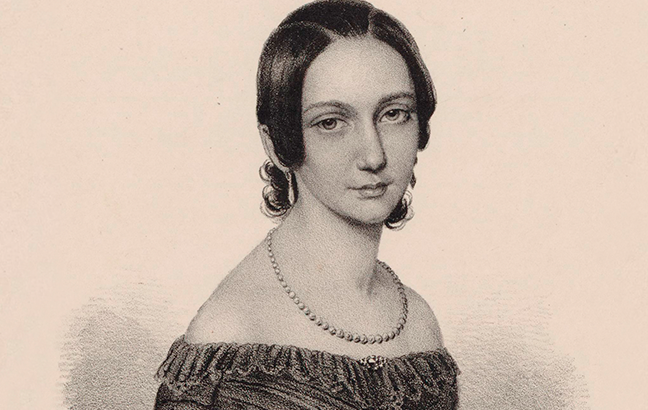
The 5 Most Important Compositions by Clara Schumann
Clara Schumann: A Composer Ahead of Her Time
Clara Schumann (1819–1896) is widely recognized as one of the greatest pianists of the Romantic era, but her achievements as a composer deserve equal attention. Despite the social expectations placed on women during the nineteenth century, Clara created works of remarkable originality, expressive depth, and technical sophistication. Her music combines lyrical beauty with refined craftsmanship, reflecting both her extraordinary pianistic abilities and her unique artistic voice.
Although her compositional output was relatively small compared to some of her contemporaries, several of her works have become landmarks of Romantic piano and chamber music. Here are five of her most significant compositions.
1. Piano Concerto in A Minor, Op. 7 (1835)
Composed when Clara was just fourteen years old and premiered with Felix Mendelssohn conducting, the Piano Concerto in A Minor is an astonishing achievement for such a young composer. Rather than simply showcasing virtuosic brilliance, the concerto demonstrates remarkable structural maturity and emotional sensitivity.
The work blends dazzling piano passages with lyrical orchestral writing, creating a dialogue between soloist and ensemble that was innovative for its time. The intimate transition between the second and third movements remains one of its most distinctive features.
Why it matters:
- Written during Clara’s teenage years.
- Premiered under the direction of Felix Mendelssohn.
- Demonstrates exceptional maturity and originality.
- Remains one of the finest piano concertos written by a female composer in the Romantic era.
2. Piano Trio in G Minor, Op. 17 (1846)
Often regarded as Clara Schumann’s masterpiece, the Piano Trio in G Minor showcases her command of chamber music. Written during a particularly productive period in her life, the work reveals a sophisticated balance among piano, violin, and cello.
The trio combines passionate Romantic expression with elegant formal design. Its melodic richness and emotional range place it alongside the finest chamber works of the nineteenth century.
The slow movement is especially admired for its warmth and introspective beauty, while the energetic finale demonstrates Clara’s mastery of thematic development.
Why it matters:
- Considered her greatest chamber music composition.
- Features balanced and expressive writing for all three instruments.
- A cornerstone of the Romantic piano trio repertoire.
3. Three Romances for Violin and Piano, Op. 22 (1853)
These Three Romances are among Clara Schumann’s most frequently performed works today. Written for violinist Joseph Joachim, they exemplify the intimacy and lyricism that characterize much of her mature style.
Each Romance possesses its own distinct personality, ranging from gentle tenderness to passionate intensity. Rather than treating the piano as mere accompaniment, Clara gives both instruments equal importance, creating an engaging musical conversation.
The collection remains a favorite among violinists and pianists for both concerts and recordings.
Why it matters:
- Dedicated to the celebrated violinist Joseph Joachim.
- Demonstrates Clara’s gift for lyrical melody.
- Continues to enjoy widespread popularity in today’s chamber music repertoire.
4. Soirées Musicales, Op. 6 (1836)
The six piano pieces that make up Soirées Musicales illustrate Clara’s brilliance as both composer and virtuoso pianist. Inspired by the salon culture of nineteenth-century Europe, these works combine elegance, charm, and technical brilliance.
Each piece explores different moods and textures, offering performers opportunities for expressive interpretation as well as virtuosic display. While influenced by composers such as Chopin and Mendelssohn, Clara’s own musical personality is clearly evident.
Today, Soirées Musicales provides valuable insight into the sophisticated piano style that made Clara one of Europe’s greatest concert artists.
Why it matters:
- A collection of six refined Romantic piano works.
- Highlights Clara’s virtuosity and compositional imagination.
- Frequently studied by pianists interested in Romantic repertoire.
5. Variations on a Theme by Robert Schumann, Op. 20 (1853)
Composed during one of the most emotionally difficult periods of her life, these variations are based on a theme by her husband, Robert Schumann. Rather than serving merely as a tribute, the work reflects Clara’s own artistic identity and compositional voice.
Through a series of imaginative transformations, she develops Robert’s theme into a deeply expressive and technically rewarding work. The variations reveal her exceptional understanding of harmonic color, pianistic texture, and emotional nuance.
The composition stands as both a personal statement and an enduring example of Romantic variation form.
Why it matters:
- Based on a theme by Robert Schumann.
- Combines personal emotion with compositional sophistication.
- Represents one of Clara’s most profound piano works.
Clara Schumann’s Lasting Legacy
For many decades, Clara Schumann’s reputation rested primarily on her extraordinary career as a pianist and her advocacy for Robert Schumann’s music. In recent years, however, scholars and performers have increasingly recognized the originality and artistic value of her own compositions.
Her music reveals a composer of remarkable intelligence, emotional depth, and technical mastery. Whether writing for solo piano, chamber ensemble, or orchestra, Clara consistently demonstrated a distinctive voice that deserves a permanent place in the classical canon.
Today, her works are performed more frequently than ever before, inspiring musicians and audiences around the world. As interest in overlooked composers continues to grow, Clara Schumann has emerged not merely as an important historical figure but as one of the most compelling composers of the Romantic period.
Conclusion
The Piano Concerto in A Minor, Piano Trio in G Minor, Three Romances, Soirées Musicales, and Variations on a Theme by Robert Schumann represent the finest examples of Clara Schumann’s compositional achievement. Together, they demonstrate her extraordinary creativity and confirm her place among the leading musical figures of the nineteenth century.
Comments are closed