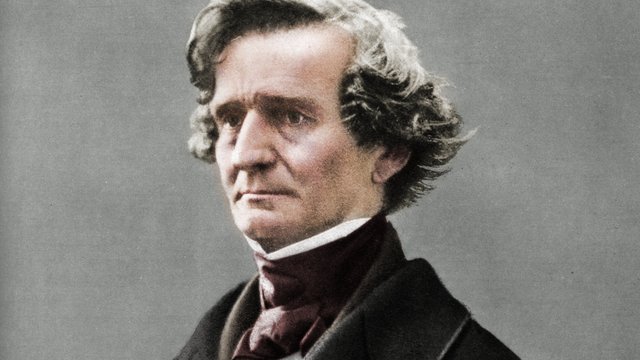
A Comprehensive Biography of Hector Berlioz
Introduction
Louis-Hector Berlioz (1803-1869) was a pivotal figure in 19th-century French music, a composer whose innovative approach to orchestration and dramatic expression left an indelible mark on the Romantic era. Often considered a visionary, Berlioz defied conventional musical norms, pushing the boundaries of form and harmony to create works of immense scale and emotional depth. His life was a testament to artistic perseverance, marked by early struggles against familial expectations, passionate romantic pursuits, and a relentless dedication to his unique musical vision. This biography will delve into the various stages of Berlioz’s life, from his formative years and early musical inclinations to his groundbreaking compositions, personal triumphs and tribulations, and his enduring legacy in the world of classical music.
Childhood (1803-1821)
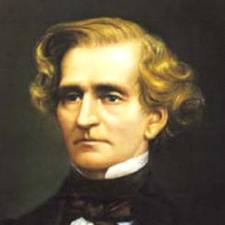
Hector Berlioz was born on December 11, 1803, in La Côte-Saint-André, a small town in southeastern France. He was the eldest child of Louis Berlioz, a respected provincial physician, and Marie-Antoinette Joséphine Marmion. His father, a man of liberal views, initially intended for Hector to follow in his footsteps and pursue a career in medicine. Dr. Berlioz provided his son with a comprehensive home education, focusing on classical literature, particularly the works of Virgil, which would later profoundly influence Hector’s artistic sensibilities.
Music did not feature prominently in young Berlioz’s early education. He learned to play the flute and guitar, largely self-taught, and showed an early aptitude for composition. His first attempts at composition, however, were met with little understanding from his family. Despite his father’s wishes for him to become a doctor, Berlioz’s passion for music steadily grew, setting the stage for a future conflict with his family’s expectations.
Youth (1821-1830)
In March 1821, Berlioz passed his baccalauréat examination and, in September of the same year, at the age of seventeen, he moved to Paris to begin his medical studies at the University of Paris. This period was a significant struggle for Berlioz, as he found the study of anatomy and dissection deeply repulsive. Despite his father’s insistence, his true calling lay elsewhere. He frequently visited the Paris Conservatoire library, immersing himself in musical scores and studying the works of composers like Gluck, Méhul, and Spontini.
By 1824, Berlioz had abandoned medicine entirely, much to his parents’ disapproval, and began to pursue music professionally. He became a private pupil of Jean-François Le Sueur, a respected composer and professor at the Conservatoire. During this period, Berlioz composed his Messe solennelle (Solemn Mass), though it was largely forgotten until a copy was discovered in 1991.
His fascination with Shakespeare’s plays began in 1827 after attending performances of Hamlet and Romeo and Juliet by a touring English company at the Théâtre de l’Odéon, featuring the Irish actress Harriet Smithson. Berlioz became intensely infatuated with Smithson, an obsession that would profoundly influence his life and work, most notably inspiring his Symphonie fantastique.
Berlioz competed for the prestigious Prix de Rome multiple times, finally winning it in 1830 with his cantata La Mort de Sardanapale. This period also saw the premiere of his Symphonie fantastique, a groundbreaking work that solidified his reputation as a radical and innovative composer.
Adult Life (1830-1860s)
The 1830s marked a period of significant personal and professional development for Berlioz. Following his Prix de Rome win, he traveled to Italy, where he found inspiration for works like Harold in Italy. His tumultuous relationship with Harriet Smithson culminated in their marriage in 1833, a union that, despite its passionate beginnings, eventually faced considerable challenges. Smithson, the muse for his Symphonie fantastique, struggled with ill health and financial difficulties, and their marriage ultimately foundered.
Berlioz’s career as a composer in France was often met with mixed reactions. While some recognized his genius, others found his music unconventional and lacking in traditional form. This led him to increasingly turn to conducting, where he achieved international acclaim, particularly in Germany, Britain, and Russia. His conducting tours were crucial for disseminating his works and establishing his reputation abroad.
To supplement his income, Berlioz became a prolific music critic and writer. His articles and essays, often sharp-witted and insightful, were published in various journals throughout his career. His literary output includes his influential Treatise on Instrumentation (1844), a seminal work that revolutionized orchestral writing and remains a cornerstone of music education.
His adult life was also marked by other significant relationships, including his marriage to singer Marie Recio after Smithson’s death. Despite personal hardships and financial struggles, Berlioz continued to compose, conduct, and write, driven by an unwavering commitment to his artistic vision. He was a tireless advocate for his own music and for the music of others he admired, such as Gluck and Beethoven.
Main Compositions
Berlioz’s compositional output is characterized by its originality, dramatic flair, and innovative use of orchestral color. His works often pushed the boundaries of musical form and expression, making him a true pioneer of the Romantic era. Some of his most significant compositions include:
•Symphonie fantastique, Op. 14 (1830): This programmatic symphony is arguably Berlioz’s most famous work. It tells the story of an artist’s unrequited love and his opium-induced dreams, featuring a recurring idée fixe (fixed idea) representing the beloved. Its innovative orchestration and dramatic narrative made it a landmark in musical history.
•Harold in Italy, Op. 16 (1834): A symphony with viola obbligato, inspired by Lord Byron’s Childe Harold’s Pilgrimage. It reflects Berlioz’s experiences in Italy and features the viola as a melancholic wanderer.
•Requiem (Grande messe des morts), Op. 5 (1837): A monumental work for tenor, chorus, and orchestra, known for its massive forces and dramatic effects, particularly the powerful Tuba mirum movement.
•Roméo et Juliette, Op. 17 (1839): A dramatic symphony with chorus, vocal soloists, and orchestra, based on Shakespeare’s play. Berlioz considered it one of his finest achievements.
•La Damnation de Faust, Op. 24 (1846): A dramatic legend in four parts, often performed as an opera. It is based on Goethe’s Faust and showcases Berlioz’s mastery of dramatic storytelling through music.
•Les Troyens (The Trojans) (1856-1858): Berlioz’s magnum opus, an epic opera in five acts based on Virgil’s Aeneid. It is a work of immense scale and ambition, though it was never performed in its entirety during his lifetime.
•Béatrice et Bénédict (1860-1862): A comic opera based on Shakespeare’s Much Ado About Nothing, showcasing a lighter, more lyrical side of Berlioz’s compositional style.
Death (1869)
In his later years, Berlioz suffered from declining health, marked by chronic intestinal pain and increasing isolation. The death of his son, Louis, in 1867, was a devastating blow from which he never fully recovered. Despite his physical ailments and emotional distress, he continued to work, though at a slower pace. His last major work, the opera Béatrice et Bénédict, premiered in 1862.
Hector Berlioz died in Paris on March 8, 1869, at the age of 65. He was buried in Montmartre Cemetery, alongside his two wives, Harriet Smithson and Marie Recio. Although he achieved considerable fame as a conductor during his lifetime, his innovative compositions were often misunderstood and underappreciated in his native France until much later.
Conclusion
Hector Berlioz remains one of the most original and influential composers of the Romantic era. His daring innovations in orchestration, his programmatic approach to music, and his profound emotional expression set him apart from his contemporaries. While his music was not always universally embraced during his lifetime, his legacy has grown steadily, and he is now recognized as a visionary who expanded the expressive possibilities of music. His works continue to be performed and studied, inspiring generations of musicians and captivating audiences with their dramatic power and imaginative scope. Berlioz’s life, a journey of artistic struggle and triumph, stands as a testament to the enduring power of creative genius.
Comments are closed