Cécile Chaminade – A Complete Biography
Introduction
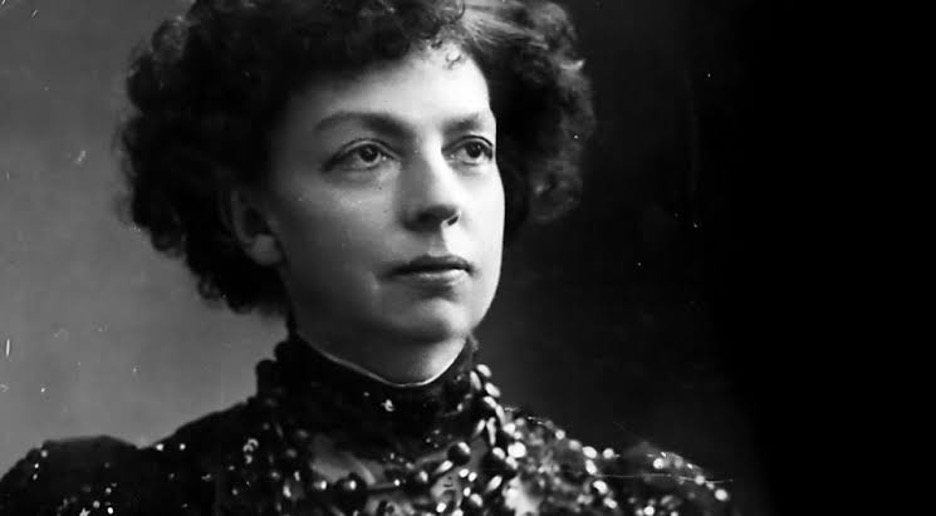
Cécile Louise Stéphanie Chaminade (1857–1944) was a French composer-pianist whose songs, salon miniatures, and orchestral scores made her an international celebrity around 1900. She was widely performed in France, Britain, and the United States; “Chaminade Clubs” sprang up across America to play and promote her music. In 1913 she was decorated with the Légion d’honneur—often cited as the first time a female composer received the honor.
Childhood
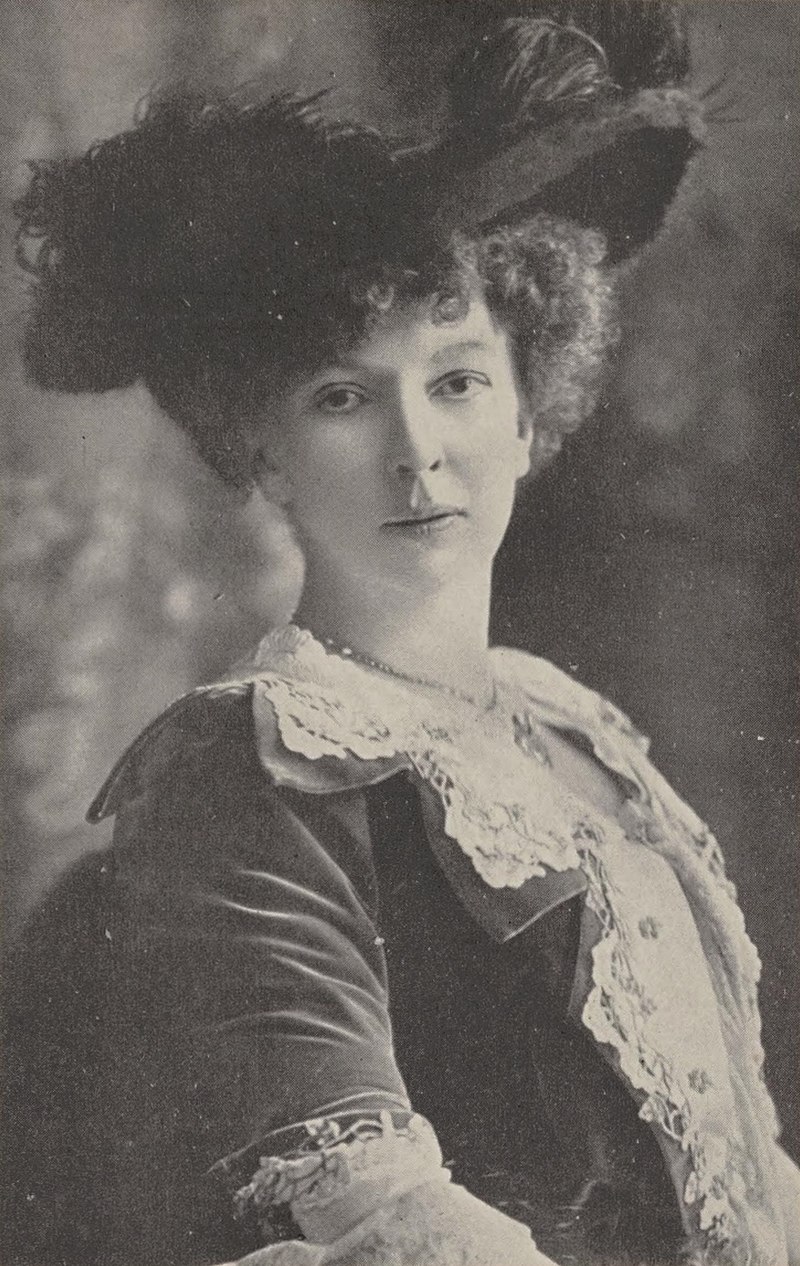
Chaminade was born in Paris on August 8, 1857, into a cultivated household: her father managed a British insurance firm in Paris, and her mother was an accomplished amateur pianist. Recognizing the child’s precocity, the family arranged for the eight-year-old to play some of her pieces for Georges Bizet, who encouraged formal study. Because her father opposed a girl entering the Conservatoire, she studied privately with Conservatoire professors—piano with Félix Le Couppey; harmony and counterpoint with Augustin Savard; violin with Martin Pierre Marsick; and later composition with Benjamin Godard.
Youth
By her late teens Chaminade was performing her own works in Paris salons. A pivotal moment came on April 25, 1878, when Le Couppey organized a salon concert devoted entirely to her compositions; similar composer-only programs became her hallmark. Several early works were taken up by the Société nationale de musique, bolstering her reputation among Paris musicians.
Adulthood
From the 1880s through the 1900s Chaminade’s career broadened rapidly. She toured France and Belgium, then debuted in England in 1892; Queen Victoria admired her music, and her works were played at important royal occasions. In 1901 she married the Marseille music publisher Louis-Mathieu Carbonel; he died in 1907. In 1908 she made a highly publicized U.S. tour, performing in roughly a dozen cities and galvanizing many American “Chaminade Clubs”—women’s music societies formed to study and perform her work. In 1913 she was named Chevalier of the Légion d’honneur.
Her style remained firmly late-Romantic and melodic, favoring character pieces for piano and lyrical songs; the public success of these “salon” genres sometimes led critics to undervalue her larger forms. Even so, she published hundreds of works and was one of the rare women of her era to live primarily from composing and publishing.
Major Compositions (selected)
- Suite d’orchestre, Op. 20 (1881) — Early orchestral suite premiered under Société nationale auspices.
- Les Amazones, Op. 26 (1884) — A dramatic symphony for soloists, chorus, and orchestra.
- Callirhoë, Op. 37 (1888) — Ballet symphonique premiered in Marseille; its piano number “Pas des écharpes” (Scarf Dance) became a global hit, reportedly selling over five million copies.
- Konzertstück, Op. 40 (1888) — Concertante work for piano and orchestra; a staple of her concert tours.
- Six Études de concert, Op. 35 (1886) — Especially No. 2, “Automne,” still beloved by pianists.
- Piano Sonata in C minor, Op. 21 (1893) — Her most substantial solo-piano work.
- “L’anneau d’argent” (The Silver Ring) (1891/1892) — A hugely popular art song on a poem by Rosemonde Gérard.
- Concertino for Flute and Orchestra, Op. 107 (1902) — Commissioned as a Paris Conservatoire morceau de concours; now a standard of the flute repertoire.
Death
During World War II, Chaminade—long resident on the Riviera—was living in Monte Carlo. Contemporary reports note she had been bedridden with a bone disease for years. She died there in 1944; French records give April 13, 1944, though some English-language sources cite April 18. Her remains were later transferred to Passy Cemetery in Paris.
Conclusion
Chaminade’s lifetime popularity was extraordinary: she published hundreds of works, toured widely, and inspired a national club movement in the United States. After World War I, public taste shifted and her reputation receded, though her melodic craft and pianistic writing never disappeared from teaching studios and recital encores. In recent decades, recordings and scholarship have renewed attention to her broader output—ballet, choral symphony, chamber music—alongside evergreen favorites such as Automne and the Flute Concertino. Taken together, her career illuminates both the opportunities and constraints a gifted woman faced in fin-de-siècle musical life, and why her best music still speaks with clarity and charm today.
Comments are closed