César Franck – A Complete Biography
Introduction
César Auguste Jean Guillaume Hubert Franck (1822-1890) was a prominent French Romantic composer, organist, pianist, and music teacher of Belgian birth. His profound influence on French music in the latter half of the 19th century, both through his compositions and his pedagogical work at the Paris Conservatoire, solidified his place as a pivotal figure in the Romantic era. Franck’s unique musical style, characterized by its rich harmonies, contrapuntal mastery, and innovative use of cyclical form, set him apart from his contemporaries. This biography delves into the life and works of César Franck, exploring his journey from a child prodigy to a revered master whose legacy continues to inspire musicians and audiences worldwide.
Childhood
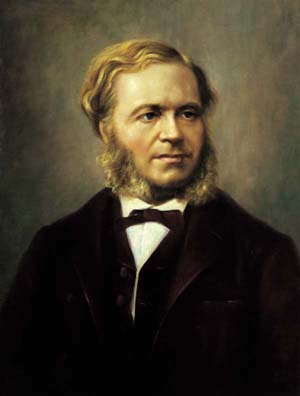
César Auguste Jean Guillaume Hubert Franck was born in Liège, which at the time was part of the United Kingdom of the Netherlands, on December 10, 1822. His father, Nicolas-Joseph Franck, was a bank clerk, and his mother, Marie-Catherine-Barbe Franck, was from Aachen, Germany. Although young César-Auguste showed both drawing and musical skills, his father envisioned him as a young prodigy pianist-composer, in the manner of Franz Liszt or Sigismond Thalberg, who would bring fame and fortune to his family. He was enrolled at the Royal Conservatory of Liège, where he studied solfège, piano, organ, and harmony. César-Auguste gave his first concerts in 1834, including one for Leopold I of the newly formed Kingdom of Belgium.
In 1835, his father decided it was time for wider audiences and brought César-Auguste and his younger brother Joseph to Paris to study privately: harmony and counterpoint with Anton Reicha, piano with Pierre Zimmerman, and solfège with Hippolyte-Raymond Colet. After Reicha’s death some ten months later, Nicolas-Joseph sought to enroll both boys in the Paris Conservatoire. However, the Conservatoire would not accept foreigners, and Nicolas-Joseph was obliged to seek French citizenship, which was granted in 1837. In the interim, Nicolas-Joseph promoted concerts and recitals in Paris featuring one or both boys playing popular music of the period, to mostly good reviews.
César-Auguste and his brother entered the Conservatoire in October 1837. César-Auguste continued his piano studies under Zimmerman and began composition with Aimé Leborn. He took the first prize in piano at the end of his first year (1838) and consistently maintained that level of performance. His work in counterpoint was less spectacular, taking successively third, second, and first prizes between 1838 and 1840. He added organ studies with François Benoist, which included both performance and improvisation, taking second prize in 1841, with the aim of competing for the Prix de Rome in composition the following year. However, for reasons that are not explicit, he made a “voluntary” retirement from the Conservatoire on April 22, 1842.
His withdrawal may have been at his father’s behest. While César-Auguste was pursuing his academic studies, he was, at his father’s demand, also teaching privately and giving concerts. Life was hard for him, and not made easier by the ill-tempered and even vindictive behavior of his father. Concerts performed by young Franck (some with his brother on the violin, some including Franck’s own compositions) were at first well received, but Nicolas-Joseph’s commercial promotion of his sons increasingly antagonized Parisian musical journals and critics. César-Auguste’s technical abilities as a pianist were acknowledged; his abilities as a composer were (probably justly at this point) felt to be wanting. The whole situation was aggravated by what in the end became a feud between Nicolas-Joseph and Henri Blanchard, the principal critic of the Revue et Gazette musicale, who lost no opportunity to castigate the aggressive pretensions of the father and to mock the “imperial” names of the elder son. This animosity, “undoubtedly personal,” may well have caused Nicolas-Joseph to decide that a return to Belgium was in order, and in 1842 a “peremptory order” to young Franck compelled him to leave the Conservatoire and accompany him.
Youth
The return to Belgium lasted less than two years. Profitable concerts did not materialize; critics were indifferent or scornful; patronage from the Belgian court was not forthcoming (although the King later sent César-Auguste a gold medal), and there was no money to be made. As far as Nicolas-Joseph was concerned, the excursion was a failure, and he brought his son back to a regime of teaching and family concerts in Paris, which Laurence Davies characterizes as rigorous and low-paying. Yet there were long-term benefits for young Franck. For it was from this period, extending back into his last Conservatoire years and forward beyond his return to Paris, that his first mature compositions emerged, a set of Trios (piano, violin, cello); these are the first of what he regarded as his permanent work. Liszt saw them, offered encouragement and constructive criticism, and performed them some years later in Weimar. In 1843, Franck began work on his first non-chamber work, the oratorio Ruth. It was privately premiered in 1845 before Liszt, Meyerbeer, and other musical notables, who gave moderate approval and constructive criticism. However, a public performance in early 1846 met with public indifference and critical snubs for the oratorio’s artlessness and simplicity. The work was not performed again until 1872, after considerable revision.
In reaction, César-Auguste essentially retired from public life to one of obscurity as a teacher and accompanist, with which his father reluctantly concurred. Young Franck had commissions both in Paris and in Orléans for these activities, and for the composition of songs and small works. He offered some compositions to celebrate and strengthen the new Second Republic of 1848; the public received some of them with interest, but as the Republic gave way to the Second Empire under Louis-Napoléon, Franck focused on his career as an organist. In 1851, he became organist at the Church of Saint-Jean-Saint-François in Paris, where he remained until 1858. During this period, he also studied with the Belgian organist Nicolas-Joseph Lemmens, who helped him refine his improvisation skills and organ technique. This phase of his life was crucial for the development of his unique musical style, which combined the German contrapuntal tradition with French Romantic expressiveness.
Adulthood
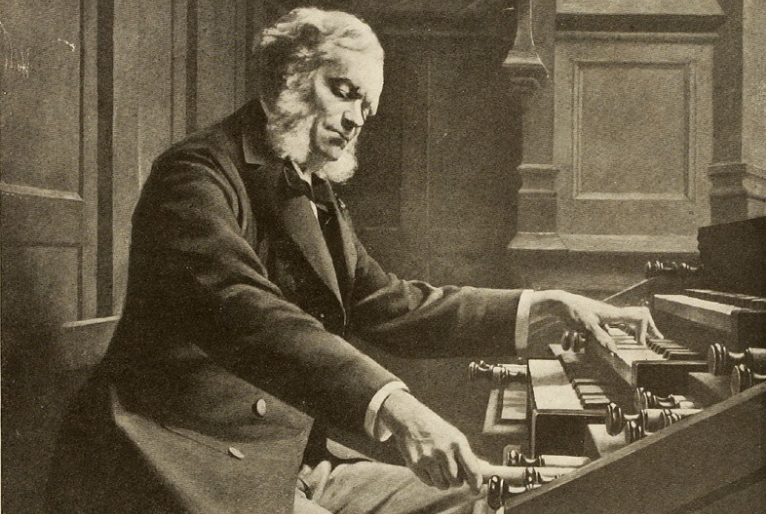
In 1858, César Franck became the titular organist of the Church of Sainte-Clotilde in Paris, a position he held for the rest of his life. This position was fundamental to his career, as the church had an Aristide Cavaillé-Coll organ, one of the most advanced of its time, which allowed Franck to explore and develop his improvisation and composition skills. He gained a reputation as a formidable musical improviser and traveled extensively throughout France to demonstrate new instruments built by Cavaillé-Coll.
In 1872, Franck was appointed professor at the Paris Conservatoire, a position that required him to obtain French citizenship. This appointment marked a turning point in his career, as he began to compose several pieces that became part of the standard classical repertoire. As a teacher, Franck had a vast influence on a generation of composers and musicians, including Ernest Chausson, Vincent d’Indy, Henri Duparc, Guillaume Lekeu, Albert Renaud, Charles Tournemire, and Louis Vierne. He was known for his dedication to his students and for his pedagogical approach that encouraged originality and musical depth.
During his adulthood, Franck dedicated himself intensely to composition, developing a style that blended the contrapuntal tradition of Bach and Beethoven with Romantic expressiveness and chromatic harmony. His works from this period include the Symphony in D minor, the Violin Sonata, the Piano Quintet, and several organ works, such as the Trois Chorals. He also composed sacred works, such as the oratorio Les Béatitudes, and piano pieces. Despite his growing reputation as a teacher and composer, Franck remained a modest figure dedicated to his art, often working in relative obscurity compared to other composers of his time.
Major Compositions
César Franck is recognized for a series of compositions that have become pillars of the classical repertoire, especially in genres such as symphonic, chamber, and organ music. His Symphony in D minor, composed between 1886 and 1888, is one of his most celebrated works and a remarkable example of his cyclical approach, where musical themes reappear and transform throughout the work. The symphony is characterized by its harmonic richness, melodic expressiveness, and an innovative structure for its time.
Another fundamental work is the Violin Sonata in A major, from 1886. This sonata is a landmark in violin and piano literature, known for its lyrical beauty, technical complexity, and the intimate interaction between the two instruments. The sonata also employs the cyclical technique, with a recurring theme that unifies the movements.
For the organ, Franck composed a series of significant works that explore the expressive capabilities of the instrument, reflecting his mastery as an organist and improviser. Among them, the Trois Chorals (Three Chorales), composed shortly before his death in 1890, stand out. These works are considered some of the most important in the Romantic organ repertoire, exhibiting profound spirituality and contrapuntal complexity.
Other notable compositions include the Piano Quintet in F minor (1879), which is a work of great dramatic intensity and passion, and the oratorio Les Béatitudes (1869-1879), a large-scale sacred work that demonstrates his deep faith and ability to handle large vocal and orchestral forms. His vocal piece Panis Angelicus, originally part of a mass, is widely known and frequently performed in religious and concert settings. Franck’s output, though not as vast as some of his contemporaries, is marked by emotional depth, structural rigor, and a distinctive harmonic language that established him as a central figure in 19th-century French music.
Death
César Franck’s health began to decline in the last years of his life. In 1890, he suffered an accident, being hit by a bus, which worsened his physical condition. Although he initially seemed to have recovered, the incident contributed to the weakening of his immune system. He continued to work and compose, but his energy considerably diminished. Franck passed away on November 8, 1890, in Paris, at the age of 67, due to complications from pleurisy, which is believed to have been exacerbated by the accident.
His death was mourned by his students and colleagues, who saw him not only as a master but also as a paternal and inspiring figure. Franck’s funeral was a modest event, but it was attended by many of his admirers and prominent figures from the Parisian musical world. Despite his growing influence, Franck did not achieve great fame or public recognition during his lifetime, especially compared to other composers of his time. However, his dedication to music and his impact on the formation of a new generation of French composers ensured his lasting legacy.
Conclusion
César Franck, although he did not enjoy great popular recognition during his lifetime, left a profound and lasting musical legacy. His influence as a teacher at the Paris Conservatoire was immense, shaping a generation of French composers who would come to define the music of the late 19th and early 20th centuries. He instilled in his students an appreciation for form, harmony, and expressiveness, encouraging them to seek originality and depth in their own works.
As a composer, Franck is remembered for his innovative approach to cyclical form, his rich harmonic language, and his profound spirituality. His works, especially the Symphony in D minor, the Violin Sonata, and the organ works, are considered milestones of French Romanticism and continue to be performed and appreciated worldwide. Franck’s music is characterized by its seriousness, passion, and an almost mystical quality, which reflects his faith and his dedication to art.
César Franck’s impact on French music is undeniable. He helped revitalize the symphonic and chamber tradition in France, which had been dominated by opera. His music paved the way for the development of later styles and influenced composers such as Claude Debussy and Maurice Ravel. Today, César Franck is celebrated as a central figure in music history, a master of harmony and counterpoint, and a composer whose work continues to resonate with listeners for its beauty and emotional depth.
Comments are closed