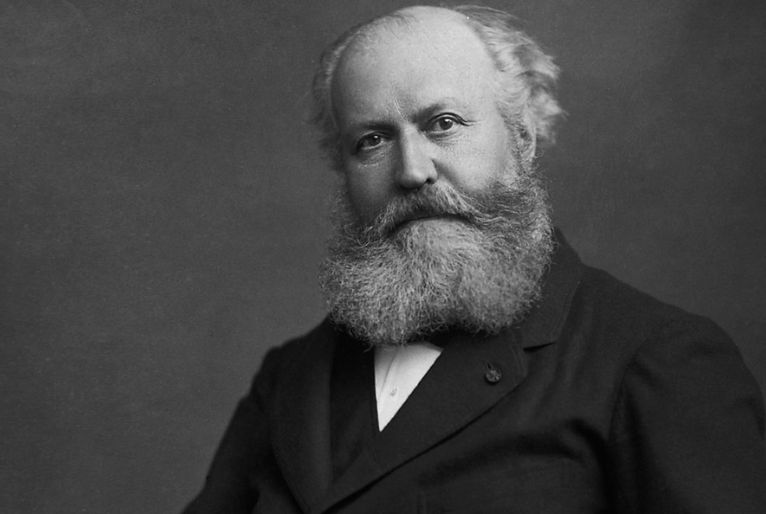
Charles Gounod – A Complete Biography
Introduction
Charles-François Gounod (1818–1893) was a French composer whose melodic instinct shaped some of the most enduring works of 19th-century opera and sacred music. Best known for the operas Faust and Roméo et Juliette, he also wrote prolifically for the church and created the much-loved “Ave Maria,” a soaring melody over Bach’s C-major Prelude. Born in Paris and later celebrated across Europe, Gounod’s career traced a line from early religious vocation to theatrical success and back again to sacred art in his final years.
Childhood
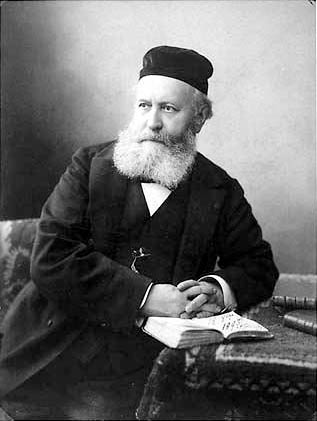
Gounod grew up in a cultured Parisian household. His father, François-Louis, was a painter and art teacher, while his mother, Victoire, was a pianist who became his first music teacher. He proved a diligent student at the Lycée Saint-Louis and showed strong aptitude for languages and the arts. Early musical instruction came privately with the distinguished theorist Anton Reicha, who coached him in harmony and counterpoint before Gounod entered the Paris Conservatoire.
Youth
At the Conservatoire, Gounod studied composition with Fromental Halévy and Jean-François Le Sueur. In 1839, on his third attempt, he won the coveted Prix de Rome for his cantata Fernand, a prize that sent him to Rome for two years and then on to Austria and Germany. In Italy he steeped himself in Palestrina; in the German lands he encountered Mendelssohn and absorbed a renewed reverence for Bach—seedbeds of the sacred style that remained with him for life. Returning to Paris, he briefly served as organist-choirmaster at the Missions Étrangères and, taking his religious leanings seriously, even pursued seminary studies before deciding against the priesthood and returning to composition.
Adulthood
Gounod married Anna Zimmermann, daughter of his Conservatoire piano professor Pierre-Joseph Zimmerman, in 1852. The couple had two children. Professionally, he first gained notice with Sapho (1851) and La nonne sanglante (1854), but true fame came with Faust (1859), whose success established him across Europe. This was followed by Mireille (1864) and the late-Romantic lyricism of Roméo et Juliette (1867). In 1866 he was elected to the Académie des Beaux-Arts.
The Franco-Prussian War (1870–71) disrupted Parisian musical life. Gounod moved to London, where he conducted and composed. For the 1871 International Exhibition he wrote Gallia, a lament set to texts from the Lamentations of Jeremiah. His English sojourn also produced the whimsical Funeral March of a Marionette, later famous as the theme for Alfred Hitchcock Presents. His association with the amateur singer Georgina Weldon during these years ended acrimoniously and spilled into litigation after his return to France in 1874. In the later 1870s and 1880s he pursued new operas—Cinq-Mars, Polyeucte, Le Tribut de Zamora—and large sacred works before focusing almost exclusively on religious music.
Major Compositions
Operas
Faust remains Gounod’s signature stage work, an operatic distillation of Goethe with irresistible melodies and finely etched character pieces such as Mephisto’s “Le veau d’or” and Marguerite’s “Jewel Song.” Roméo et Juliette followed with a string of rapturous duets and the coloratura waltz “Je veux vivre.” Other notable titles include Mireille, La reine de Saba, Philémon et Baucis, La colombe, Le médecin malgré lui, and La nonne sanglante.
Sacred music
Even while writing for the theater, Gounod cultivated a deeply devotional catalogue. The Messe solennelle de Sainte-Cécile (1855) became a Paris sensation. Later came the paired oratorios La Rédemption (1882) and Mors et Vita (1885), along with many masses and motets. His most widely known sacred piece, however, is the “Ave Maria,” first published in 1853 as Méditation sur le 1er prélude de J. S. Bach, with Gounod’s melody soaring over Bach’s C-major Prelude.
Orchestral and chamber music
Beyond the stage and church, Gounod wrote two early symphonies, which influenced his young admirer Georges Bizet’s Symphony in C. Late in life he produced the charming wind Petite Symphonie (1885). From his London years came the piano piece later orchestrated as Funeral March of a Marionette, whose afterlife in film and television sealed his name for millions.
Death
In his final years, Gounod lived quietly in Saint-Cloud, working on sacred scores and writings. After suffering a stroke on October 15, 1893, he died three days later, on October 18, at the age of 75. Paris honored him with a state funeral at the Church of La Madeleine. At Gounod’s wish, the music was strictly vocal, conducted by Gabriel Fauré. He was interred at the Cimetière d’Auteuil near Saint-Cloud.
Conclusion
Gounod’s reputation has inevitably ebbed and flowed with taste, but his greatest strengths remain clear: an unfailing melodic gift, a lyrical sincerity that serves both stage and sanctuary, and a refined sense of vocal writing that shaped French opera for a generation. Faust and Roméo et Juliette still anchor the operatic repertoire, and the “Ave Maria” endures in countless arrangements. If some critics found his sacred works overly sentimental, his best music—tender yet poised—continues to thrive in opera houses, recital halls, and churches around the world.
Comments are closed