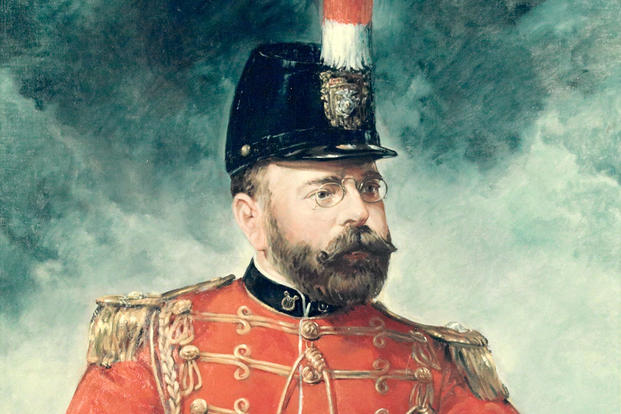
John Philip Sousa – A Complete Biography
Introduction
John Philip Sousa (1854–1932) was the United States’ preeminent bandmaster and the most famous composer of American marches. Dubbed “The March King,” he shaped the sound and standards of wind bands at home and abroad, led “The President’s Own” United States Marine Band to unprecedented professionalism, and then toured the world with his own civilian ensemble. Beyond his popular hits, Sousa raised concert programming, instrumentation, and musicianship to a level that helped legitimize the concert band as a serious artistic medium in American life.
Childhood
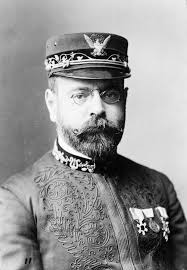
Sousa was born on November 6, 1854, in Washington, D.C., a short walk from the Marine Barracks. His father, John (João) Antônio Sousa, a trombonist in the Marine Band, and his mother, Marie Elisabeth Trinkaus, a Bavarian immigrant, filled their home with music and discipline. Growing up amid military pageantry, Sousa absorbed parades, drills, and the ceremonial life of the capital, while studying violin and the rudiments of harmony and theory with local teachers. The household’s immigrant ethos—Portuguese on his father’s side and German on his mother’s—also helped to shape the diligence and craft he brought to music-making.
Youth
Precocious and restless, Sousa nearly ran off as a teenager to join a circus band—an episode that prompted his father to enlist him as an apprentice musician in the United States Marine Corps to keep him on a steadier path. He served in “The President’s Own” through his teens, learning military deportment, sight-reading, and the practicalities of band life from the inside. After completing his minority enlistment, he left the Marines in the mid-1870s, supporting himself as a violinist and learning the craft of conducting in theater pit orchestras—experience that sharpened his ear for pacing, balance, and dramatic timing. By the late 1870s, he had worked his way into music-director posts in commercial venues around Philadelphia and Washington, consolidating a reputation as an exacting young professional.
Adulthood
In 1880, at just twenty-five, Sousa returned to Washington as leader of the Marine Band. Over the next twelve years he transformed the ensemble—standardizing rehearsals, expanding the library, polishing intonation and ensemble blend, and introducing audiences to a broader repertory through the band’s first extensive recording and touring activities. Under five presidents, the Marine Band became a national musical symbol, performing at White House functions, inaugural balls, and public ceremonies that broadcast Sousa’s disciplined, gleaming sound to millions.
In 1892, sensing the limits of a military post and the public’s hunger for marquee entertainment, he resigned to create the Sousa Band. For the next four decades, it toured relentlessly across the United States and abroad, appearing at world’s fairs and major halls, often with star soloists and polished transcriptions of orchestral repertory alongside marches. Sousa’s programs, deftly paced and theatrically savvy, helped define the band concert as a mainstream American pastime. He also championed music education, guest-conducted school and community ensembles, and wrote essays and lectures on musical taste, discipline, and the civic value of bands.
Sousa’s name became attached to band instrumentation itself through the sousaphone, a wrap-around bass brass instrument designed to project its tone over the ensemble on parade and on stage. He authored popular fiction and a lively memoir, advocated for composers’ rights and performing-rights royalties, and cultivated a wholesome public image that balanced patriotism with showmanship.
Major Compositions
Sousa composed well over a hundred marches, plus operettas, suites, songs, and dances. A few works both defined his idiom and entered the national consciousness:
- “The Stars and Stripes Forever” (1896; published 1897): His signature march, crowned by a piccolo obbligato that has become a rite of passage for band flutists, later designated by Congress as the National March of the United States. Its construction—brisk introduction, crisp first strain, swaggering second strain, a broad trio, and triumphant final strain—became a model for the genre.
- “Semper Fidelis” (1888): Dedicated to the U.S. Marine Corps, this march exemplifies Sousa’s clipped rhythms, disciplined articulations, and clarified counter-lines—the sonic embodiment of military precision.
- “The Washington Post” (1889): Commissioned for a newspaper essay-contest ceremony, it helped ignite an international two-step dance craze and made Sousa a household name beyond strictly military circles.
- “The Liberty Bell” (1893): Memorable for its bell effects and noble trio melody, it demonstrates Sousa’s knack for vivid musical imagery.
- “El Capitan” (1896): A swaggering march drawn from his stage operetta of the same name, showing how he cannily cross-promoted his theater works through band pieces and vice versa.
Across these and many others (“The Thunderer,” “King Cotton,” “Manhattan Beach,” “Hands Across the Sea”), Sousa refined the American march: clean phrase architecture; singable, well-shaped melodies; robust but transparent counterpoint; and harmonic turns that deliver uplift without sentimentality. His stage works (including El Capitan and The Bride-Elect) and orchestral/band suites show broader ambitions, but the march remained his most enduring canvas—music designed for public spaces, civic ritual, and shared joy.
Death
In early 1932, still active well into his seventies, Sousa traveled to Reading, Pennsylvania, to rehearse the Ringgold Band. On March 6, 1932, after running a rehearsal that included “The Stars and Stripes Forever,” he died suddenly of heart failure in his hotel room. His body returned to Washington, where he lay in state at the Marine Barracks before a military funeral procession to Congressional Cemetery. The outpouring of public mourning testified to a career that had become synonymous with American ceremony, spectacle, and communal pride.
Conclusion
John Philip Sousa fused craftsmanlike composition with charismatic leadership to elevate band culture from parade grounds to concert stages. He professionalized the Marine Band, built a globe-trotting touring institution bearing his name, and authored marches that continue to anchor celebrations from small-town parades to national observances. His imprint also includes advocacy for music education, for composers’ rights, for disciplined rehearsal standards, and for the very instruments bands use. More than a century after his prime, Sousa’s music still rallies crowds—not because of nostalgia alone, but because its design, momentum, and optimism were built to serve a living civic ideal.
Comments are closed