
Julius Röntgen – A Complete Biography
Introduction
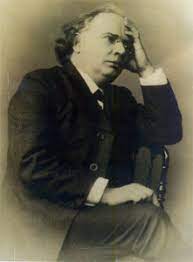
Julius Engelbert Röntgen (1855–1932) stands as a significant, though often overlooked, figure in the annals of classical music. A German-Dutch composer, pianist, conductor, and educator, Röntgen’s life spanned a period of immense musical transformation, from the late Romantic era into the early 20th century. Born into a family steeped in musical tradition in Leipzig, Germany, his prodigious talent was nurtured from an early age, setting the stage for a career that would profoundly influence the musical landscape of both Germany and the Netherlands. His journey from a child prodigy to a respected musical institution builder in Amsterdam, coupled with his extensive compositional output of over 600 works, paints a portrait of a dedicated and versatile artist. Röntgen’s personal and professional relationships with contemporaries such as Franz Liszt, Johannes Brahms, and Edvard Grieg further underscore his central position within the European classical music scene. This biography delves into the various facets of his life, exploring his formative years, his pivotal move to Amsterdam, his prolific creative period, and his enduring legacy.
Childhood
Julius Röntgen was born on May 9, 1855, in Leipzig, Germany, into an environment saturated with music. His lineage was distinguished by musical talent; his father, Engelbert Röntgen, a Dutch violinist, held the esteemed position of concertmaster for the renowned Gewandhaus Orchestra in Leipzig. His mother, Pauline Klengel, a German pianist, hailed from the celebrated Klengel musical dynasty. This rich heritage provided Julius with an unparalleled foundation for his artistic development. Unlike many of his peers, Julius and his sisters did not attend conventional schools. Instead, their education was meticulously curated at home through private tutors, ensuring a comprehensive intellectual and artistic upbringing. His musical instruction commenced at a remarkably tender age, with his first piano lessons imparted by his grandfather, Moritz Klengel, and his mother. By the age of eight, in 1864, Röntgen had already demonstrated his innate compositional abilities by penning his first work, a set of four duets for two violins. His formal studies in harmony, counterpoint, and composition began between 1865 and 1868 under the tutelage of Moritz Hauptmann, the esteemed cantor of the Thomanerchor in Leipzig. Concurrently, his piano education was further refined by Louis Plaidy and Carl Reinecke, who also served as the conductor of the Gewandhaus Orchestra. Röntgen quickly gained recognition as a child prodigy, frequently performing his own compositions in prominent cities such as Düsseldorf, Hamburg, and Leipzig, showcasing a talent that belied his young age.
Youth
Röntgen’s youth was a period of intense musical immersion and pivotal encounters that shaped his artistic trajectory. At the formative age of 14, in 1870, he embarked on a significant journey to Weimar, where he had the opportunity to meet and perform for the legendary Franz Liszt. This encounter, where Röntgen presented his own compositions, culminated in an invitation to a soirée at Liszt’s residence, a testament to his burgeoning talent. His early compositional style was a rich tapestry woven from the influences of his teachers and contemporaries, including Carl Reinecke, the profound romanticism of Robert Schumann, the innovative spirit of Franz Liszt, and the classical rigor of Johannes Brahms. His initial meeting with Brahms occurred within the intimate setting of a musical circle at the home of Heinrich von Herzogenberg, where Röntgen and his parents were frequent participants. Furthering his piano studies, he moved to Munich to learn under Franz Lachner, a close associate of Franz Schubert, which broadened his musical perspective. A crucial turning point in his life came in 1877 when, at 22 years old, Röntgen faced a choice between pursuing his career in Vienna or Amsterdam. He ultimately chose Amsterdam, accepting a position as a piano teacher at the local music school. Although he initially perceived the institution as primarily catering to
amateurs, this decision marked the beginning of his profound and lasting contributions to Dutch musical life, establishing him as a central figure in its development.
Adulthood
Julius Röntgen’s adulthood was defined by his extensive and transformative contributions to the musical landscape of the Netherlands. Upon settling in Amsterdam in 1877, he rapidly integrated himself into the city’s cultural fabric. He assumed the role of a piano teacher and became a prominent conductor, leading the vocal society Excelsior and the Amsterdam division of the Maatschappij tot Bevordering der Toonkunst (Society for the Advancement of Music). His pioneering spirit was evident in his efforts to introduce significant works to Dutch audiences, notably conducting the first Dutch performance of Bach’s monumental Hohe Messe. A cornerstone of his legacy in Amsterdam was his co-founding of the Amsterdam Conservatory in 1884, alongside Frans Coenen, Daniël de Lange, and Johannes Messchaert. He later served as its managing director from 1913 to 1924, guiding its development into a respected institution. Röntgen was also deeply involved in the establishment of the Concertgebouw, a world-renowned concert hall, further solidifying his impact on the city’s musical infrastructure.
Röntgen cultivated close friendships and professional relationships with many of the era’s leading musical figures, including Johannes Brahms, Edvard Grieg, and Pablo Casals. His admiration for Brahms was particularly strong, leading him to organize several concerts in Holland between 1878 and 1885 that introduced Brahms’s works to Dutch audiences. In 1884, Röntgen had the distinct honor of performing as the soloist in Brahms’s Second Piano Concerto, conducted by the composer himself. Renowned for his pianistic prowess, he was also a highly sought-after accompanist for celebrated soloists such as Joseph Joachim, Carl Flesch, and Pablo Casals. His personal life saw him marry Amanda Maier, a Swedish violinist and composer, in 1880. Following her passing in 1894, he married Abrahamina des Amorie van der Hoeven, a talented piano teacher. Many of his children inherited his musical gifts and became professional musicians, with his son Joachim founding the Röntgen String Quartet.
In 1919, in the aftermath of the First World War, Röntgen became a naturalized Dutch citizen, a decision influenced by the wartime experiences of his sons. The later years of his career saw him embrace experimentation. From 1920 onwards, he explored atonal music, even composing a bi-tonal symphony in 1930, demonstrating his willingness to engage with contemporary musical trends. He also ventured into film composition, providing musical accompaniment and improvisations for folkloric films by D.J. van der Ven. In 1924, Röntgen retired from public life and relocated to Bilthoven, a village near Utrecht. There, his son Frants, an architect, designed the country house Gaudeamus, which became a vibrant hub for musical activities. It hosted house concerts, analysis courses, and welcomed esteemed guests like Pablo Casals and Percy Grainger. In recognition of his immense contributions to music, Röntgen was awarded an honorary doctorate from the University of Edinburgh in 1930, a testament to his international standing and enduring influence.
Major Compositions
Julius Röntgen was an extraordinarily prolific composer, leaving behind an extensive oeuvre of over 600 compositions that spanned nearly every genre of classical music. His creative output included numerous symphonies, concertos for various instruments, a vast collection of chamber music, songs, choral works, and operas. His early compositional style was deeply rooted in the Romantic tradition, heavily influenced by the Leipzig school and exhibiting a strong affinity with the works of Johannes Brahms. This influence is particularly evident in pieces like his Wind Serenade, Op. 14, whose main theme was notably incorporated by Brahms into his Symphony No. 2, a testament to the mutual respect and artistic dialogue between the two composers.
As his career progressed, Röntgen gradually developed a more individual and distinctive style. He was a keen researcher and re-interpreter of Dutch folk music, incorporating these traditional melodies and rhythms into his compositions, thereby enriching the national musical heritage. His interest extended beyond Dutch borders, as he also drew significant inspiration from Scandinavian folk tunes, weaving them into his works. In his later years, Röntgen demonstrated a remarkable willingness to experiment with more contemporary and avant-garde musical forms. This adventurous spirit led him to explore atonal music, culminating in the composition of a bi-tonal symphony in 1930, showcasing his continuous artistic evolution and openness to new sonic landscapes. His final completed work, a Piano Quintet in G major, subtitled Sentendo nuova forza (Feeling New Strength), was finished just months before his death in 1932, serving as a poignant capstone to a lifetime of musical creation. This piece, his third for piano and strings, exemplifies his enduring creativity and mastery until the very end of his life. Other significant works include his two most recent piano concertos, which he performed as a soloist at a celebratory gala concert in Amsterdam in 1930, further highlighting his dual role as both a virtuoso performer and a prolific composer.
Death
Julius Röntgen’s remarkable life of musical dedication concluded on September 13, 1932, when he passed away in Utrecht, Netherlands, at the age of 77. His creative spirit remained vibrant until his final months; his last composition, a Piano Quintet in G major (his third for piano and strings), bearing the poignant subtitle Sentendo nuova forza (Feeling New Strength), was completed on July 5 of the same year. This final work stands as a testament to his enduring passion and vigor for music. Following his death, his close friend, the esteemed musicologist and composer Donald Tovey, penned a heartfelt commemoration in The Times. Tovey lauded Röntgen’s comprehensive mastery across all aspects of musical technique and the inherent beauty and wit found even in his most accessible works, asserting that each series of his compositions culminated in a unique and living masterpiece. Two years later, Tovey further solidified Röntgen’s legacy by describing him as “one of the greatest masters of absolute music I have ever known,” a profound tribute from a respected contemporary that underscores Röntgen’s significant, though sometimes understated, place in classical music history.
Conclusion
Julius Röntgen’s life was a testament to a profound dedication to music, marked by his dual German-Dutch heritage and his significant contributions to the classical music landscape of the late 19th and early 20th centuries. From his prodigious childhood in Leipzig to his influential adulthood in Amsterdam, Röntgen distinguished himself as a composer, pianist, conductor, and educator. His extensive body of work, encompassing over 600 compositions, reflects a journey from Romanticism to experimental atonality, showcasing his versatility and continuous artistic evolution. Beyond his compositions, his role in founding the Amsterdam Conservatory and the Concertgebouw, and his close relationships with musical giants like Brahms and Grieg, solidify his legacy as a pivotal figure in European classical music. Though his music was sometimes overshadowed by his contemporaries, the renewed interest in his oeuvre and the posthumous recognition, including an honorary doctorate from the University of Edinburgh, underscore the enduring quality and historical importance of his contributions.
Comments are closed