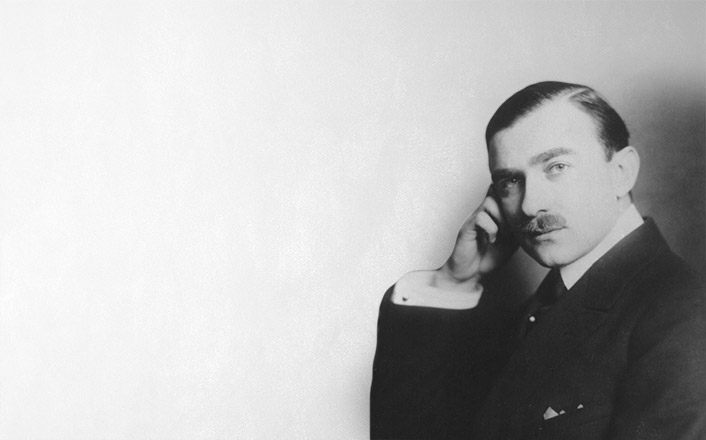
Karol Szymanowski – A Complete Biography
Introduction
Karol Maciej Szymanowski (born October 3, 1882 — died March 29, 1937) stands as one of Poland’s most important composers of the early twentieth century. His music moved from late-Romantic roots through impressionistic color and exoticism to a distinctively Polish modern voice. Szymanowski combined rich harmonic language, vivid orchestration, and an intense interest in folk and poetic sources to produce works for piano, voice, violin, orchestra, and the stage that remain central to the twentieth-century repertoire.
Childhood
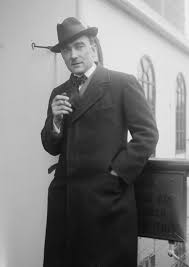
Szymanowski was born on his family’s estate in Tymoszówka (then in the Russian Empire; today in Ukraine). He belonged to a cultured, land-owning Polish family and grew up surrounded by music and literature. His earliest musical training came at home: he learned piano from family teachers and showed talent from a young age. In the 1890s he attended the music school run by Gustav Neuhaus in Elisavetgrad (now Kropyvnytskyi / Ukraine), which provided him with a practical grounding before his later studies in Warsaw. Those formative years combined private tutoring, exposure to literature and foreign travel, and the comfortable environment of a noble household — all of which shaped his early artistic ambitions.
Youth
In 1901 Szymanowski moved to Warsaw to pursue more sustained musical study. There he took private lessons in harmony and counterpoint and began composing in earnest. Dissatisfied with the conservative musical life of Warsaw, he spent time in Berlin and other European cultural centers; he also helped to organize the Young Polish Composers’ Publishing Company, a venture intended to promote contemporary Polish music. During this period his early works display strong influences from late-Romantic German composers and from Alexander Scriabin: lush harmony, virtuosic piano writing, and an exploratory approach to form. He became associated with the broader Young Poland cultural movement and developed friendships with leading Polish artists and performers of the day.
Adulthood
The outbreak of World War I and the political upheavals that followed interrupted normal life for Szymanowski. He spent several years (roughly 1914–1917) at his family estate, a time marked by isolation but also intense creative activity and by the destruction and dislocation the war brought to the region. In the 1920s he settled in Zakopane in the Tatra Mountains (Villa Atma became his famous home there), where he immersed himself in the highland (Goral) culture. That immersion triggered a major stylistic turn: he began to weave Polish folk elements, rhythms, and modal inflections into his richly textured orchestral and vocal writing, aiming to create a new Polish musical voice distinct from the nineteenth-century nationalist legacy.
Szymanowski also held important institutional roles. In the later 1920s he served as director of the Warsaw Conservatory (the State Conservatory), and he championed modern Polish composers while continuing to compose, revise, and promote his own works. Throughout the 1920s and early 1930s his music was performed internationally; he cultivated relationships with leading performers and conductors who helped bring his works to audiences across Europe and beyond.
Major compositions
Szymanowski’s output is large and stylistically varied; the following are the works most commonly singled out as central to his achievement:
- Operas and stage works: King Roger (an opera of extraordinary psychological and sensual richness), Hagith, and the ballet Harnasie (a work strongly influenced by highland folk idioms). King Roger in particular is often cited as his masterpiece for the stage — complex, mythic, and vividly theatrical.
- Symphonies and orchestral works: Four symphonies (including the Third, often called Song of the Night, which uses choir and solo voices, and the Fourth, Symphonie Concertante, which features the piano as a solo instrument). These works show his evolution from late-Romantic structures toward freer, more coloristic forms.
- Concertos and solo concerted works: Two violin concertos and a number of concertante works; his violin writing is especially admired for its lyrical intensity and technical brilliance (the Three Myths for violin and piano, later orchestrated, are key examples).
- Piano music: A substantial piano repertoire, including the early Études (Op. 4), mazurkas, and a number of character pieces that combine virtuosity with poetic imagination.
- Choral and vocal works: Among these the Stabat Mater and many art songs stand out for their expressive directness and orchestral coloring; he set texts in several languages and often drew on poetic or exotic sources (including translations of Hafiz and other poets).
Across these genres, Szymanowski’s hallmark traits are a sensual, color-rich harmonic language; a melodic gift that can be modal or folk-derived; and an orchestral imagination that balances transparency and density. His work after the Zakopane years is frequently described as a deliberate effort to create a modern Polish musical idiom, one that could sit alongside European developments while retaining national distinctiveness.
Death
Szymanowski’s health declined in the 1930s. Seeking treatment, he spent time in sanatoria and clinics; in early 1937 he was in Lausanne, Switzerland, where he died on March 29, 1937 (some sources record ambiguity about the exact hour, noting it may have been shortly before or after midnight between March 28 and 29). After his death his remains were returned to Poland and interred at the Skałka cemetery in Kraków, a resting place reserved for many of the nation’s most honored cultural figures.
Conclusion
Karol Szymanowski left a legacy both national and international: he helped usher Polish music into the twentieth century, created a personal and innovative musical language, and wrote works that continue to challenge and reward performers and listeners. His career moves — from a Romantic-inflected youth through impressionistic and exotic phases to a mature synthesis embracing Polish folk elements — trace one of the most interesting creative journeys in modern music. Today his operas, orchestral works, violin pieces, and piano compositions enjoy renewed interest on concert programs and recordings, and his influence is visible in later generations of Polish composers.
Comments are closed