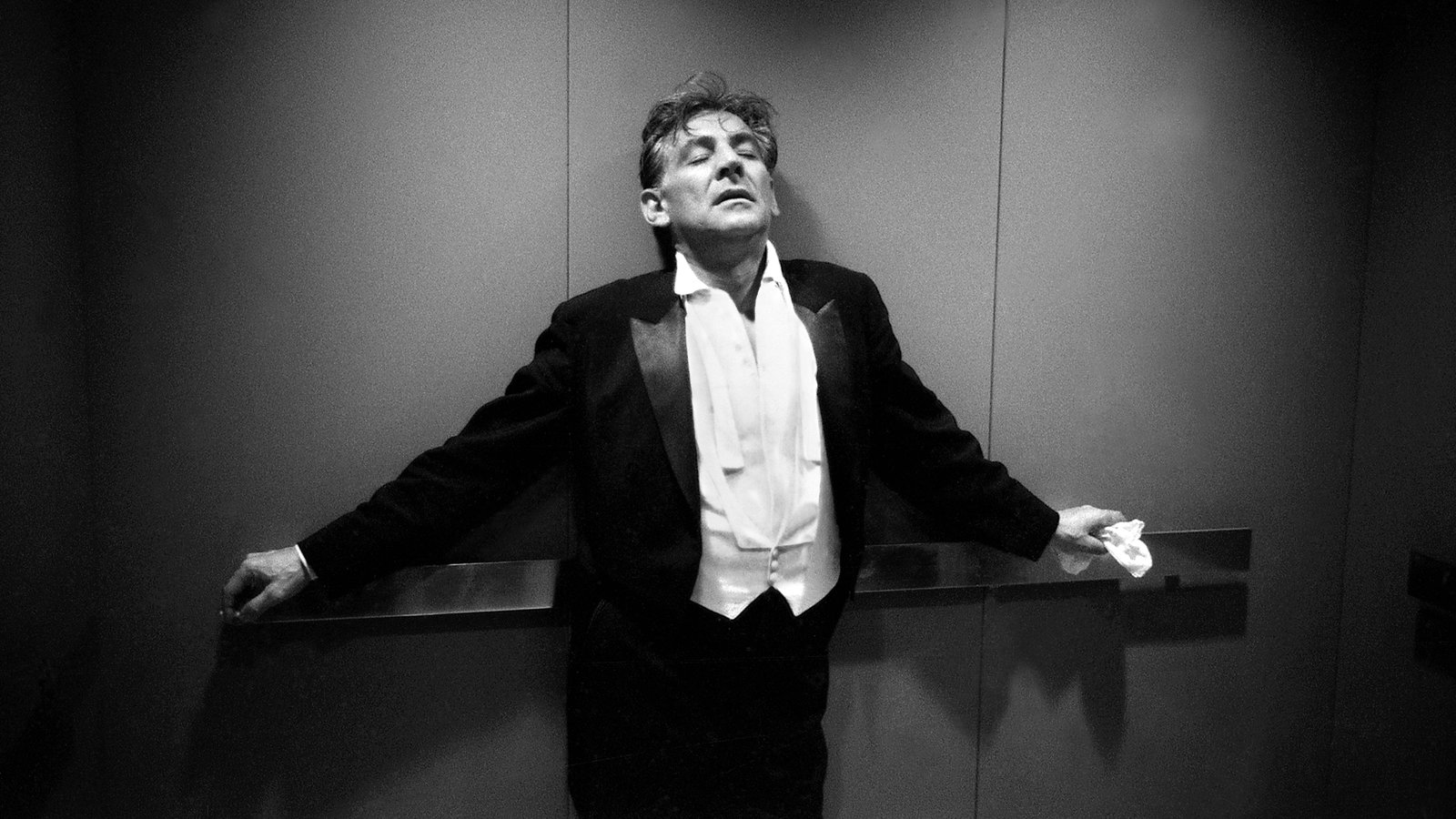
Leonard Bernstein – A Complete Biography
Introduction
Leonard Bernstein (1918–1990) was a multifaceted American musician whose influence spanned conducting, composing, education, and television. Renowned for his dynamic presence and passionate performances, he became one of the most celebrated figures in 20th-century music. As the first American-born conductor to achieve international acclaim, Bernstein’s legacy endures through his extensive body of work and his efforts to make classical music accessible to a broad audience.

Childhood
Born Louis Bernstein on August 25, 1918, in Lawrence, Massachusetts, to Ukrainian-Jewish immigrants Jennie and Samuel Bernstein, Leonard was raised in a family that valued education and cultural engagement. His early exposure to music came through his mother, who was a pianist, and his father, who was a businessman. Despite his father’s initial reluctance, Leonard began piano lessons at a young age and quickly demonstrated a natural aptitude for the instrument. He attended the Garrison School and later the Boston Latin School, where he began composing and directing small musical productions. At 15, he officially changed his name to Leonard, a decision influenced by his grandmother’s wishes.
Youth
Bernstein’s musical education continued at Harvard University, where he earned a Bachelor of Arts degree in 1939. There, he studied music theory and composition under prominent instructors. Seeking further refinement, he attended the Curtis Institute of Music in Philadelphia, studying conducting with Fritz Reiner and orchestration with Randall Thompson. His time at Curtis was pivotal, honing his skills and preparing him for a career that would bridge classical and popular music.
Adulthood
In 1943, Bernstein’s career took a significant turn when he substituted for an ill Bruno Walter as the conductor of the New York Philharmonic. His performance was met with critical acclaim, leading to his appointment as assistant conductor. Over the years, he ascended to the position of music director, a role he held from 1958 to 1969. Bernstein’s tenure with the Philharmonic was marked by his charismatic conducting and commitment to expanding the orchestra’s repertoire.
Beyond conducting, Bernstein was a prolific composer. His works encompassed a wide range of genres, including musicals, operas, symphonies, and choral pieces. Notable compositions include the Broadway musical West Side Story (1957), the operetta Candide (1956), and the choral work Chichester Psalms (1965). His compositions often blended elements from various musical traditions, reflecting his belief in the universality of music.
Bernstein was also a passionate educator. In 1958, he initiated the “Young People’s Concerts” with the New York Philharmonic, a series of televised concerts aimed at introducing classical music to younger audiences. These programs, which continued until 1972, were groundbreaking in their approach and reached millions of viewers worldwide.
Compositions
Bernstein’s compositional output was diverse and influential. Some of his most significant works include:
- West Side Story (1957): A groundbreaking musical that fused classical music with jazz and Latin rhythms, telling a modern retelling of Shakespeare’s Romeo and Juliet set in New York City.
- Candide (1956): An operetta based on Voltaire’s satirical novel, known for its witty lyrics and complex musical structures.
- Chichester Psalms (1965): A choral work that combines Hebrew texts with contemporary musical idioms, showcasing Bernstein’s ability to blend sacred and secular elements.
- Symphony No. 3: Kaddish (1963): A large-scale work for orchestra, chorus, and soloists, reflecting Bernstein’s deep engagement with Jewish themes and his response to the assassination of President John F. Kennedy.
- Missa Brevis (1988): His final complete choral work, composed as a tribute to retiring conductor Robert Shaw.
Death
Leonard Bernstein passed away on October 14, 1990, at the age of 72, in New York City. His death was attributed to a heart attack brought on by mesothelioma, a cancer linked to his history of heavy smoking. Bernstein’s passing marked the end of an era in American music, leaving a void in both the classical and popular music communities.
Conclusion
Leonard Bernstein’s contributions to music were vast and varied. As a conductor, he brought a unique energy and insight to the podium, elevating the performances of the New York Philharmonic and other ensembles. As a composer, he created works that resonated with audiences and performers alike, blending different musical genres and traditions. His efforts as an educator helped demystify classical music for generations of listeners. Bernstein’s legacy continues to inspire musicians and audiences around the world, cementing his place as one of the most influential figures in the history of American music.
Comments are closed