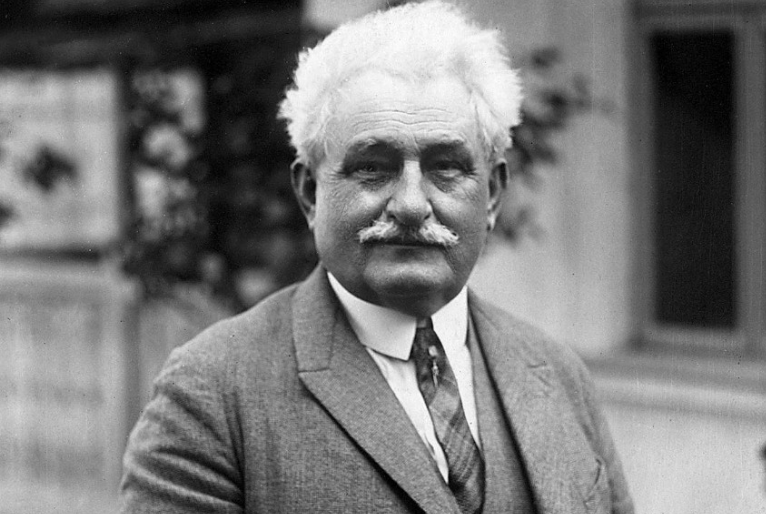
Leos Janacek – A Complete Biography
Introduction
Leoš Janáček (1854–1928) was a prominent Czech composer, music theorist, folklorist, publicist, and teacher. He is considered one of the most important exponents of musical nationalism of the 20th century. Janáček’s unique musical style was deeply inspired by Moravian and other Slavic music, including Eastern European folk traditions, and the inflections of the Czech language. His journey from a humble background to international recognition was marked by tireless work, personal sorrows, and a distinctive artistic vision that profoundly influenced 20th-century classical music.

Childhood
Leoš Janáček was born on July 3, 1854, in Hukvaldy, Moravia, which was then part of the Austrian Empire. He was the ninth of fourteen children born to Jiří Janáček, a schoolmaster, and Amálie (née Grulichová) Janáčková. Despite his family’s limited financial means, Janáček displayed an early and uncommon musical talent, particularly in choral singing. His father, recognizing his son’s abilities, sought a scholarship for him to pursue a musical education. In August 1865, at the age of eleven, Janáček left his home for Brno to attend the Augustinian Monastery, where he became a chorister under the guidance of Pavel Křížkovský. This early separation from his family and the strict environment of the monastery deeply impacted his formative years, shaping his independent spirit.
Youth
Janáček’s youth was characterized by intensive musical and general education. At the Augustinian Monastery in Brno, he received a thorough musical grounding, participating in choral singing and occasionally playing the organ. He attended the German grammar school in Old Brno from 1866 to 1869 and the Slavonic Teachers’ Training Institute from 1869 to 1872, initially preparing for a career as a teacher, following his father’s wishes. However, his passion for music led him to further studies. In 1874, he enrolled at the Prague Organ School, where he studied under František Skuherský and František Blažek. His time in Prague was financially challenging, often forcing him to practice on a keyboard drawn on his tabletop. His outspoken nature was evident when he publicly criticized a performance by the school’s headmaster, leading to a temporary suspension. Nevertheless, he graduated with top honors in 1875. His studies continued abroad, first at the Leipzig Conservatory from October 1879 to February 1880, and then at the Vienna Conservatory from April to June 1880, where he focused on composition. During this period, he also began a lifelong friendship with Antonín Dvořák.
Adulthood
Upon returning to Brno, Janáček embarked on a prolific career as a composer, educator, and cultural organizer. In 1881, he married his young pupil, Zdenka Schulzová, though their marriage was often unhappy. The same year, he founded and became the director of the Organ School in Brno, a position he held until 1919 when it became the Brno Conservatory. He also directed the Czech Philharmonic Orchestra from 1881 to 1888 and later became a professor of composition at the Prague Conservatory in 1919. Janáček’s deep interest in folk music led him to collect folk songs with František Bartoš and to publish the journal Hudební Listy (Musical Pages) between 1884 and 1888. This folkloristic work profoundly influenced his compositional style, leading him to develop a distinctively Czech musical language intimately connected with the rhythms and inflections of his native speech. Personal tragedies, particularly the death of his daughter Olga in 1903, had a profound impact on his creative output, notably evident in his opera Jenůfa. Despite early struggles for recognition, the belated success of a revised Jenůfa in Prague in 1916 marked a turning point, bringing him international acclaim. In his later years, Janáček became infatuated with Kamila Stösslová, a married family friend, with whom he maintained a passionate correspondence that inspired many of his late masterworks.
Major Compositions
Janáček’s major compositions span various genres, showcasing his innovative and deeply personal style. His operas are central to his legacy, characterized by their dramatic intensity and vocal lines that mirror the natural cadences of the Czech language. Key operatic works include:
•Šárka (1887–1888, revised 1919): His first opera, a romantic work.
•Jenůfa (1894–1903, revised 1908, 1915): Often considered his breakthrough work, it established his international reputation.
•Káťa Kabanová (1919–1921): An opera inspired by Russian literature, reflecting his interest in Russian culture.
•Příhody lišky Bystroušky (The Cunning Little Vixen) (1921–1923): A charming and philosophical opera that blends human and animal worlds.
•Věc Makropulos (The Makropulos Affair) (1923–1925): A complex and thought-provoking work exploring themes of immortality.
•Z mrtvého domu (From the House of the Dead) (1927–1928): His final opera, based on Dostoevsky’s novel, known for its stark realism.
Among his orchestral works, the Sinfonietta (1926) stands out for its vibrant brass fanfares and celebration of military music, while the rhapsody Taras Bulba (1915–1918) reflects his pan-Slavist sentiments and interest in Russian history. His chamber music includes two significant string quartets: String Quartet No. 1 (“Kreutzer Sonata”) and String Quartet No. 2 (“Intimate Letters”), both deeply personal and expressive. The wind sextet Mládí (Youth) (1924) is a nostalgic reflection on his early life. For piano, works like On an Overgrown Path and Sonata 1.X.1905 (“From the Street”) are notable for their emotional depth. Janáček’s choral compositions are equally significant, with the monumental Glagolitic Mass (1926) being a powerful and unique setting of the Old Slavonic liturgy. His song cycles, such as Zápisník zmizelého (Diary of One Who Vanished) (1917–1919), further demonstrate his mastery of vocal writing, closely tied to the inflections of his native language.
Death
Leoš Janáček’s life came to an end on August 12, 1928, at the age of 74, in Ostrava, Czechoslovakia. His death was attributed to a chill he caught while out walking, near his birthplace in Hukvaldy. Despite his advanced age, Janáček remained creatively active until his final days, leaving behind a rich and influential body of work that continued to gain recognition posthumously.
Conclusion
Leoš Janáček’s legacy as a composer is immense. He transcended the Romantic traditions of his predecessors to forge a highly individual and modern musical language rooted in Moravian folk music and the unique rhythms of the Czech language. His operas, orchestral pieces, chamber works, and choral compositions are celebrated for their emotional intensity, dramatic power, and innovative use of melody and harmony. Janáček’s tireless dedication to his art, his profound connection to his cultural heritage, and his ability to transform personal experiences into universal artistic expressions cemented his place as one of the most original and significant composers of the 20th century, alongside figures like Antonín Dvořák and Bedřich Smetana. His music continues to captivate audiences worldwide, a testament to his enduring genius.
Comments are closed