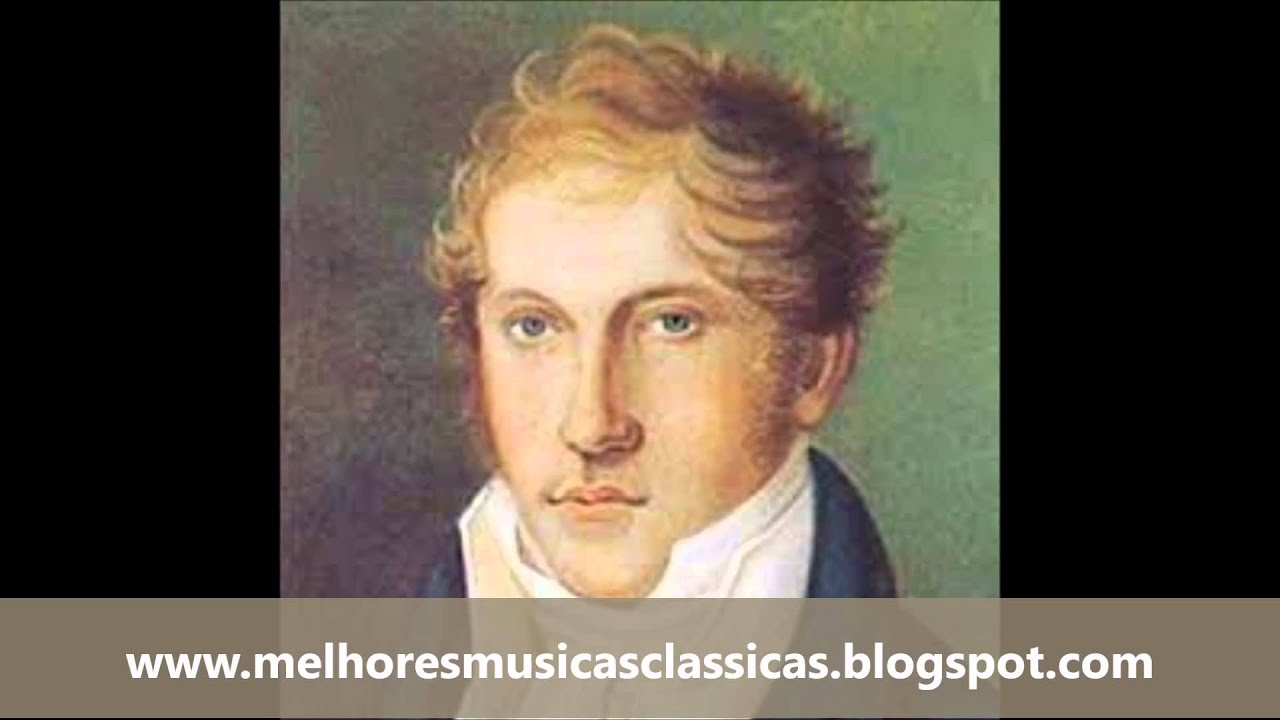
Ludwig Spohr – A Complete Biography
Introduction
Ludwig (often called Louis) Spohr (April 5, 1784 – October 22, 1859) was a German violinist, conductor, teacher, and composer whose career bridged the Classical and early Romantic periods. Celebrated in his lifetime as both a virtuoso performer and an inventive composer, Spohr left a wide-ranging body of work that includes symphonies, operas, concertos, chamber music, sacred works, and pedagogical writings. His music reflects the refinement of Classical structures while pointing forward to the emotional depth and expressive character of Romanticism.

Childhood
Spohr was born in Braunschweig, in the duchy of Brunswick-Wolfenbüttel, on April 5, 1784. He grew up in Seesen, where his musical talent was nurtured by his family. His mother was a singer and pianist, and his father played the flute, so the household provided fertile ground for his early development. Spohr began violin lessons at a young age, showing rapid progress. He also absorbed music from local ensembles and gained exposure to the works of Mozart and other composers, which helped shape his artistic sensibility from an early stage.
Youth
As a teenager, Spohr began to gain recognition for his talent. He joined the ducal court orchestra and benefited from the support of patrons who encouraged his career. Under the guidance of experienced violinists, especially Franz Eck, he developed formidable technique and began touring, traveling across Germany and even to Russia. These experiences gave him valuable exposure to Europe’s vibrant musical life and helped him build a reputation not only as a violin virtuoso but also as a promising young composer. His earliest compositions already displayed a balance between technical brilliance and expressive lyricism.
Adulthood
Spohr matured into a multifaceted musical figure, balancing the roles of composer, performer, conductor, and teacher. As a violinist, he was often compared to the great virtuosos of his era, though his style emphasized nobility and expressiveness over sheer display. He held important positions in several musical centers, most notably in Kassel, where he spent many years as court conductor. There he developed innovative rehearsal techniques, including the use of rehearsal letters, and became one of the first conductors to consistently use a baton.
As a teacher, Spohr had a lasting influence. His Violinschule (Violin School) became a cornerstone of 19th-century violin pedagogy, codifying techniques that shaped generations of performers. His autobiography also provides vivid insight into the musical life of the 19th century, describing his encounters with fellow musicians and his perspective on the artistic debates of his time.
Major Compositions
Spohr’s works are extensive and varied. He composed eighteen violin concertos, which combine lyrical, operatic qualities with the technical demands of the virtuoso tradition. His ten symphonies show an evolution from Classical clarity to more Romantic expression, at times embracing programmatic ideas. Spohr also composed numerous operas, chamber works such as string quartets and sextets, oratorios, songs, and sacred music.
He was particularly admired for his contributions to clarinet repertoire, writing several concertos and chamber works for the instrument, which were instrumental in establishing its prominence in Romantic music. Spohr’s chamber music reveals his mastery of counterpoint and his sensitivity to ensemble writing, while his orchestral works demonstrate his skill in large-scale structure and dramatic effect.
Death
Spohr died in Kassel on October 22, 1859. At the time of his death, he was still regarded as one of the leading musicians of his era, though his reputation began to decline in the decades that followed as newer Romantic voices overshadowed him. Despite this, his innovations in conducting, pedagogy, and instrumental writing secured his place in music history. Later revivals and scholarly attention have restored interest in his work, and his compositions continue to be explored by musicians and audiences seeking to understand the early Romantic tradition.
Conclusion
Ludwig Spohr was a pivotal figure in 19th-century music, embodying the transition from Classical restraint to Romantic expressiveness. As a violinist, composer, conductor, and teacher, he contributed significantly to the evolution of European music. His invention of the modern chinrest, his development of orchestral rehearsal techniques, and his enduring pedagogical works all testify to his influence beyond the concert hall. While his music may not occupy the central place it once did, Spohr’s legacy remains important for the history of performance practice and for the richness of his contributions across genres.
Comments are closed